Here it is in black and white (and green) from CBA:
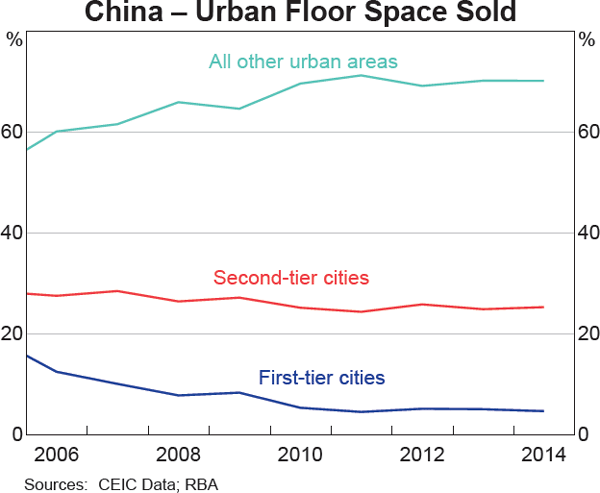
The measures have so far proven to be most effective in tier 1 cities, raising concerns that additional support measures may result in a housing bubble in tier 1 cities. While new home prices in China have generally improved in the last year, the lack of price growth in tier 3 cities and below is of concern to us given it accounted for 80-90% of total new construction. With construction a strong driver of China’s commodity demand, we likely need to see prices supported in lower-tier cities to encourage commodity demand. Given a property inventory overhang of two-to-five years in lower-tier cities, inventories are likely to remain a problem for China’s property sector. With China still focusing on transitioning its economy towards consumption and services, we think construction and commodity demand will remain weak in 2016.
I use the RBA figures which show 75% of construction in the lower-tiered cities:
Advertisement
The full text of this article is available to MacroBusiness subscribers
David Llewellyn-Smith is Chief Strategist at the MB Fund and MB Super. David is the founding publisher and editor of MacroBusiness and was the founding publisher and global economy editor of The Diplomat, the Asia Pacific's leading geo-politics and economics portal.
He is also a former gold trader and economic commentator at The Sydney Morning Herald, The Age, the ABC and Business Spectator. He is the co-author of The Great Crash of 2008 with Ross Garnaut and was the editor of the second Garnaut Climate Change Review.