
Domainfax has reported that young Aussie home buyers are finding it increasingly difficult to by a home:
According to a recent study by Mortgage Choice, of 1000 recent first-home buyers surveyed, 23.4 per cent saved for more than five years, a 5.8 per cent jump from 2009.
They are also taking on more debt, with 56.1 per cent of the respondents putting down a deposit of no more than 10 per cent, compared with 47.6 per cent in 2014…
“The average home loan size in Australia is now approximately 4.5 times larger than the average wage – up 25 per cent in the past two years”…
The survey also reveals more first-home buyers are getting help from their parents or family members to get a foothold on the property ladder. Some bought with siblings and friends.
Hardly sounds like a “relatively affordable” housing market, does it HIA?
Of course, the jump in the mortgage deposit gap can be explained by the escalation of dwelling prices against sluggish income growth.
To illustrate, below are the latest median dwelling values as provided by Core-Logic RP Data:
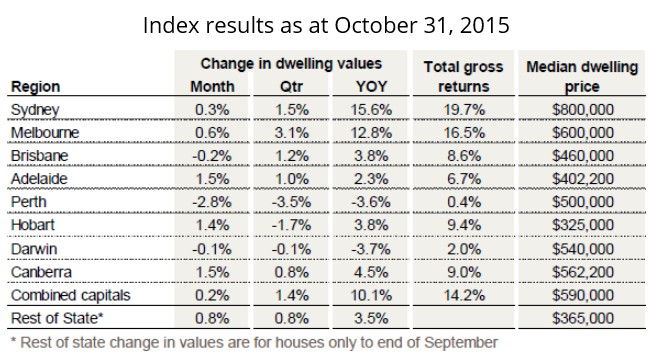
Let’s ignore for the moment that the quality (size) of the median dwelling has been falling recently, thanks to the boom in apartments and shrinking lot sizes, and focus on these values.
Now, lets consider median capital city incomes, which can be estimated by combining the ABS’ data on median household disposable income as at June 2014 with wages growth since that time:
- National capital city: $79,511
- Sydney: $82,945
- Melbourne: $76,951
- Brisbane: $76,193
- Perth: $84,500
- Adelaide: $63,984
- Hobart: $67,663
- Darwin: $98,219
- ACT: $98,098
Which gives the following dwelling price-to-income ratios:
- National capital city: 7.42
- Sydney: 9.64
- Melbourne: 7.80
- Brisbane: 6.04
- Perth: 5.92
- Adelaide: 6.29
- Hobart: 4.80
- Darwin: 5.50
- ACT: 5.73
Assuming 20% of disposable income is available for saving, it would take the following number of years to save a measly 10% deposit (assuming stagnant incomes and dwelling prices, and no transaction costs):
- National capital city: 3.8 years
- Sydney: 4.9 years
- Melbourne: 4.0 years
- Brisbane: 3.1 years
- Perth: 3.0 years
- Adelaide: 3.2 years
- Hobart: 2.5 years
- Darwin: 2.8 years
- ACT: 2.9 years
Nowhere above, and certainly not in the major capital cities, could housing be described as “relatively affordable”. Add in stamp duties, mortgage insurance, etc and the affordability picture obviously worsens.
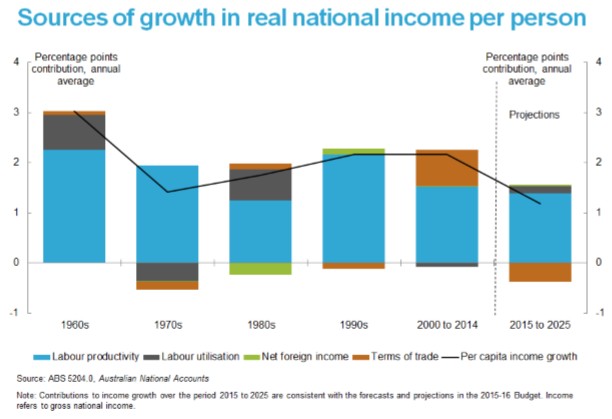
Then there’s the difficulties inherent in paying-off a 90% LVR mega-mortgage amid the slowest projected income growth in at least 60 years:
It sure does suck to be a young aspiring first-time buyer in Australia.
