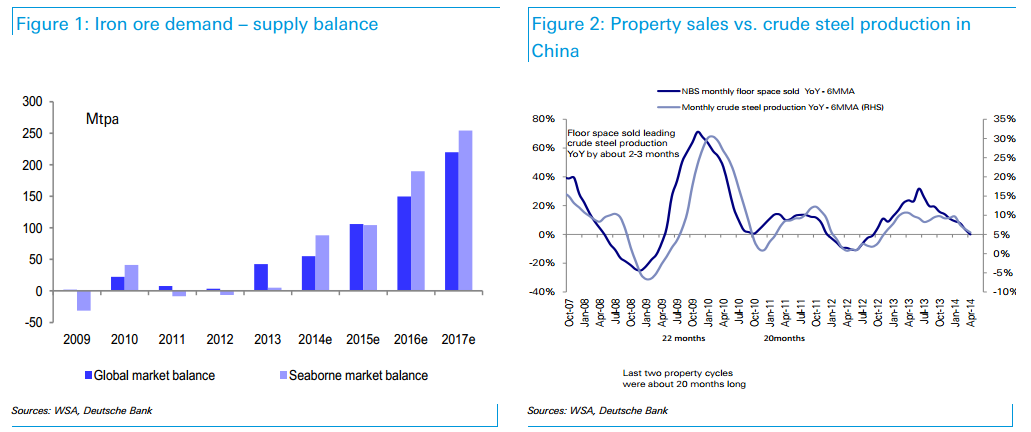
Property construction accounts for a third of Chinese steel consumption, the single largest component of demand, and remains a key driver of materials growth. In light of the weakness in the Chinese property market, we have downgraded our China steel production forecasts by c.20 – 30Mt over the next three years. We expect the biggest impact is likely to be felt on the global iron ore market where we expect market surpluses to rise over the years ahead, Figure 1.
Despite the weakness in Chinese property sector, we are not forecasting a contraction in Chinese steel production. Steel production generally lags Chinese property sales by two to three months, Figure 2. Furthermore, the duration of a typical property cycle has tended to be around two years from trough to trough, and we are about 24 months away from the previous trough. Moreover we continue to forecast positive Chinese steel production growth, in response to the structural factors of ongoing urbanization as well as the upgrading and replacement of sub-standard building stock.
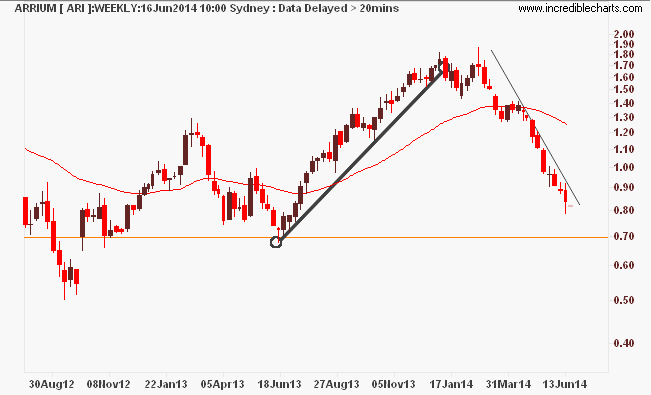
Urbanisation is past halfway meaning it is now detracting from growth. Upgrading existing buildings can be a real support. Deutsche also downgraded Arrium (ARI) which has gap down almost 3% on the open today, on its way to 70c or less.
David Llewellyn-Smith is Chief Strategist at the MB Fund and MB Super. David is the founding publisher and editor of MacroBusiness and was the founding publisher and global economy editor of The Diplomat, the Asia Pacific's leading geo-politics and economics portal.
He is also a former gold trader and economic commentator at The Sydney Morning Herald, The Age, the ABC and Business Spectator. He is the co-author of The Great Crash of 2008 with Ross Garnaut and was the editor of the second Garnaut Climate Change Review.