


By Chris Becker
A paralysis has entered one of the largest sovereign bond markets in the world – Japan – and is spreading to both FX and stock markets explaining the total lack of volatility.
First, some background on Abenomics – the biggest attempt in economic history to stifle deflation – from Sober Look:
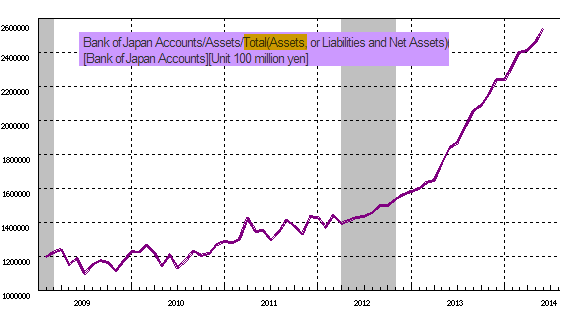
The Bank of Japan’s balance sheet continues to expand at a fairly constant pace. Relative to the size of the GDP, this is already the largest QE program in the world. Yet some analysts believe that the BoJ will accelerate securities purchases later this year.
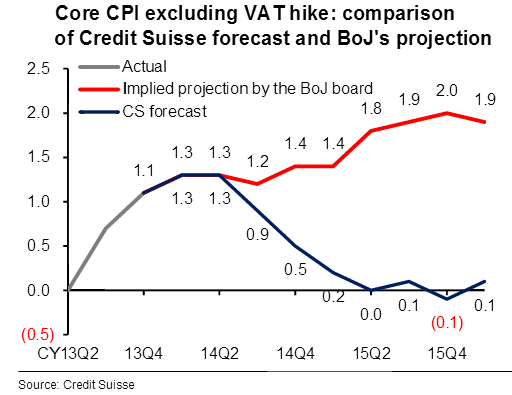
Source: BoJ Here is why. Credit Suisse for example projects that Japan’s inflation rate has peaked and is about to begin declining. In fact CS researchers see a complete divergence between the BoJ’s own projection of inflation and reality. A number of other researchers (for example Scotiabank) agree.
This potential decline in inflation dramatically raises the risk of Japan slipping back into deflation – something that the BoJ and the Abe administration have been desperately trying to avoid.
As inflation begins to lag the BoJ’s projections, the central bank will accelerate QE to new highs. The central bank’s already bloated balance sheet will go “parabolic” in order to get back on track with the much publicized inflation target of 2%.
The ramifications of this almost zero volatility has spread to trade in the yen and Japanese stock markets – from Bloomberg:
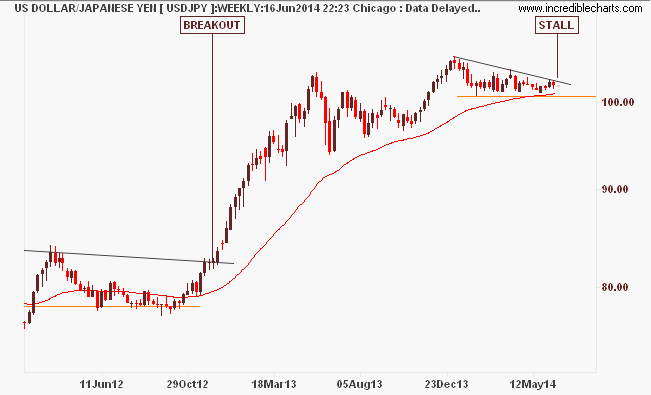
The yen has traded in a range of 4.68 per dollar since Jan. 1, the tightest since Japan ended currency controls four decades ago. Average trading on the Topix index is near its lowest level in more than a year.
Asset purchases have not only made BOJ Governor Haruhiko Kuroda the biggest player in Japan’s $9.6 trillion bond market, they have also given him the most leverage over currency and equity markets in the world’s third-largest economy.
Volatility in USDJPY is now at nearly 20 year lows as it trades in an extremely tight range:
The widowmaker trade has always been shorting Japanese government bonds as the BOJ provides an almost perfect protection for bond traders infinitum.
But what if the BOJ starts to taper realising endless purchases were not working?
More from Bloomberg:
“Investors in Japan assume that the BOJ will continue to buy JGBs vigilantly next year and the year after,” said Makoto Yamashita, the chief Japan rates strategist at Deutsche Securities, a primary dealer. “They take it for granted they can sell those bonds bought expensively to the BOJ as more and more notes disappear from the secondary market. It’s too frightening to think what might happen when the BOJ tapers.”
Students of Hyman Minsky understand all too well the ramifications of too low volatility for too long a time – inevitably volatility will roar its head, and in unexpected ways.
For now – watch Yen (USDJPY) as the driver of inflation and deflation in Japan. The recent start depreciation in Yen (i.e. a rise in USDJPY) was behind almost all of the recent inflationary surges in Japan, unfortunately all of the tradeable kind which is starting to impact consumer spending.
Japan remains in the deflationary danger zone.