Via FTAlphaville comes these thoughts from BofAML’s Michael Hartnett on the bond trade reversal that caught the macro majority flat-footed this year and when it might run into greater volatility. This is interesting as well for the snapshot that it provides of money center asset allocation.
Very simply portfolios were positioned, in an extreme way, for Higher Growth-Higher Yields-Higher Dollar, and that backdrop is yet to transpire (Portfolios were also positioned for sub-7% China GDP and that also didn’t happen). Investors long Small Cap, Tech & Banks and short Gold, Government Bonds and Emerging Markets have been hammered.
…As we recently wrote, new summer highs in equities are likely to be aided and abetted by “irrational exuberance” in both credit markets and carry trades. Zero rates continue to induce asset manias. When the end of zero rates is threatened, likely this autumn as unemployment rates drop to uncomfortably low levels, both credit & stock markets should correct sharply.
…What could make volatility jerk higher in coming months? We think the likelihood of this happening is low, but here is what you should track:
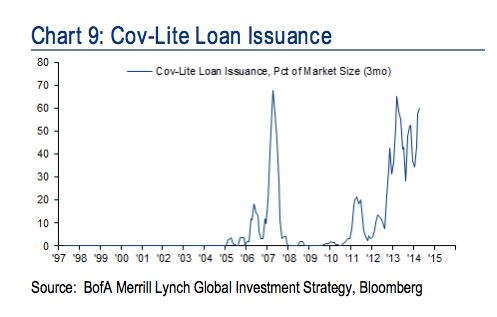
Positioning: in the short-term forced deleveraging by levered holders of peripheral European bonds; a dramatic improvement in economic data that induces Fed hike expectations and a credit event (Chart 9 – Cov-Lite Loan issuance is back close to its highs).
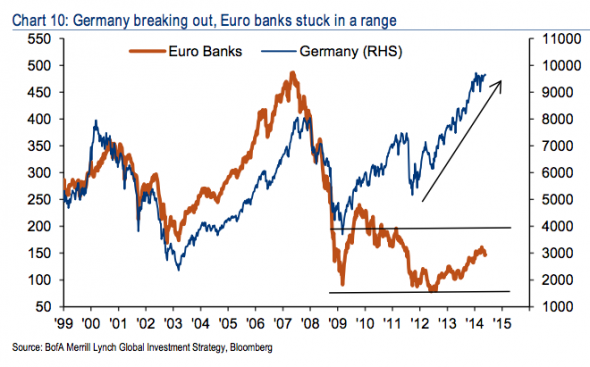
Policy: a mistake by the ECB which exacerbates deflation in Europe (via currency appreciation) and corroborates the “Japanification” of European asset markets (i.e. the secular outperformance of “good” assets versus “bad” assets – see Chart 10 of German stocks versus European banks).
Profits: a lurch lower in housing starts, bank stocks (BKX dropping to 60), and bond yields would have worrying implications for growth and profits.
Advertisement
I agree that the odds are low with US housing stumbling not tumbling, Europe and Japan soldiering on at best and a Chinese reform agenda that will keep exporting deflation.
The other point to make is that you should never assume that markets are busy unpacking the nuances of data in every trade, bourse, bond or country. On the contrary, they still rely very heavily upon sentiment and reflexivity, upon institutional structures like credit ratings and upon trend as well as momentum. The so-called Masters of the Universe are often just adrenalin-addicted and time-poor kids.
David Llewellyn-Smith is Chief Strategist at the MB Fund and MB Super. David is the founding publisher and editor of MacroBusiness and was the founding publisher and global economy editor of The Diplomat, the Asia Pacific's leading geo-politics and economics portal.
He is also a former gold trader and economic commentator at The Sydney Morning Herald, The Age, the ABC and Business Spectator. He is the co-author of The Great Crash of 2008 with Ross Garnaut and was the editor of the second Garnaut Climate Change Review.