
Here are the iron ore price charts for May 28, 2014:
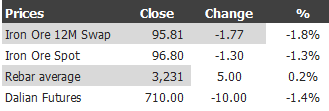
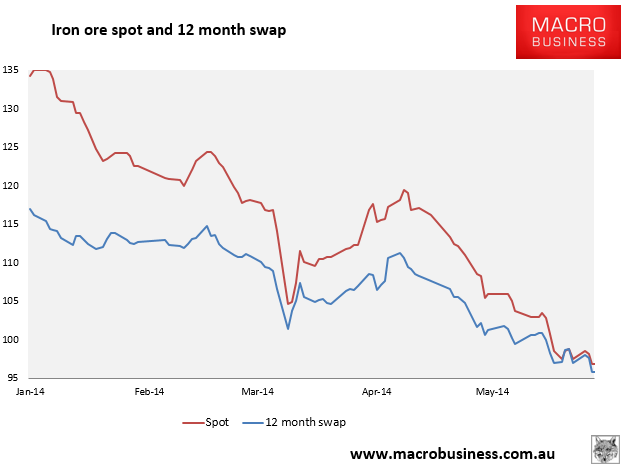
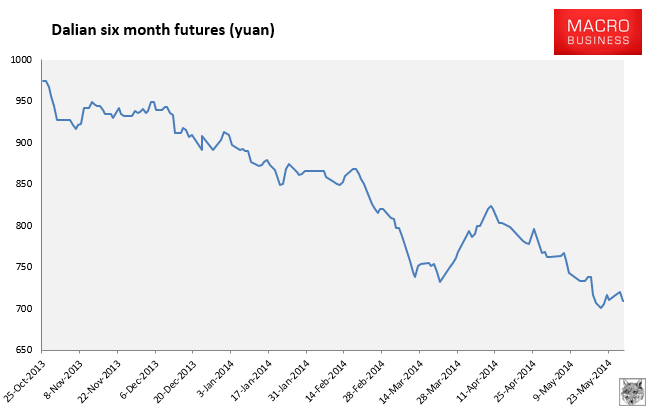
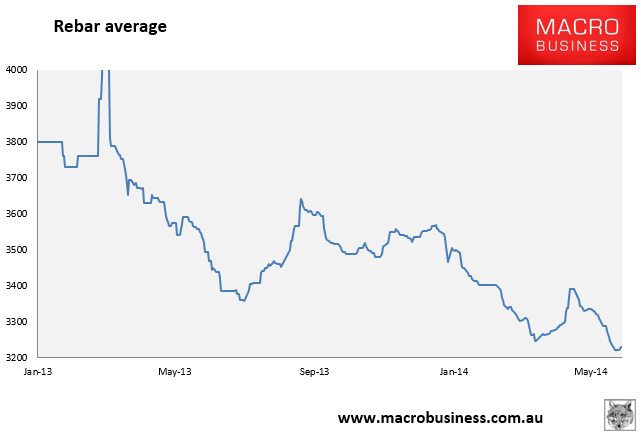
A new low for spot. 12 month swap is diving. Dalian is holding up better. Rebar futures were down but physical seems to have bottomed for now. The Baltic Dry reversed half of yesterday’s gain (apologies for getting that wrong yesterday).
Reuters has texture:
“There’s a lot of available supply and the key issue is mills are not in a rush to buy. They are keeping their inventory small and not buying a lot in advance,” said an iron ore trader in Shanghai.
Iron ore prices are unlikely to rise over the next three months due to high port inventories in China and increased supply, the National Development and Reform Commission, China’s economic watchdog, said.
Here’s more of what they said from the WSJ:
“As some big miners are running new capacity, iron ore delivery would grow steadily over the next two to three months, while port inventories will continue standing at high levels and steel demand growth is slowing, so iron ore prices will find it difficult to rise…The period of China’s high steel demand has passed, and iron ore demand is now rising at a slow pace of 3%-4% annually.”
The rebar bottom may offer hope but it’s awfully slim. From Taiwan:
China Steel Corp (CSC, 中鋼), the nation’s only integrated steelmaker, yesterday cut its domestic prices for July and August shipments by an average of 1.64 percent compared with those for June over slowing market sentiment.
“We have set our prices at a level that allows our clients to compete with others around the world,” CSC vice president for sales Liu Jih-gang (劉季剛) said by telephone yesterday.
US demand for steel products manufactured by China Steel’s clients is high now, but prices are set to drop next quarter as the industry enters its slow season, Liu said.
Meanwhile, demand for steel products produced by the company’s clients in Europe is low because of the region’s slower-than-expected economic recovery, Liu said, adding that CSC’s customers also have to compete with Japanese firms benefitting from a weaker yen.
Demand from Southeast Asia has also been dampened by political unrest in Thailand and Vietnam, he said.
In China, sentiment is low there because the Chinese government has not cut excess steel production effectively, Liu said.
More falls ahead, now or Q3.
