
The IMF released its biannual Fiscal Monitor overnight and Australia placed first:
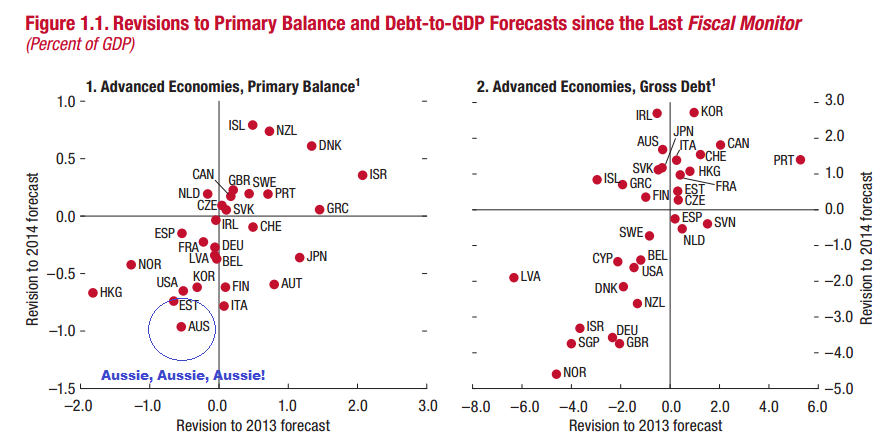
That is for the fastest deterioration against forecast outcomes in the developed world! I’m not sure why anyone questions Joe Hockey’s bearish new broom at Treasury.
Only Japan and Norway currently have larger budget deficits, though that’s understandable given the economic adjustment we’re going through.
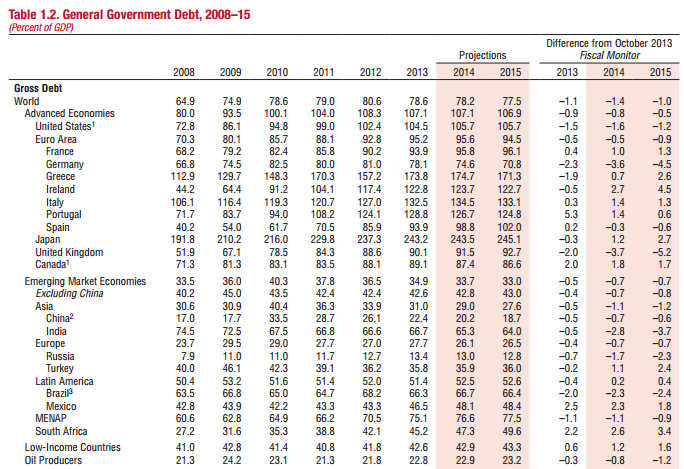
We can afford it for now. Australia also places very well in terms debt stock, with gross debt (state and federal) roughly at $31 billion
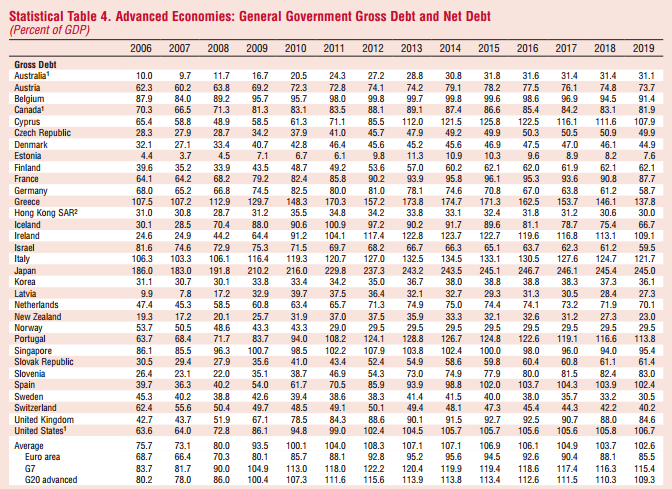
That’s about 22% of GDP, which puts us in the best-in-class category:
The AFR reckons that:
The IMF data suggests that without bold changes to taxation and government policies in the May budget, taxes and spending will rise just as the rest of the world swings in the opposite direction.
The fund indicated the budget would need to improve by at least $50 billion in today’s dollars by 2020 to have any chance of bringing gross debt down by 70 per cent to a “safer level” equal to 4.7 per cent of gross domestic product.
And, not to be outdone, The Australian works up and even larger figure:
The IMF has calculated what would be required to bring Australia’s public-sector debt back to this year’s levels, allowing for the expected growth in age-related spending over the next 15 years. It estimates this would require savings from federal and state budgets of 5.6 per cent of GDP, equivalent to $90bn.
It would represent about 15 per cent of all government spending.
I can’t find the source of the calculations anywhere in the primary document but let’s agree that the figure to stop the budget bleeding is substantial.
Budget repair remains a priority not because the public debt is large and will be a drain on growth but because household debt is enormous and the next global shock will again call upon a clean public balance sheet to guarantee the banks so as to avoid a nasty feedback loop of rising national funding costs.
