Cross-posted from Mark the Ballot.
At the end of week two in the five week election campaign there was a slew of individual marginal seat polls, all of which were pretty ugly for Labor. At the start of the third week in the campaign, we have three national polls in. Again, they were pretty ugly for Labor:
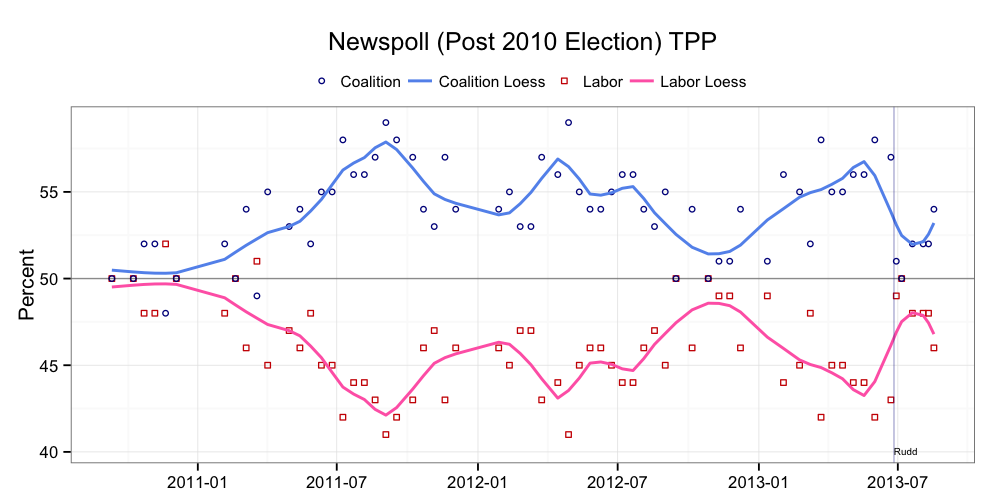
- Newspoll came in at 46 to 54 in the Coalition’s favour – a two point movement to the Coalition.
- Morgan came in at 48 to 52 in the Coalition’s favour – a half point movement to the Coalition.
- Galaxy came in at 48 to 52 in the Coalition’s favour – a one point movement to the Coalition.
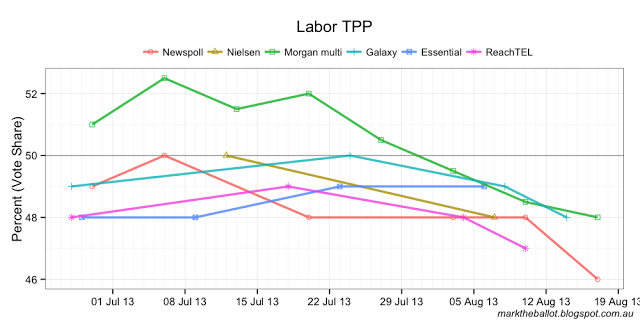
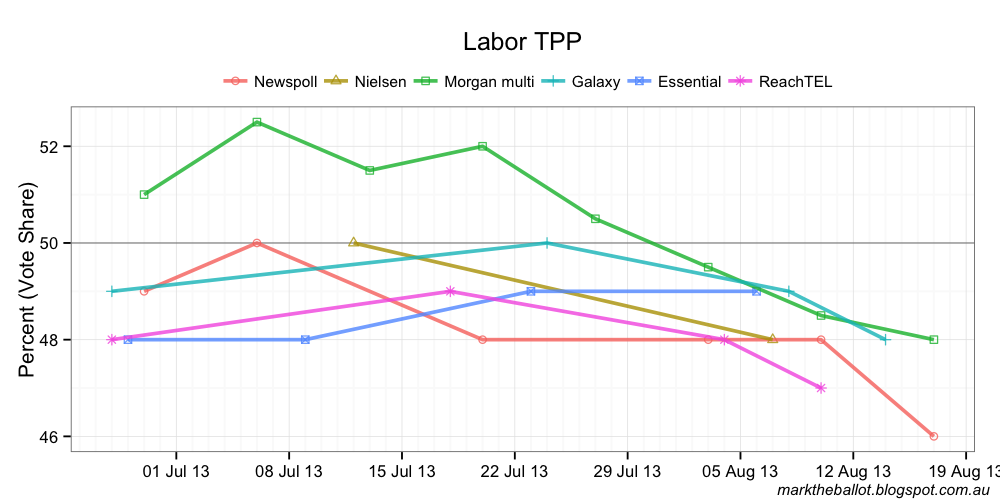
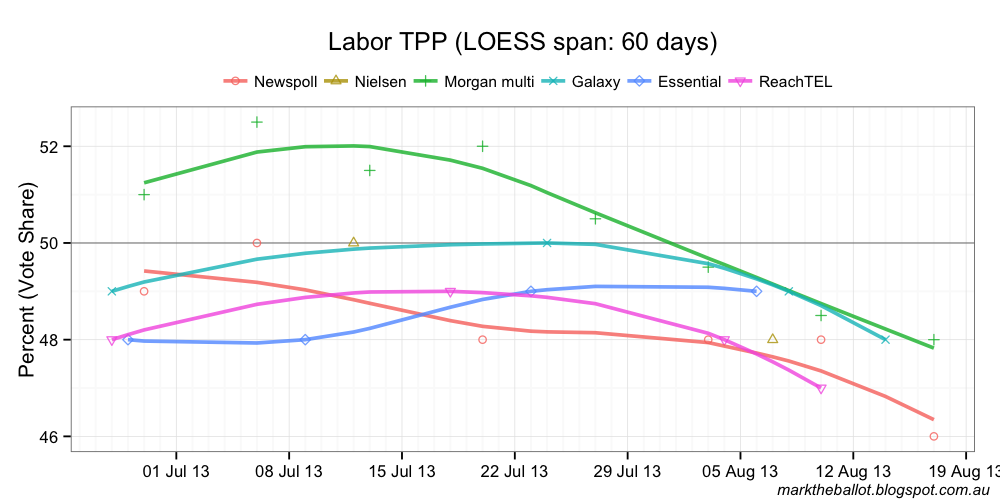
If it were a normal polling week and Newspoll had moved two points in a week, at this point in the blog I would be noting that a two point movement is not unusual. Furthermore, it is far more likely to be noise than signal (and in most circumstances one would expect it to be followed quickly by a poll move in the opposite direction). Isolated moves in opinion polling data need to be corroborated, before being given any analytical weight.
However, this is not a normal polling week with one poll bouncing around within its normal margin of error. So far, all of the national polls have moved to the Coalition this week. And this movement is consistent with the numerous marginal seat polls we saw over the weekend, which also suggested a move in voting intention to the Coalition. It may not be by as much as two points, but some some movement towards the Coalition in the past week is the most likely scenario. This can be seen in the following aggregation (Note: updated chart from original post to accommodate an expanded Newspoll sample size).
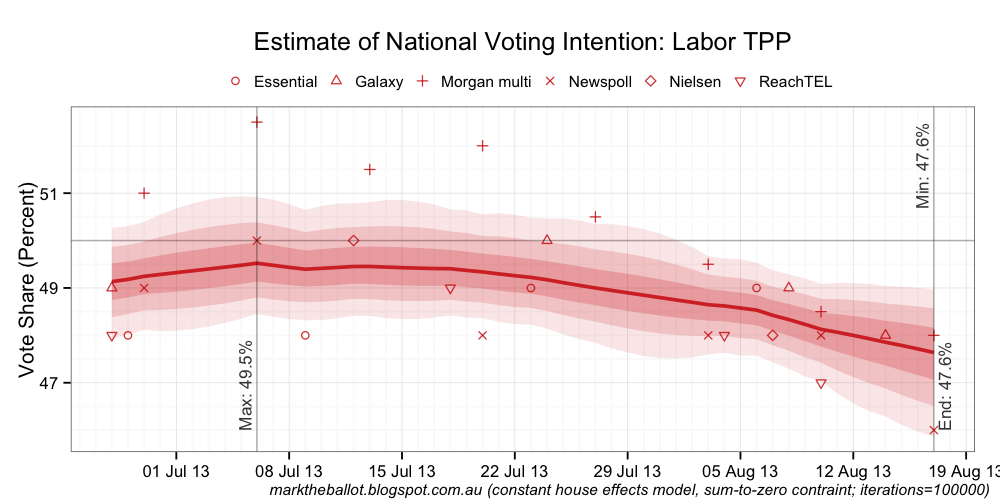
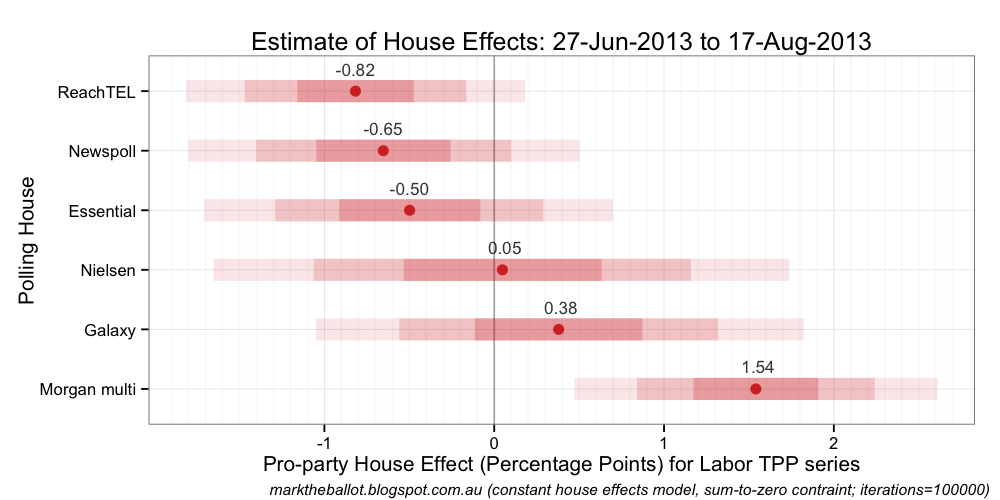
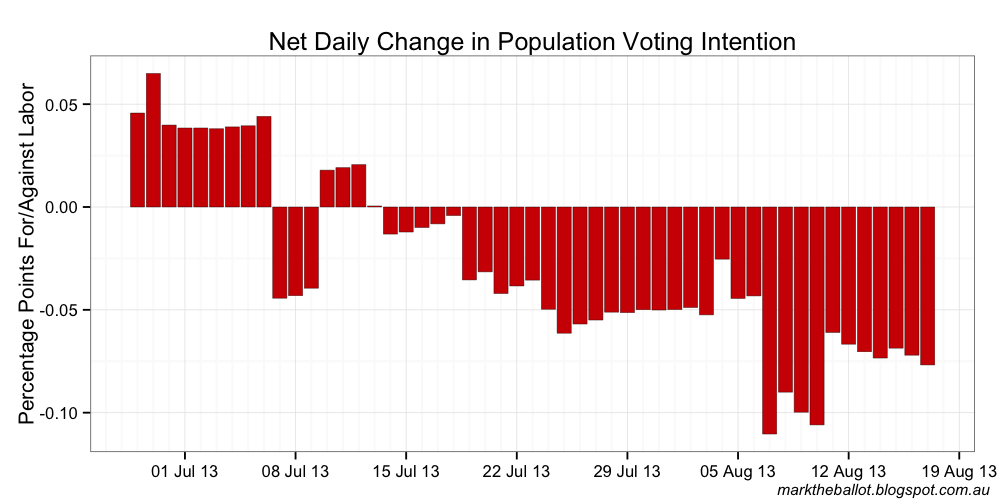
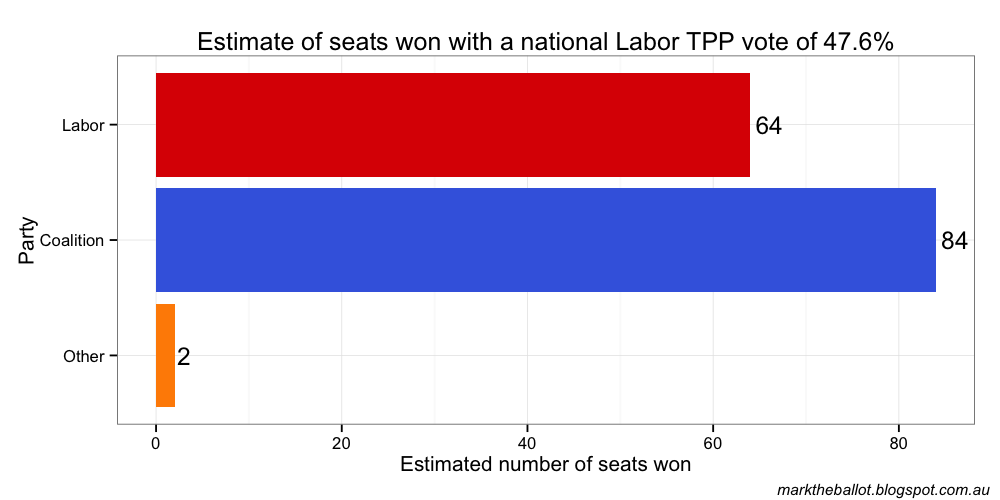
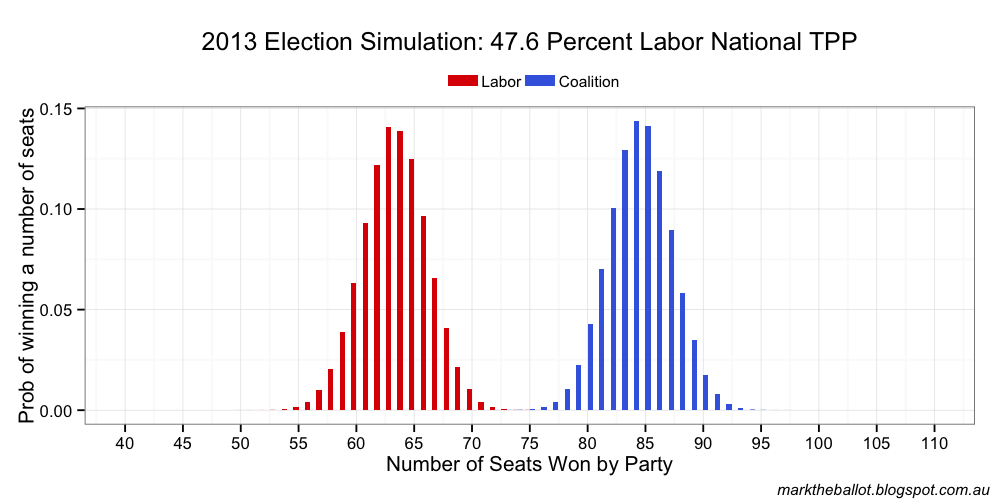
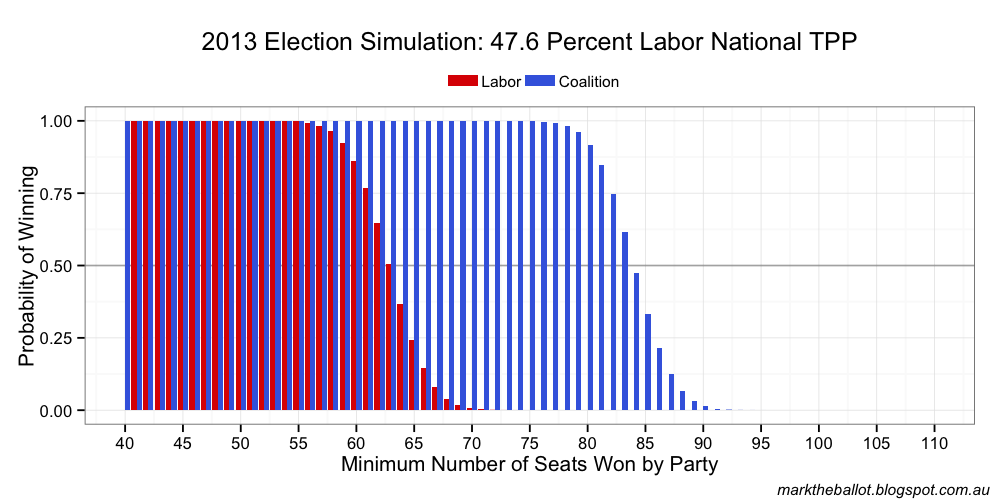
At this point in the blog, it is my normal practice to remind people that I anchor the above Bayesian aggregation with the assumption that the net bias across all of the polling houses sums to zero. You will need to come to your own view about where the actual level of collective systemic bias lies for all the pollsters. At the 2010 Election (with a different set of pollsters), the population voting intention was about one percentage point more in the Coalition’s favour compared with the pollster average (see here). In light of the 2010 experience, it is arguably plausible to subtract (say) half a percentage point or more from the above aggregation to adjust for the collective systemic bias across all of the polling houses. [As an aside, you will note that Simon Jackman, who seeks to anchor his Bayesian models with respect to the outcome of past elections regularly produces an aggregated poll that tracks well below the vast majority of individual poll results].
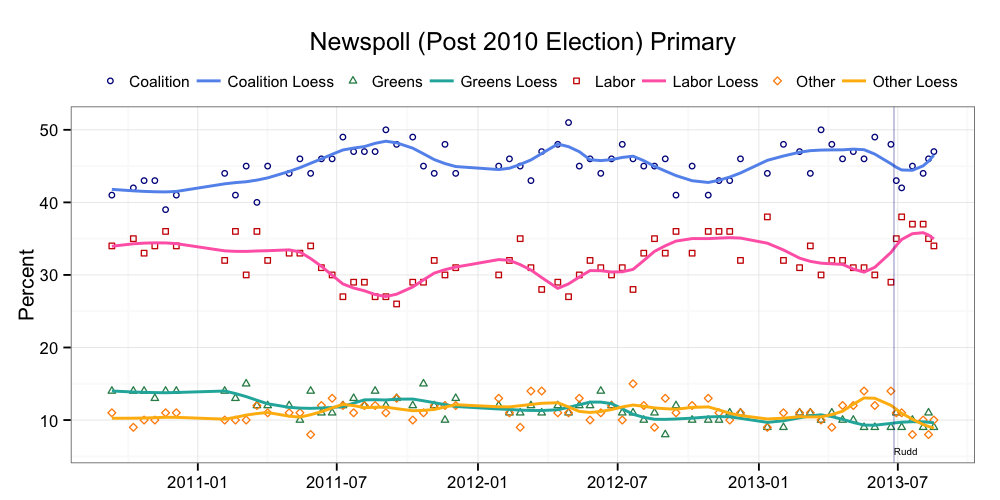
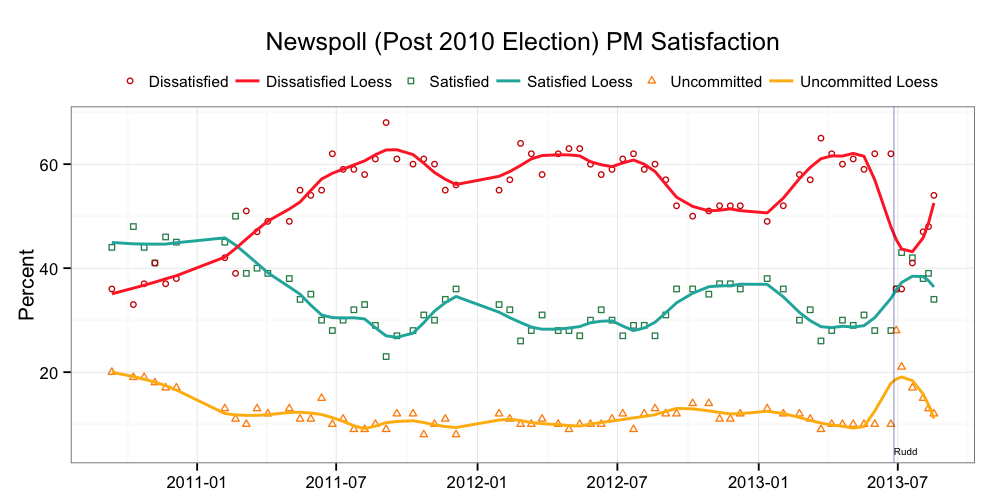
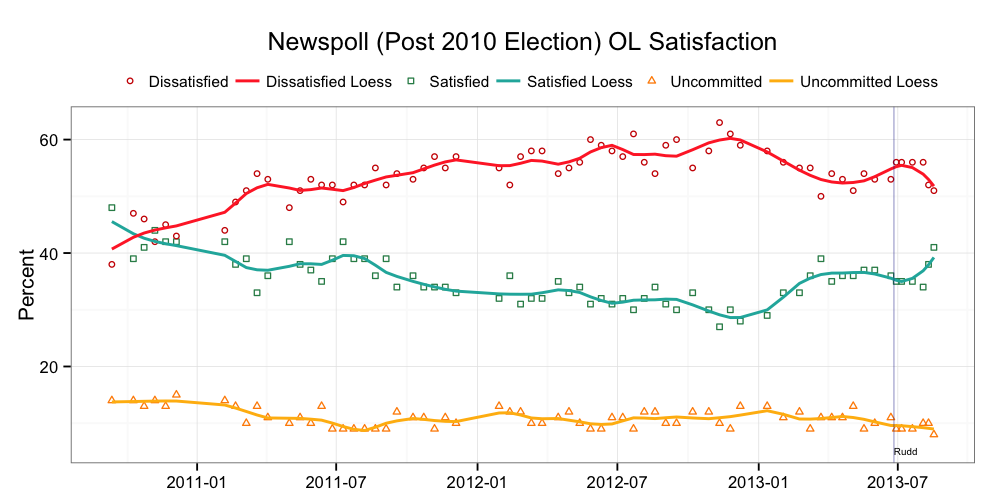
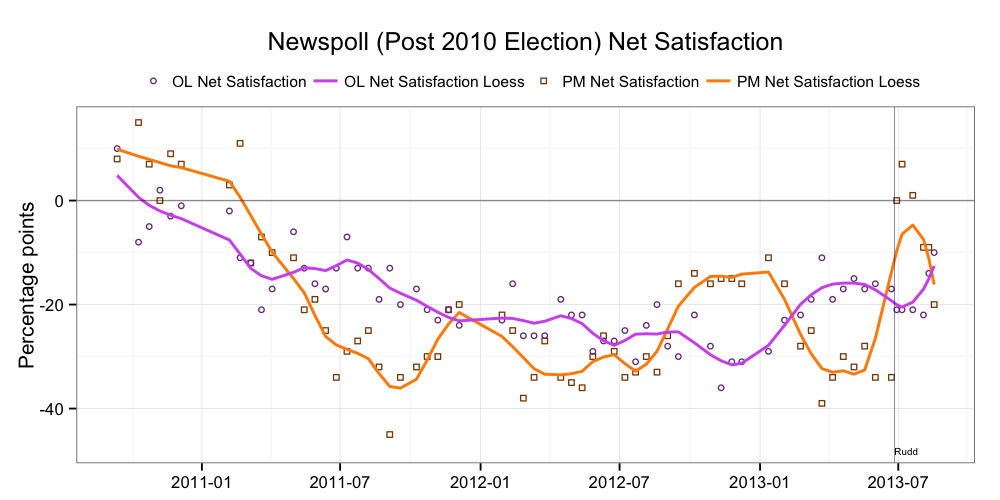
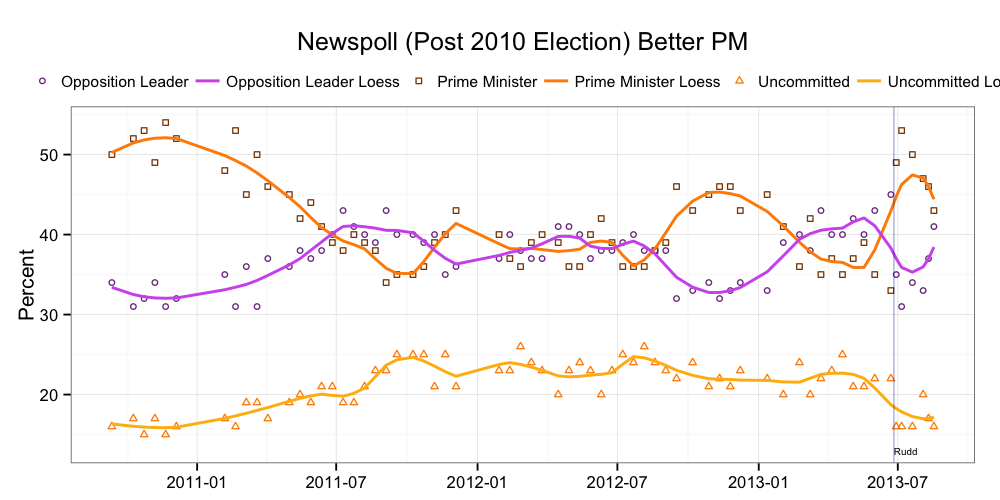
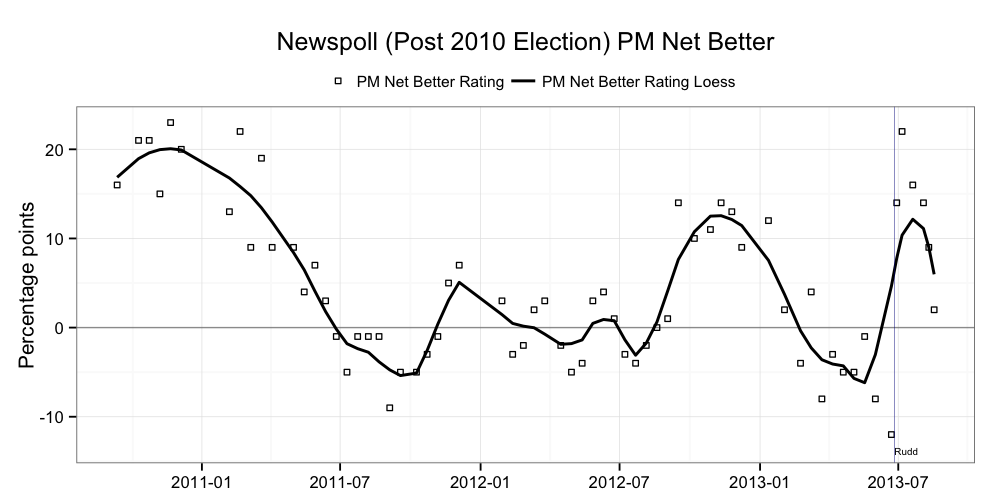
Having looked at the aggregation, let’s pick through the entrails of the latest Newspoll. The recent changes in the attitudinal polling is perhaps the most interesting aspect of this latest release.