

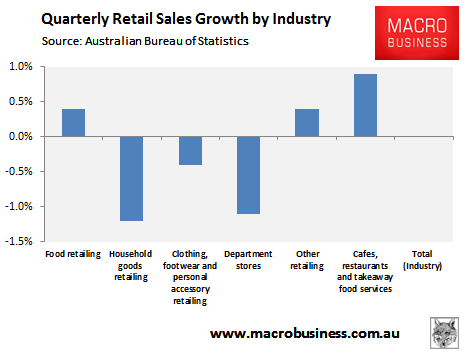
Today’s weak retail sales are set to weigh on Australia’s June quarter GDP after recording zero growth in real chain volume terms. The overall result contrasted strongly with the March quarter, where sales volumes rose by 2.0% and added to GDP (see next chart).
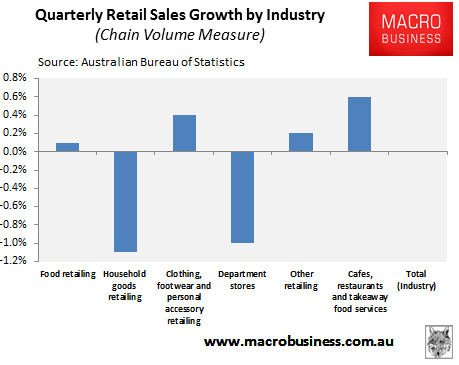
Looking at the breakdown of the key components, you can see that volume rises in food retailing, clothing, footwear & personal accessories, other retailing, and cafes, restaurants and takeaway food services were fully offset by big falls in household goods retailing and department store retailing (see next chart).
Moreover, because of some hefty discounting (see next chart).
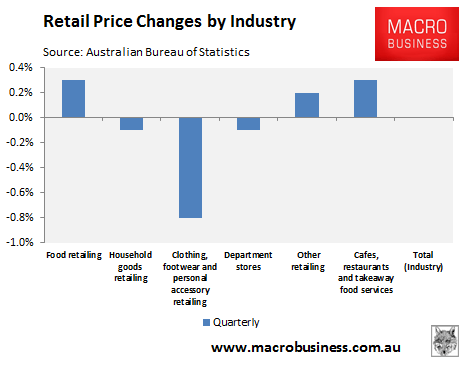
Actual clothing, footwear & personal accessories sales fell in value terms, despite the increasing volumes (see next chart).
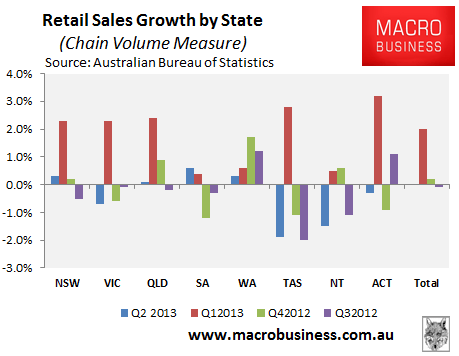
Looking at the states and territories, retail sales volumes over the June quarter were up in four jurisdictions and down in four:
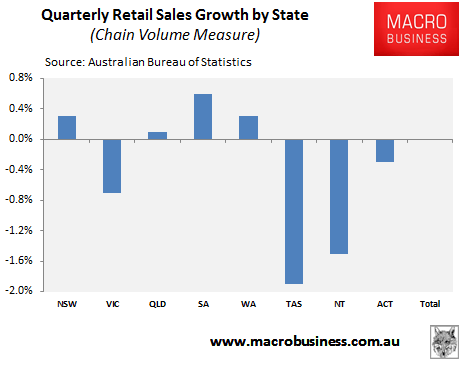
Retail sales are a sub-component of household consumption, which is itself the largest component in GDP. It is volumes that matter for GDP so the zero quarterly result, down from 2% in the March quarter, does not bode well for June quarter growth. Nor future quarters for that matter.
Most market forecasters are expecting household consumption to rebound next year but there are very good reasons reasons to think that that will be difficult.
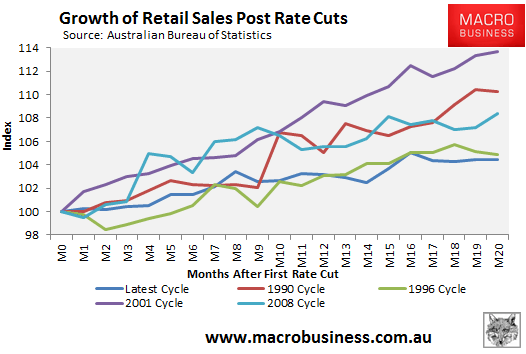
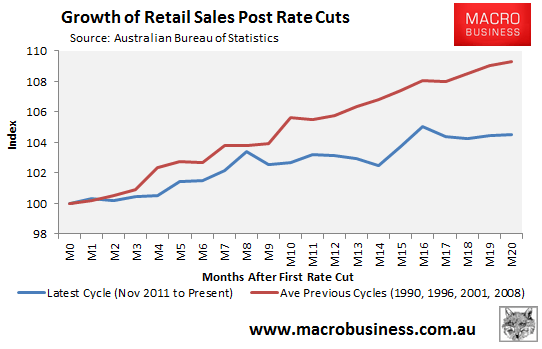
It would be an understatement to say that the response to interest rate cuts has been underwhelming. As shown below, retail sales in value terms have risen by just 4.5% since the Reserve Bank first began cutting interest rates in November 2011, roughly half the average rate of increase experienced in the past four rate-cutting cycles (see below chart).
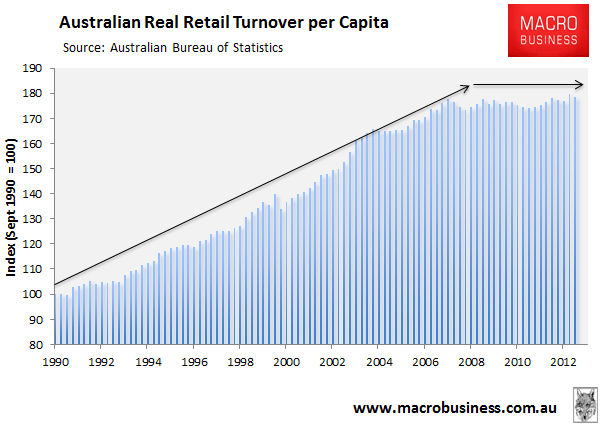
Moreover, when adjusted for both inflation and population growth, retail sales have experienced virtually no growth over the past five-and-a-half years – a big contrast to the stellar growth experienced in the previous 15-year period (see next chart).
As explained last month, there are strong reasons to believe that retail sales growth will remain soft going forward, irrespective of whether the Reserve Bank cuts interest rates further.
First, one of the key drivers of the strong growth in retail sales over the 1990s and 2000s was the inexorable rise in household debt and the run-down of household savings (see below charts).
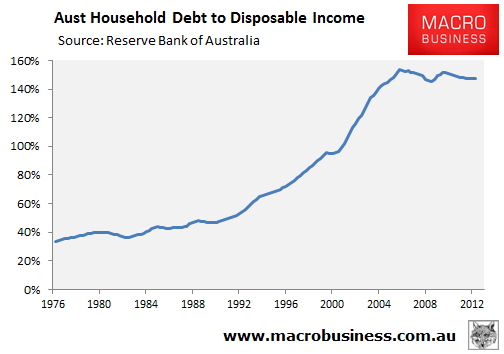
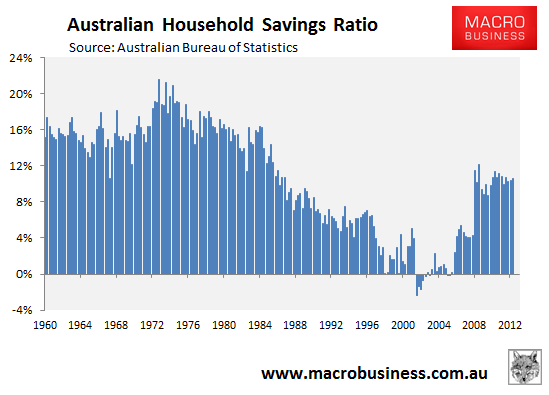
Household debt levels stabilised from 2006, whereas household savings rates have returned to long-run historical norms, suggesting that sales growth can only grow in line with disposable incomes going forward.
On this front, the news is also bad for the retail industry. As explained in detail recently, the growth in household disposable incomes over the 2000s was extraordinary, driven by the once-in-a-century surge in commodity prices and the terms-of-trade. As the terms-of-trade retraces back towards its longer-run average, it will detract from income growth, pulling down consumption and retail sales in the process.
The next chart is instructive. Despite five years of sluggish retail growth, overall retail sales have still managed to grow at a faster rate than incomes since 2000 – incomes that were highly inflated by the one-off boom in commodity prices (see next chart).
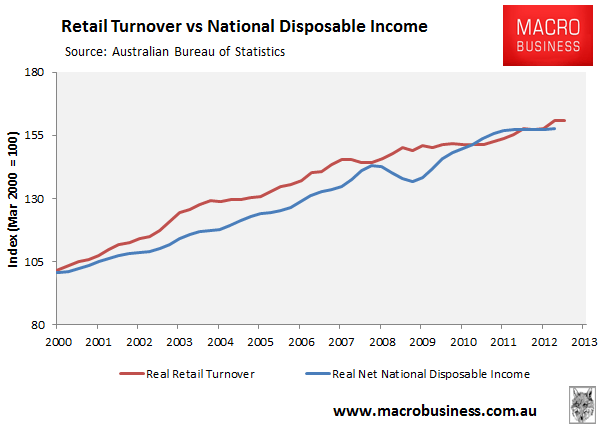
In short, retailers, economists and policy makers will have to get accustomed to a lower growth future.
unconventionaleconomist@hotmail.com
