

Japan’s fourth quarter GDP results registered a slowing of growth to 0.6% over the June quarter (2.4% annualised rate), from 0.9% (3.6% annualised) in the March quarter. It also missed analysts’ expectations of 0.9% quarterly growth (see next chart).
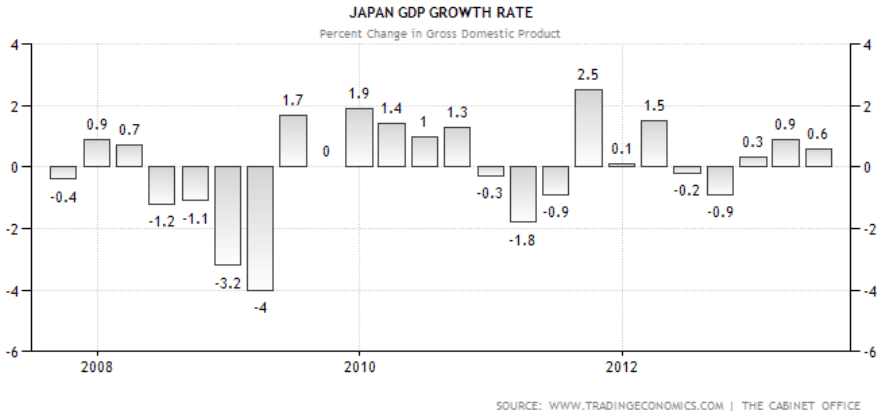
The result has cast doubt on whether Japan’s Prime Minister, Shinzo Abe’s, policies of boosting the supply of money in the economy and raising government spending (known as “Abenomics”) will succeed in boosting the economy over the long-term beyond merely weakening the yen and boosting profits for Japan’s exporters.
While still early days, immediate data does not appear encouraging. Industrial production pulled-back in June (see next chart).
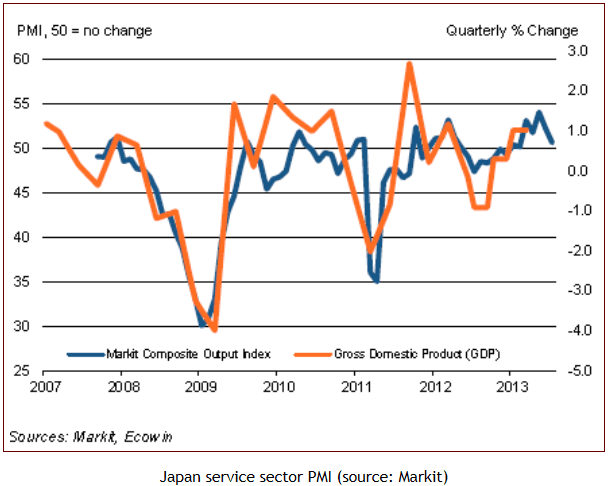
Whereas Japan’s service sector sentiment index fell for the fourth straight month in July, according to Reuters.
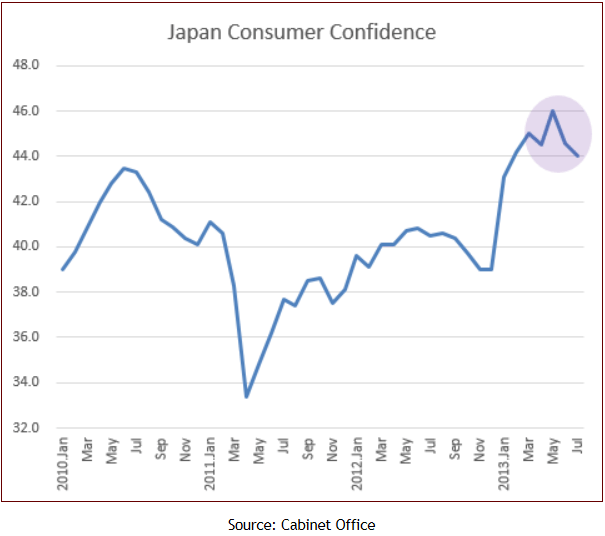
And consumer sentiment has also taken a dip (see next chart).
The longer-term outlook for Japan’s economy still looks precarious. Japanese public debt has just hit a record quadrillion yen (i.e. 1,000,000,000,000,000) – twice the size of the economy – just as its dependency ratio is set to worsen materially over coming decades as the population ages (see next chart),
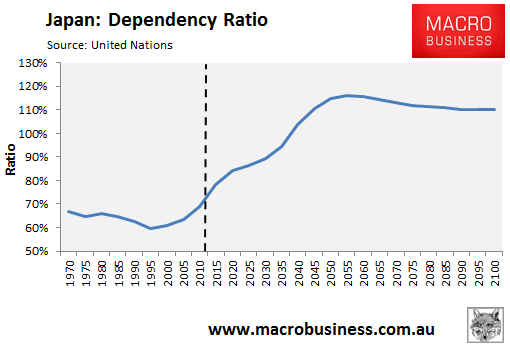
Accordingly, the Japanese Government is facing extreme fiscal headwinds as its ever diminishing workforce is called on to finance an ever growing army of aged citizens.
In a move clearly aimed at increasing tax revenues from retirees and restoring the budget, the Japanese Government has committed to raising its sales tax in April 2014 to 8% from 5%, and then to 10% in October 2015. While the plan looks like a necessary evil, in light of the growing public debt and ageing population, it also risks stifling Japan’s fledgling economic recovery.
unconventionaleconomist@hotmail.com
