
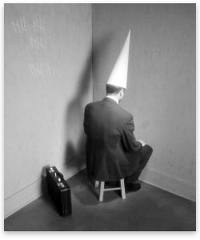
Gosh, this from the Kouk this morning:
As always, economics and economic policy management will be dominant issues in the election campaign. This means that each data release during the campaign will be scrutinised – and no doubt under the mantra that strong data is good for the government and weak data bad.
The risk for having the election a little later is that the current cyclical softening in economic conditions will translate to softer jobs data and possibly a weaker GDP result.
The Australian Bureau of Statistics is scheduled to release the June quarter GDP on September 4 and early indications suggest GDP growth could be as low as 0.5 per cent for the quarter, which would see annual GDP growth edge back to around 2.4 per cent. This is not a problem from a big-picture macroeconomic perspective, but in the optics of an election campaign, a below trend GDP growth rate is not particularly helpful to the government. It may have been better to go on August 31 to avoid this complication.
As things stand the GDP data will be driven by solid gains in export volumes; housing construction is on the rise and household consumption is expanding, albeit at a moderate pace. Business investment is likely to have fallen and at this stage, to a quarterly GDP result around 0.7 per while 2.7 per cent for the year is likely. The government would welcome this. Anything this strong or even stronger would be a boost to the government while anything below 2.5 per cent would see the Opposition crank up its negative take on economic management.
I have no idea if the Government actually believes this conventional claptrap, perhaps it does given the fiscal cuts it is pursuing, but it is diametrically wrong both economically and politically.
Economic weakness will be a huge advantage to the incumbent government if handled correctly. The Opposition has less credibility in times of economic uncertainty than it does in times of prosperity. It has spent the last six years painting itself into a corner on austerity, whining about every stimulus policy and ceaselessly berating government for failing to run surpluses. If it has one single fact tattooed to its forehead it is this: SURPLUS RULES! (Please don’t accuse me of bias here, this is an analysis of politics).
Compare this with how the Government can represent itself, steering the economy through the Great Recession with little local consequence (waste or not). It has also made a promising start on its “post-mining boom” narrative, which is far more favourable than the “perpetual surplus” narrative of the LNP if data continues to sour. (Again, no bias, this is an analysis of politics).
Nor is the nation the idiot that the Kouk seems to think it is. Households know that Australia is better but not different to other Western nations. That is why they are saving their butts off. They also understand some very simple economic truths. Europe has taken the path of austerity into recession and chaos and the US and UK have not (or, at least, much less s0). How hard would it be to paint the LNP as austerity nutters? Pretty damn easy.
Think back to when Paul Keating won the un-winnable election in 1993. Fresh out of recession and bristling with rage against Keating, the electorate nonetheless retained him. They did so owing to the combination of a GST scare campaign (read austerity policy) and uncertain economic circumstances.
Elections are won by occupying the middle ground and pushing your opponent off of it. It can be on just one issue. In this election it is leadership for Labor. Labor can make it austerity for the LNP.
Put is this way. Labor can spend the next six weeks looking like the frenetic and politically motivated narcissists that the LNP (and Kouk) is aiming to paint it as. Or it can spend the next four months quietly and substantially addressing the national interest and painting the LNP as paragons of teutonic austerity with no plan for the challenge ahead.
