

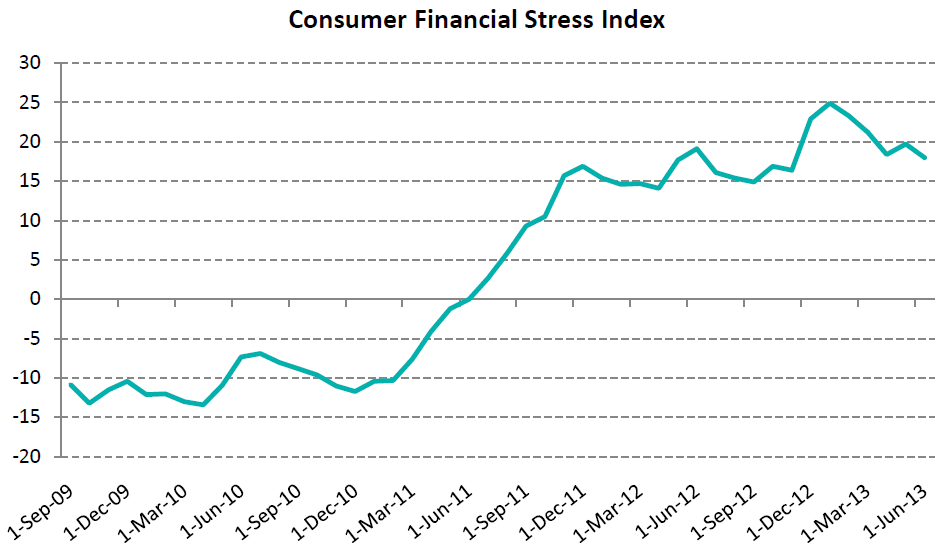
Dunn & Bradstreet has today released its consumer financial stress index (survey below), which registered an ongoing easing in financial stress levels as lower interest rates combined with increased savings.
The index, which measures consumer demand and capacity for credit, fell in June to 18.0 points, which was its lowest level since November 2012. However, financial stress levels remain at a historically elevated level, still well above the “0” threshold indicating increased stress.
According to Dunn & Bradstreet, concerns around rising unemployment have contributed to the increased savings rates and general consumer caution:
“We know that job security is a major factor in consumer confidence, and so with the unemployment rate creeping up it’s not surprising to see that people are being more conservative with their money.”
“Although this attitude doesn’t necessarily assist the position of businesses, which are eager to see people spending again, the continued focus on savings is a sign that consumers are aware of the fragility of the economy and are ensuring they consolidate their financial position.”
“While D&B’s analysis reflects this financial prudence, the financial stress index is still relatively high, a reminder that the broader economic performance is weak,” she added.
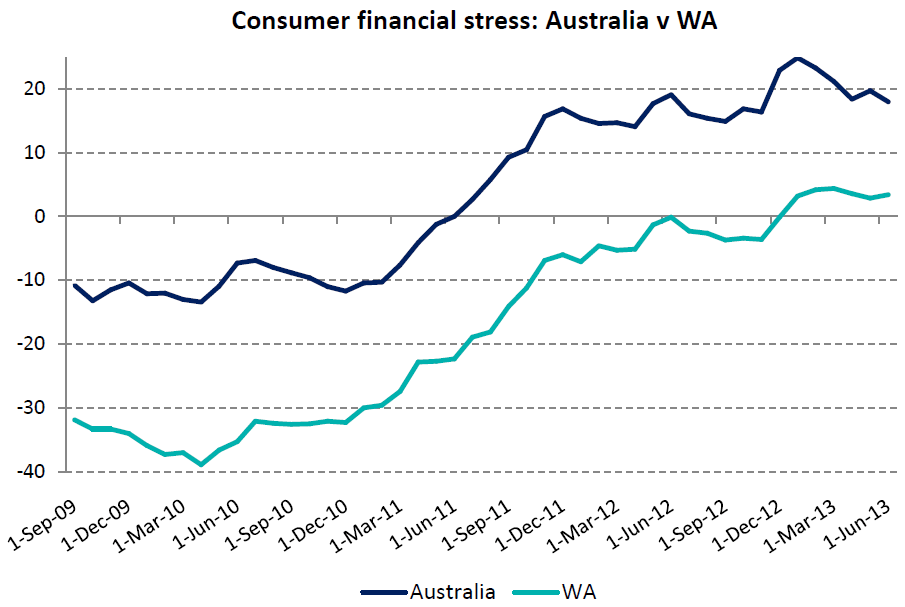
Dunn & Bradstreet also note a marked divergence in stress levels between mining and non-mining jurisdictions, as well as the marked deterioration in Western Australia (albeit from a very healthy position):
Reflecting the economy’s irregular performance, financial stress levels in mining-strong Western Australia (3.4), Queensland (9.9) and the Northern Territory (-1.4) remain well below the nation’s most populous states, New South Wales (26.8) and Victoria (23.5).
Despite its current low index and the strength of its economy through the post-GFC years, however, Western Australia’s financial stress level is trending upwards. During June it was the only state to experience a rise in the financial stress index, which across 12 months has increased from -0.1 points to 3.4 points.
The movement in the WA financial stress index parallels the state’s increasing unemployment rate, which has been creeping upwards since mid-2012. According to the ABS, the June 2013 unemployment rate in WA was 4.9 per cent, compared to 3.5 per cent the previous year.
Full media release below.
Stress Levels Ease as Savings Swell – Dun & Bradstreet Consumer Financial Stress Index
