
The Australian Bureau of Statistics (ABS) has just released trade data for the month of December, with Australia’s trade deficit decreasing to a seasonally-adjusted $427 million, from $2,788 million in November (revised upwards from $2,637 million).
It was the twelfth consecutive month that Australia has recorded a monthly trade deficit (see below chart).
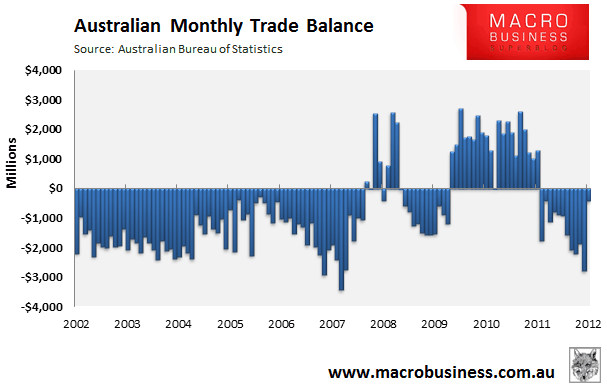
In seasonally adjusted terms, exports rose $648 million (+3%) to $25,381 million. The increase in exports was supported by a $1,713 million (6%) decrease in imports to $25,808 million, mostly on the back of lower capital goods imports (-$1,196 million) .
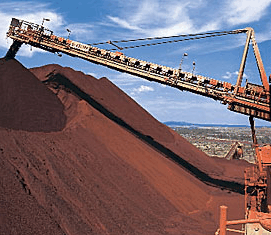
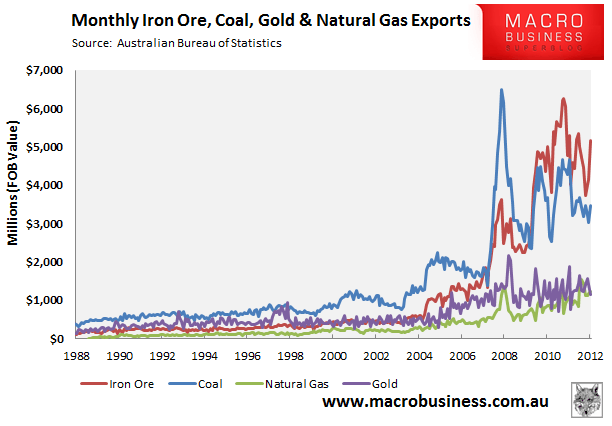
Australia’s two major export commodities – iron ore (23% share) and coal (16% share) – rose by $995 million and $436 million respectively. Gas exports (5% share) also rose marginally (+$38 million), whereas Australia’s fourth biggest export – gold (5% share) – fell by -$258 million over the month (see below chart).
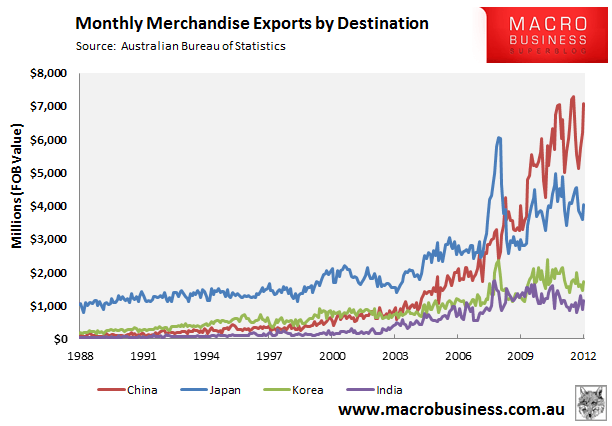
Exports to China continue to rebound, rising by $866 million (+14%) over the month, taking its share of total exports to 32%. Exports to the three other major markets – Japan (+$452 million), Korea (+$262 million) and India (+$292 million) – also rose over the month of December (see below chart).
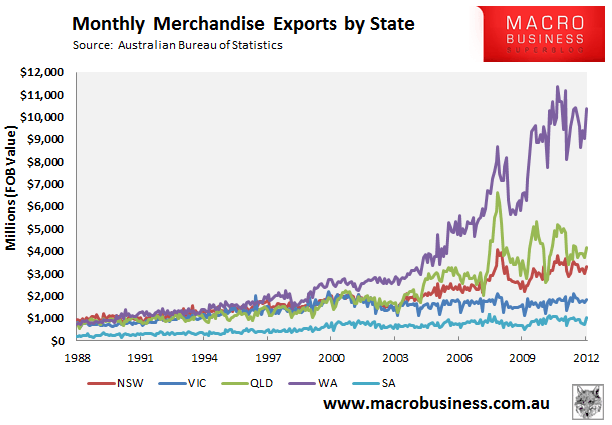
Western Australia continues to dominate the nation’s exports. It alone accounted for 47% of Australia’s merchandise exports in December, much of which was iron ore (see below chart).
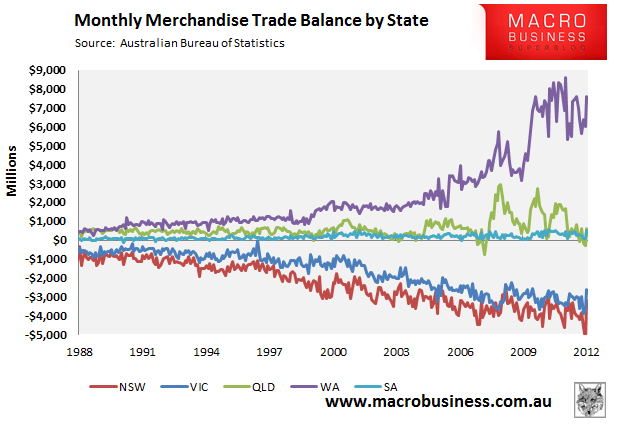
Western Australia also continues to hold-up Australia’s trade balance, recording a whopping surplus of $7,598 million (+26%) in December, again mostly on the back of iron ore exports (see below chart).
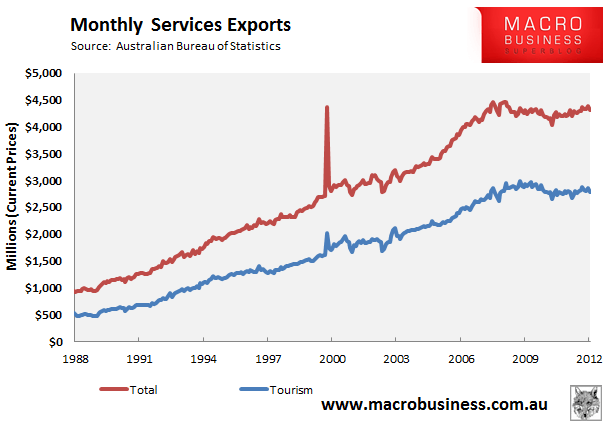
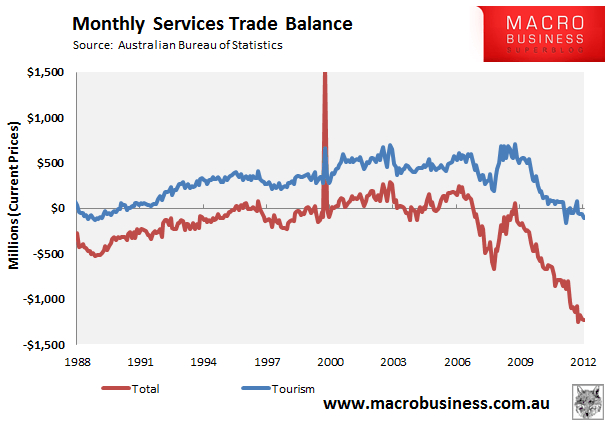
Finally, Australia’s services trade balance deteriorated slightly in December (-$12 million), but has essentially stabilised over the past four months after a horror run since late-2008 on account of the high Australian dollar (see below charts).
Overall, this is a very good report, which reflects the resurgence of both the iron ore price and the Chinese economy.
unconventionaleconomist@hotmail.com
