

As reported by the Houses & Holes earlier, the Australian Bureau of Statistics (ABS) has released labour force data for the month of November, which reported a seasonally-adjusted decrease in the headline unemployment rate to 5.2% from 5.4% in October, as well as an increase in the total number of jobs across the economy.
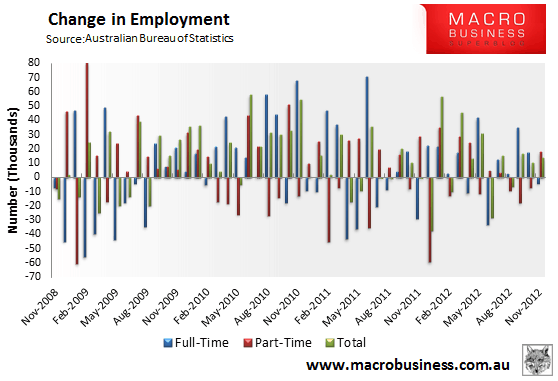
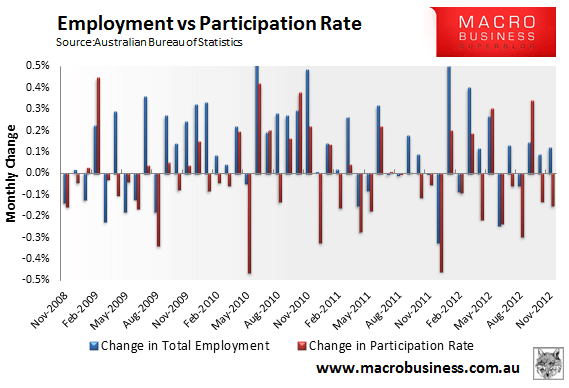
The economy added 13,900 (0.1%) jobs over the month, with the loss of -4,200 full-time jobs more than offset by a 18,100 increase in part-time jobs. The labour force participation rate also fell slightly to 65.1% from 65.2% (see below charts).
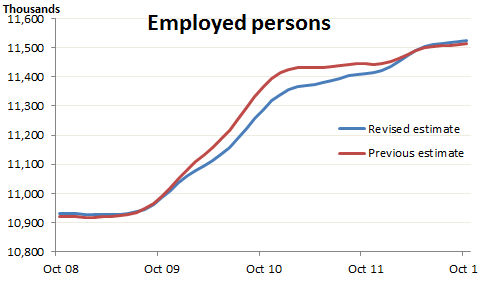
Interestingly, the ABS has revised lower its jobs growth estimates from 2009 and 2010, and revised upwards jobs growth in 2011 (chart from Matt Cowgill via Twitter):
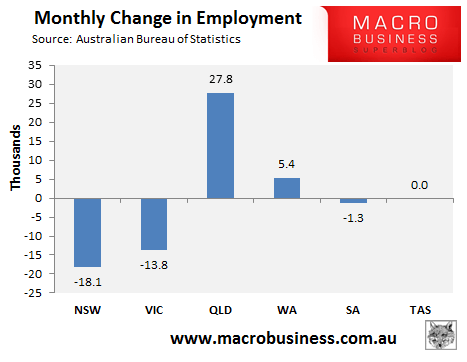
Jobs growth was mixed across states in November, with losses in the non-mining states offset by jobs creation the mining states:
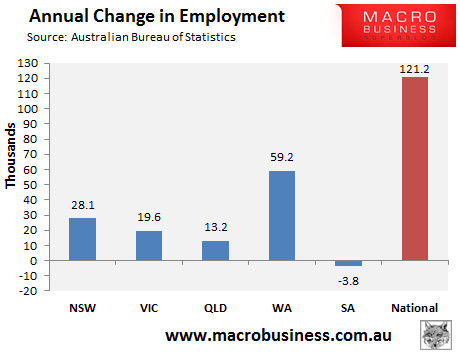
Australia’s employment growth remains fairly two speed, with Western Australia producing around half of the nation’s jobs growth over the past year. That said, all mainland states, except South Australia have gained jobs over the past year, which is an encouraging result:
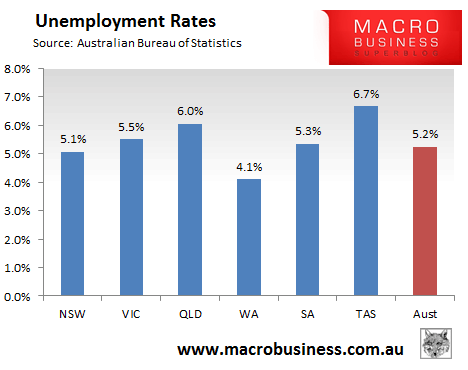
Reflecting its strong jobs growth, Western Australia’s unemployment rate is, by far, the lowest of any mainland state. New South Wales’ unemployment rate is also holding-up well:
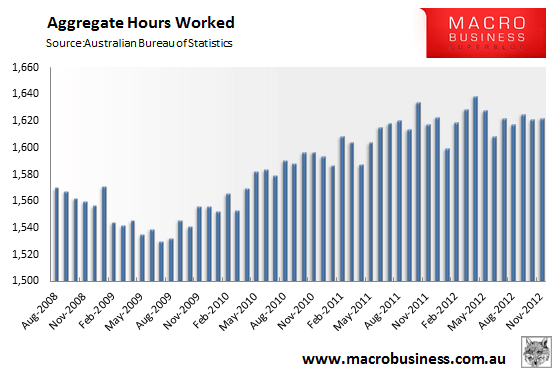
Growth in the aggregate number of hours worked was flat in the month of November at the national level, and was up marginally (+0.3%) over the past year:
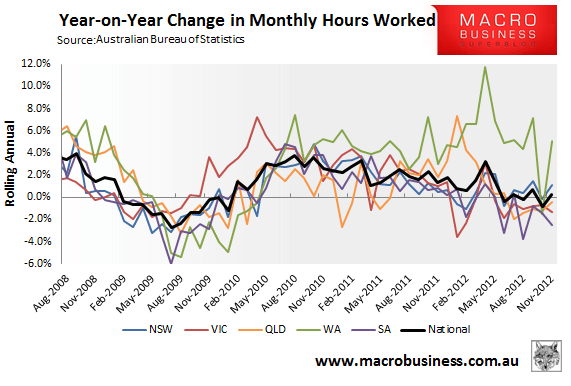
At the state level, annual growth in the aggregate number of hours worked was positive in Western Australia and New South Wales, but negative in the other mainland states:
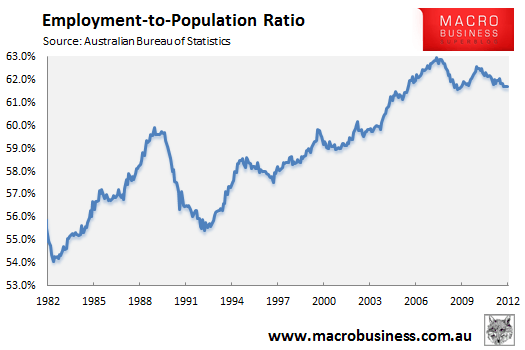
The employment-to-population ratio was flat in November at 61.7%, but remains in a clear down-trend:
Finally, the below chart summarises the annual change in the key employment aggregates:
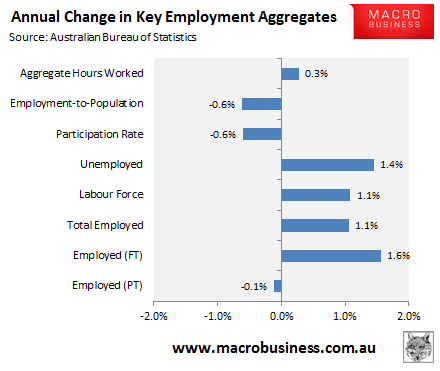
Based on this chart, you would have to conclude that the employment market is lukewarm, which is a good result given the fragile state of the global economy and the overall softness in other recently released domestic macroeconomic data.
Twitter: Leith van Onselen. Leith is the Chief Economist of Macro Investor, Australia’s independent investment newsletter covering trades, stocks, property and yield. Click for a free 21 day trial.
