

News has continued to improve a little for Australia’s tourism industry, with the release of the overseas short-term arrivals and departures figures for October showing a third consecutive monthly lift in the number of inbound tourists and a big increase over the year.
Although the number of short-term visitor arrivals increased by only 0.2% in October (seasonally-adjusted), short-term resident departures fell by -2.0% over the month, and the ratio of annual arrivals to departures also continues to improve ever so slightly after hitting 25-year lows in July 2012 (see below chart).
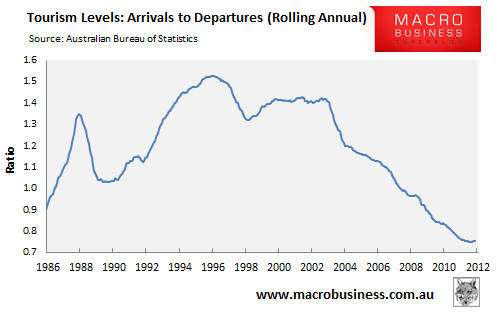
In the 12 months to October 2012, the annual number of arrivals increased by 3.8% relative to the corresponding period of the prior year, whereas departures rose by 3.5%.
And as suggested above, the slight improvement in the ratio of arrivals to departures has been caused predominantly by an increase in visitor arrivals into Australia:
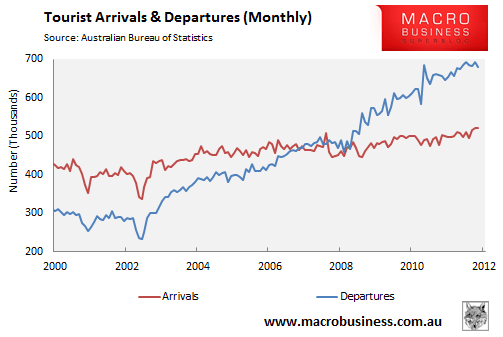
The year to September 2012 was a record for both inbound and outbound tourism. A record 6.1 million inbound tourists arrived in Australia over the year – a 26% increase on a decade ago (4.7 million). However, the number of Australians holidaying overseas also hit a record 8.1 million departures – a 131% increase on 10 years ago (3.4 million).
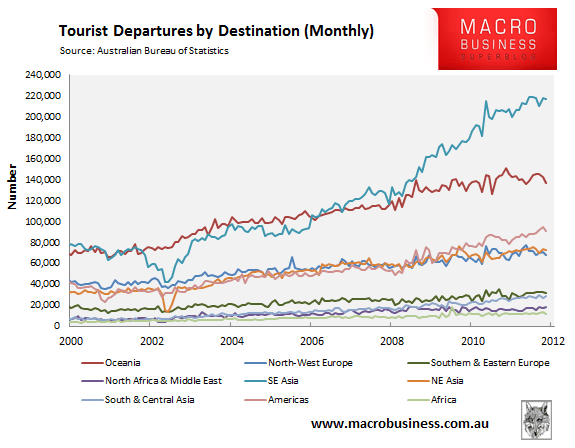
South East Asia (particularly Indonesia and Thailand) remains Australia’s favourite holiday destination, receiving a near record 216,600 visitors in October, or 32% of Australia’s total departures over the month. This was followed by Oceania (20%), the Americas (13%), North East Asia (11%) and North West Europe (10%):
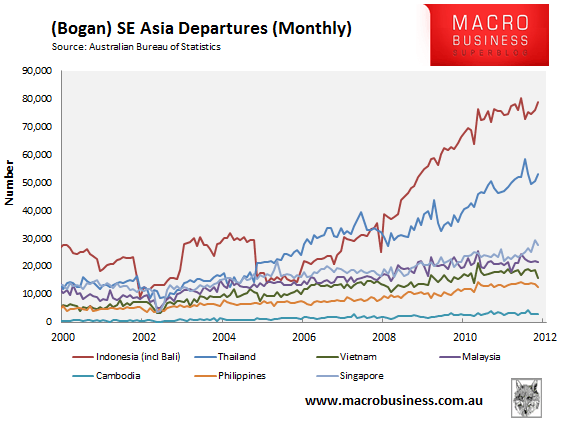
The bogan hotspots of Bali (Indonesia) and Thailand remain Australia’s favourite holiday destinations, with both destinations experiencing strong seasonally-adjusted growth over the month:
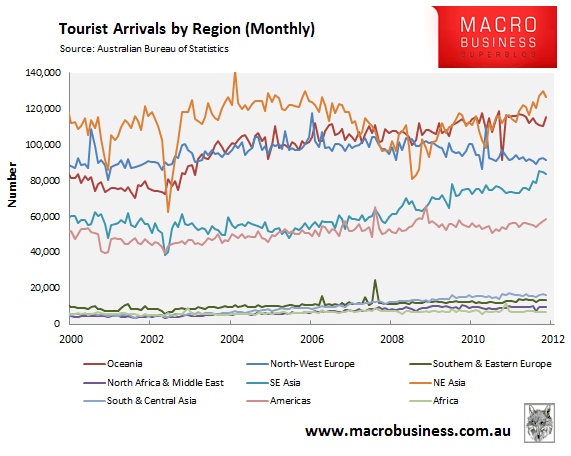
By contrast, the most foreign visitors to Australia came from NE Asia (mostly China), which accounted for 24% of arrivals in October 2012, and has recently overtaken Oceania (22%) as the leading source of inbound tourists:
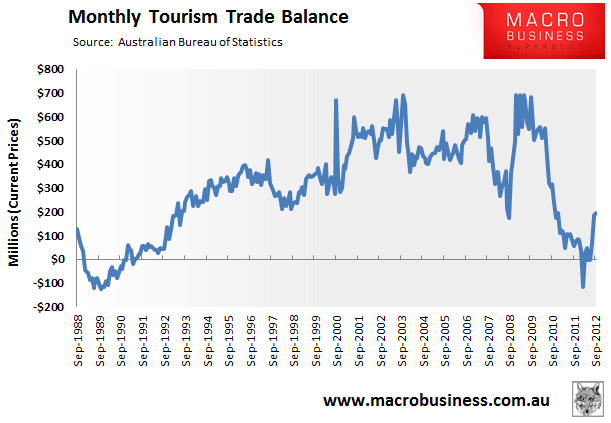
Finally, recent improvement in tourism numbers is also reflected in trade data for September, which revealed a third consecutive monthly increase in Australia’s tourism-related trade surplus to $193 million. October’s trade data will be released later today.
Twitter: Leith van Onselen. Leith is the Chief Economist of Macro Investor, Australia’s independent investment newsletter covering trades, stocks, property and yield. Click for a free 21 day trial.
