Courtesy of Mark the Graph
For eleven months of the year, the Department of Finance produces monthly financial statements. They come out somewhere between one month and three months after the conclusion of the relevant month. The last set issued was for May 2012.
Within a couple of weeks of their publication, the Reserve Bank of Australia takes these statements and compiles them into its historical series: table E1. The RBA has a monthly and annual series.
The one month of the year that is a bit tricky is June. The RBA Table E1 row for June 2012 can be reconstructed from the Final Budget Outcome document, but it takes a little bit of work. Well quite a bit of work, which I have now completed.
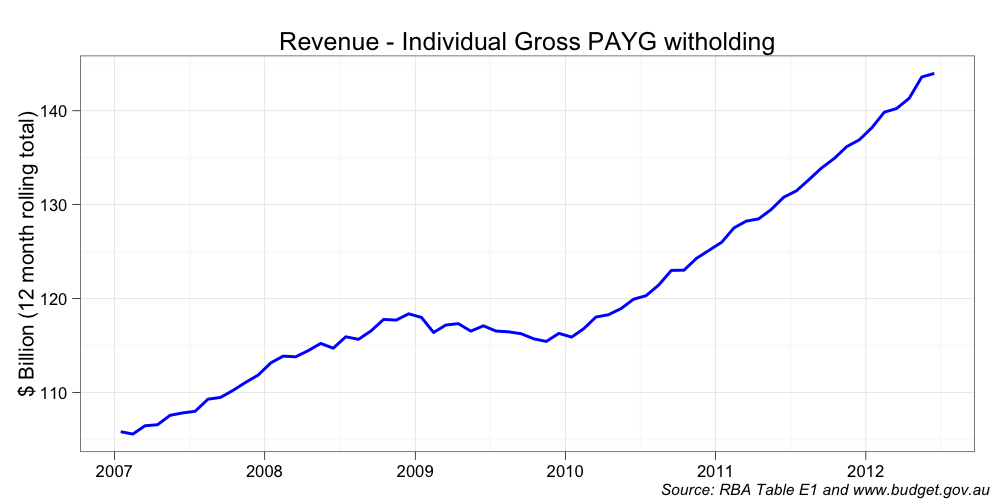
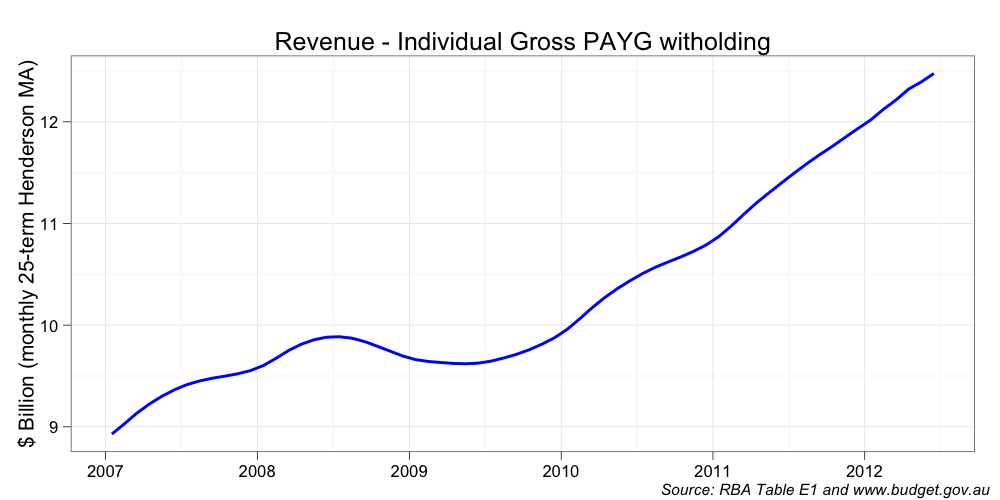
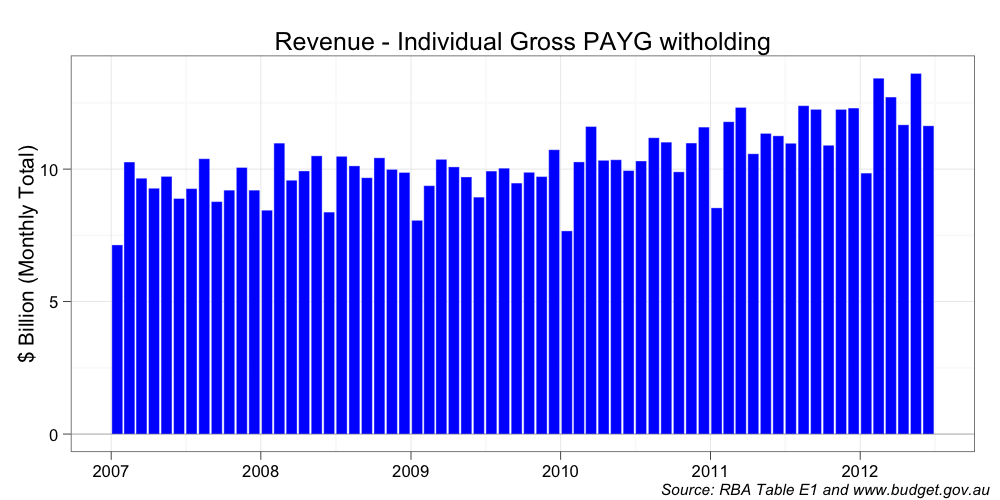
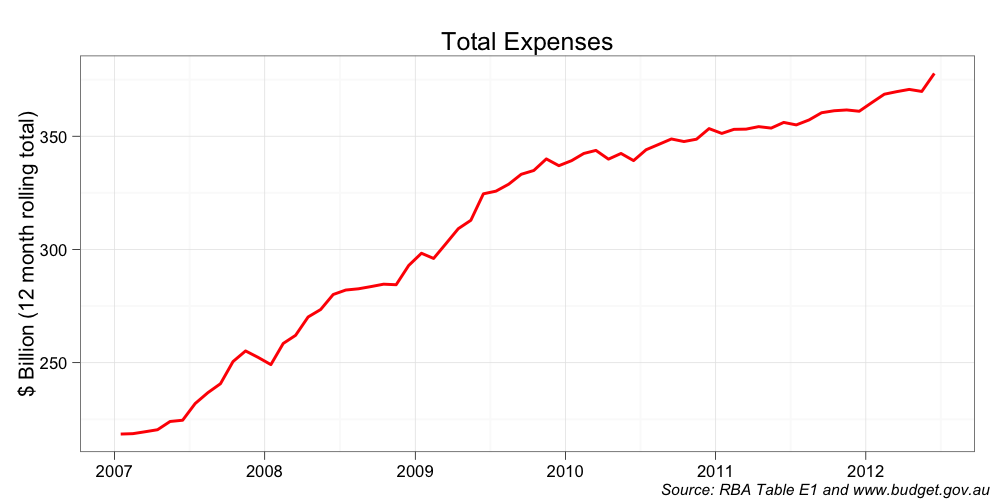
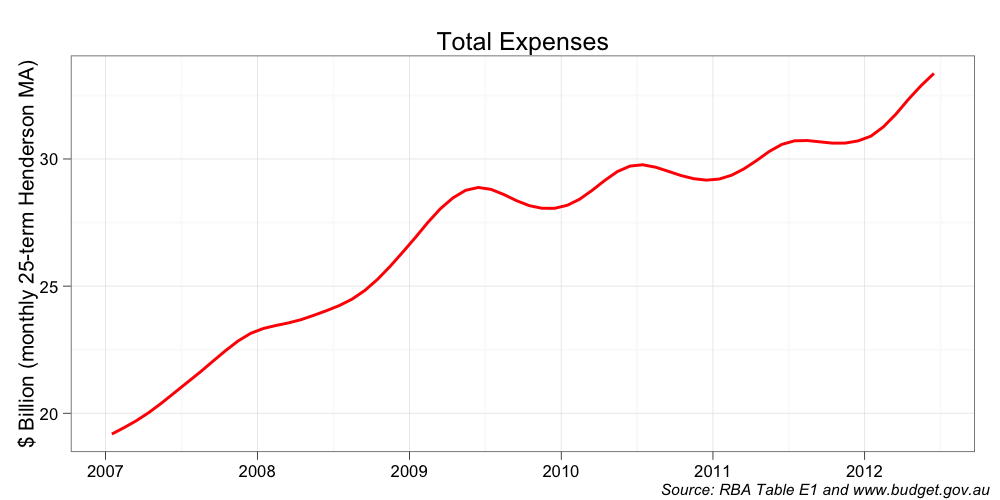
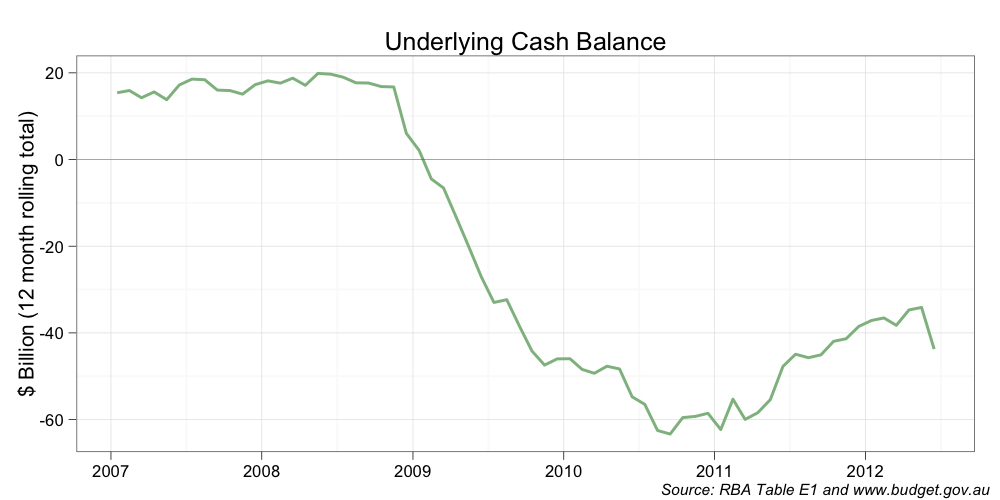
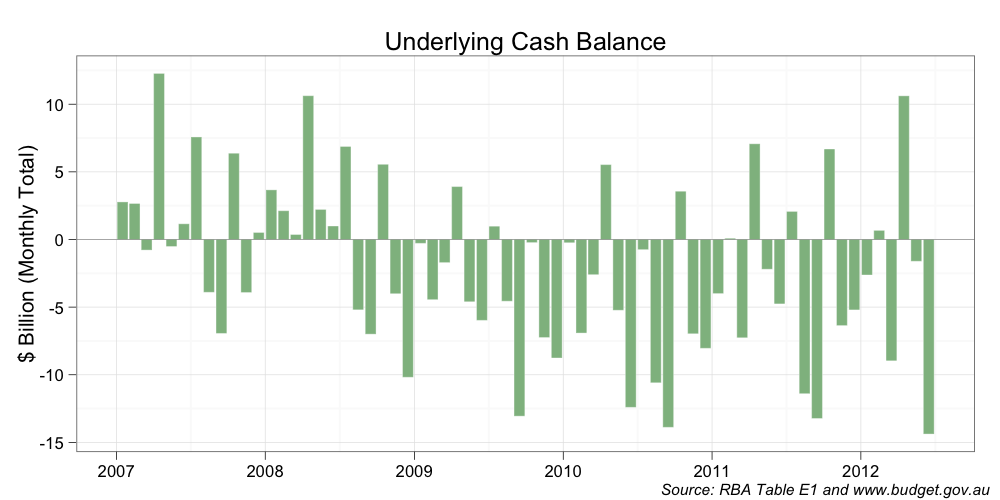
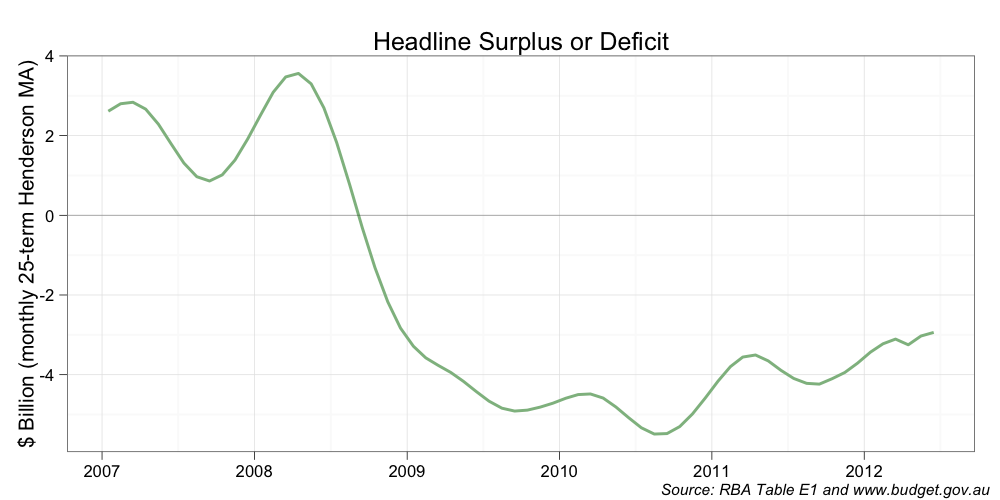
Because the data is pretty noisy, I have used both a twelve month rolling average and a 25-term Henderson Moving Average to peer into the underlying trend. I have also provided the raw monthly data as bar charts.
Let’s start with PAYG tax, which appears to be holding up reasonably well.
Company tax, on the other hand … looks a little unhealthy in June. The July reading will be important to get a handle on how this revenue stream is holding up. I suspect the Henderson moving average mechanism does not cope well with the seasonality of this data series – I might look at a seasonal decomposition next time I work with this data.
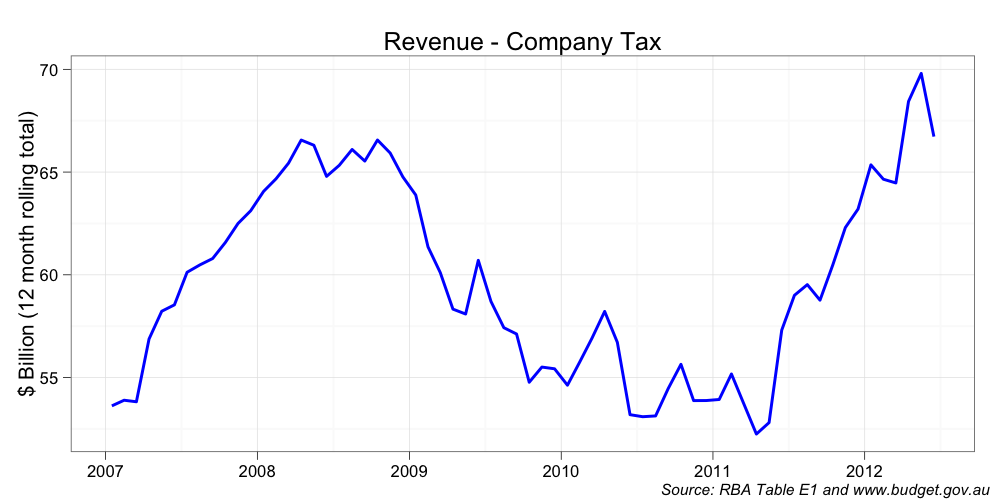

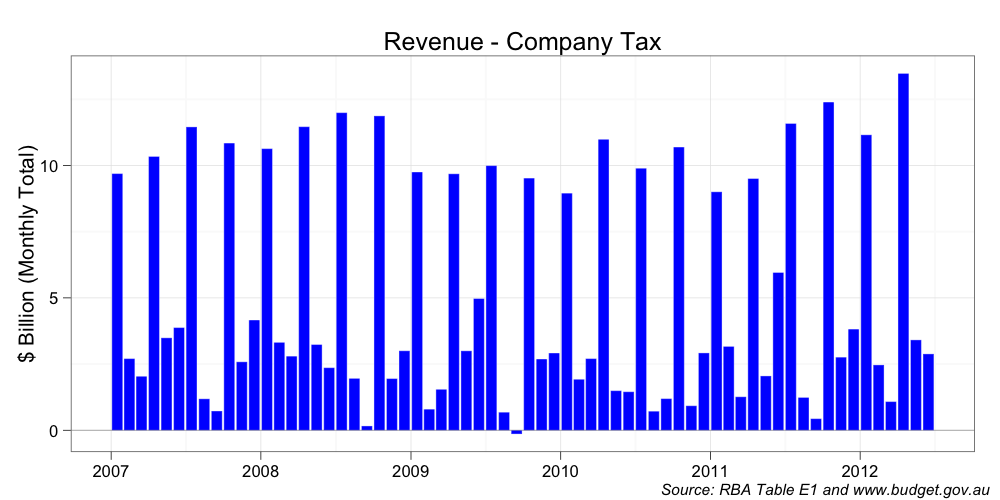
The total revenue story … might be holding. It will be worth watching this series for the next couple of months.
-line-from2007.png)
-line-from2007.png)
-bar-from2007.png)
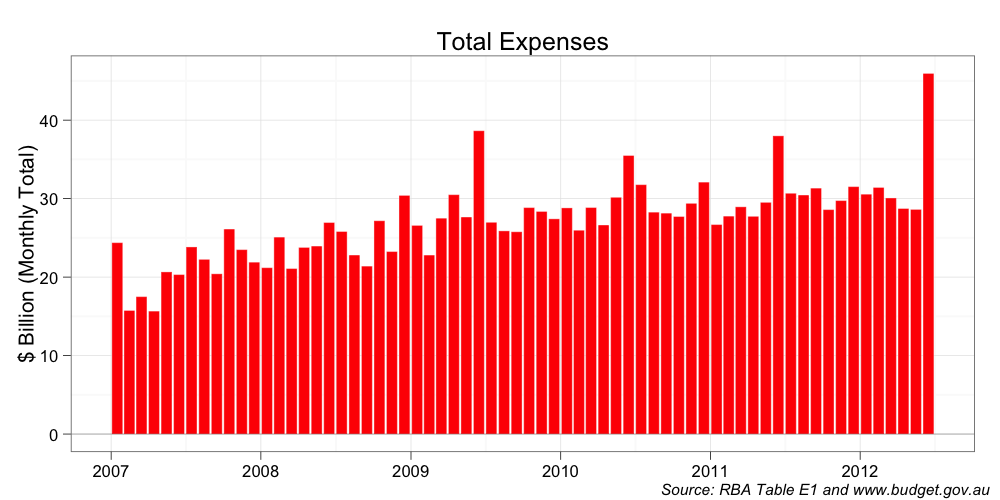
Expenses growth has slowed noticeably since 2010. Looking at the bar chart, this is the fourth June with above monthly expenses (probably additional payments and prepayments of 2012-13 items).
Looking at the underlying cash balance …

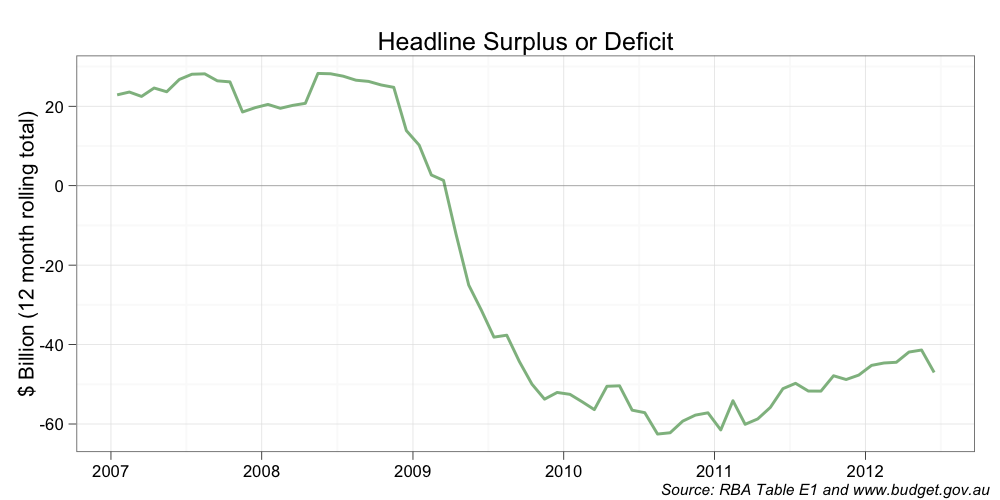
The headline surplus/deficit …

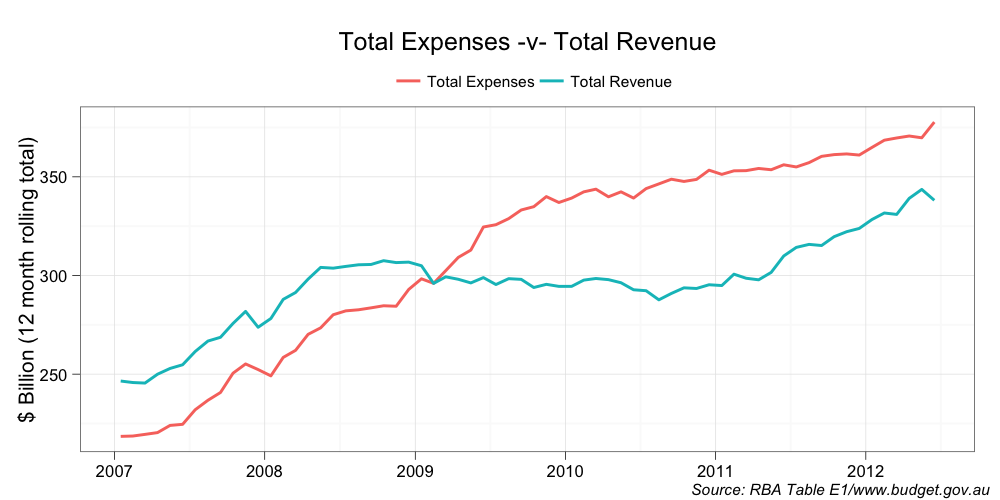
And finally, a quick comparison … we can see that revenue has been growing faster than expenses since mid 2011. If the government can keep these trends going – faster revenue growth while constraining expenditure growth – it just might just get to a balanced budget on time.