
Courtesy of Sober Look.
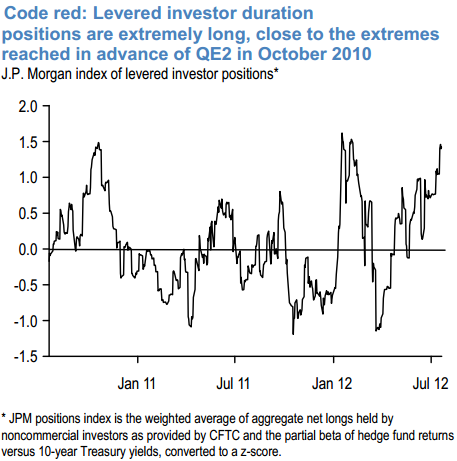
Leveraged investors such as hedge funds are piling into longer term treasuries and other rate product in anticipation of QE3. The speculative long positions are near records.
But the Fed may choose to avoid outright QE3 this year for the following reasons:
1. A spike in commodity prices that is now taking place could be exacerbated by outright asset purchases (as happened in early 2011). Higher commodity prices will make additional QE counterproductive.
2. Increases in US residential rents and rising commodity prices are yet to flow through to the CPI. The Fed will be cautions about stoking inflationary pressures.
3. Bank credit in the US is actually expanding, which was not the case prior to QE2, when the environment looked deflationary.
4. The Fed has other tools it will want to exhaust before commencing outright purchases. The Fed will save outright purchases as the last bullet in case of an extreme event such as the Eurozone losing one of its member states in a disorderly manner.
That means that these leveraged investors could find themselves on the wrong side of a crowded trade if the Fed sticks to some form of Maturity Extension Program rather than outright QE. And the unwind of this trade could end up being quite violent, pushing treasury yields considerably higher.
