
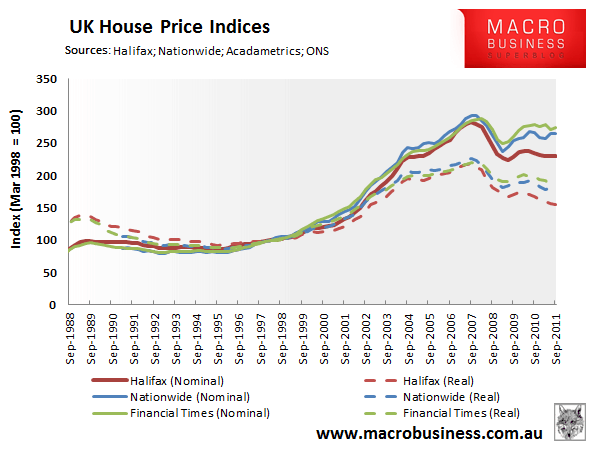
2011 was a strange year for the UK housing market. Home prices continued to track sideways, falling in real terms (see here for an explanation of the different indices):
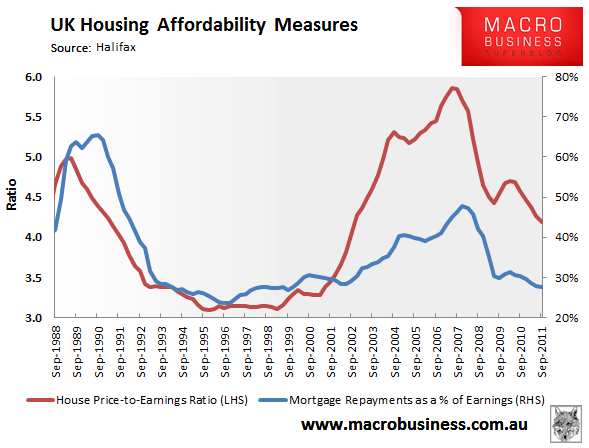
And affordability continued to improve:
Yet, the number of first home buyers fell to its lowest level since records began in 1974:
Around 187,000 people became first-time buyers in 2011, which was 7pc fewer than the preceding year and less than half the recent peak of 402,800 seen in 2006.
The figure from Halifax, the lowest recorded since it started tracking the data for the UK, will stoke concerns that a generation of Britons is locked out of the property market.
Hefty deposits mean first-time buyers are struggling to get on the housing ladder despite prices being at their most affordable in eight years, according to Halifax’s annual First-Time Buyer Review.
“Housing affordability for those looking to get on to the property ladder for the first time has improved significantly over recent years, largely as a consequence of the decline in house prices since 2007,” said Martin Ellis, the lender’s housing economist.
Nevertheless, conditions for potential first-time buyers remain tough. Difficulties raising the necessary deposit and concerns over the economic climate are preventing many from entering the market”…
Halifax says…the average first time buyer deposit in 2011 was just over £27,000 compared to less than £17,500 in 2007. As a proportion of the purchase price, the average deposit has doubled to 20pc in 2011.
In response to the decline in first time buyers, the UK Government is looking to ‘ease affordability constraints’ by launching a mortgage indemnity scheme that will enable UK lenders to drop deposit requirements for first home buyers in exchange for UK taxpayers assuming the default risk. That’s right, instead of letting home prices fall back to more affordable levels, the UK Government will instead use taxpayer funds to fuel demand by encouraging riskier borrowers into the market and, in the process, will likely exacerbate house price pressures (sound familiar, Australia?).
There is little doubt that the UK is suffering from a chronic housing affordability crisis. The fact that the average first home buyers is now 37 years old and the average deposit required is 10 times higher than two decades ago – confirms this fact.
Moreover, it is hard to deny that the UK housing situation has caused a massive transfer of wealth from young to old, evidenced by the fact that 80% of Britain’s net personal wealth (mostly housing) is owned by people aged over 50.
But policies aimed at pumping demand are not the answer to the UK’s housing woes. Rather, as explained in detail here and here, the UK Government needs to work to remove the myriad of policies that have placed a straightjacket on land/housing supply and, in the process, driven prices to highly unaffordable levels and made the UK housing market prone to vicious boom/bust cycles.
unconventionaleconomist@hotmail.com
