
Advertisement
TSLombard with half of the truth.
- Inflation Credibility Collapse: Central banks’ decade-long failure to return inflation to 2% (mischaracterizing “transitory” as negative supply shocks) has destroyed credibility; markets now treat inflation as a non-negotiable threat, invalidating 2027 macro outlooks.
- Revealed Preference for >2% Inflation: Central banks exhibit explicit tolerance for sustained inflation above 2% (e.g., BOE tightening despite >3% inflation), using weak labor markets in 2024 to justify policy shifts—signaling a permanent shift from prior targets.
- Fed’s Hardening Stance & Rhetoric-Action Gap: Warsh rejects “somewhere in the twos” as sufficient, insisting on strict 2% targeting, yet incremental 25bps hikes and missed moves create market uncertainty on rate timing and volatility.
- Inflation-Labour Market Disconnect: Persistent divergence between inflation (blue) and labor market (red) metrics from Fed targets (2022–2023 peak) invalidates “Jedi central banking” narratives, exposing policy misalignment with data.
- Aggressive Quarterly Hike Cadence: Central banks may implement 25bps rate hikes every quarter until inflation stabilizes, driven by inflation/labor market dynamics—critical for rate-sensitive asset positioning (bonds, equities).
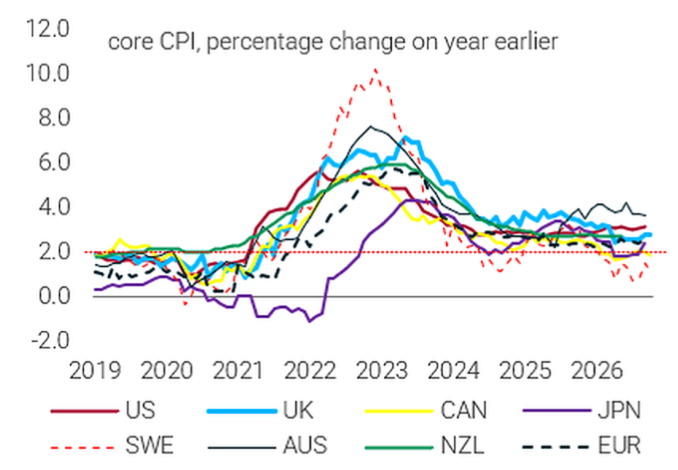
Why is this a surprise? Central banks talking tough while acting weak is the job description.
Advertisement
The full text of this article is available to MacroBusiness subscribers
Cancel at any time through our billing provider, Stripe
About the author

David Llewellyn-Smith is Chief Strategist at the MB Fund and MB Super. David is the founding publisher and editor of MacroBusiness and was the founding publisher and global economy editor of The Diplomat, the Asia Pacific's leading geo-politics and economics portal.
He is also a former gold trader and economic commentator at The Sydney Morning Herald, The Age, the ABC and Business Spectator. He is the co-author of The Great Crash of 2008 with Ross Garnaut and was the editor of the second Garnaut Climate Change Review.
Advertisement