
Advertisement
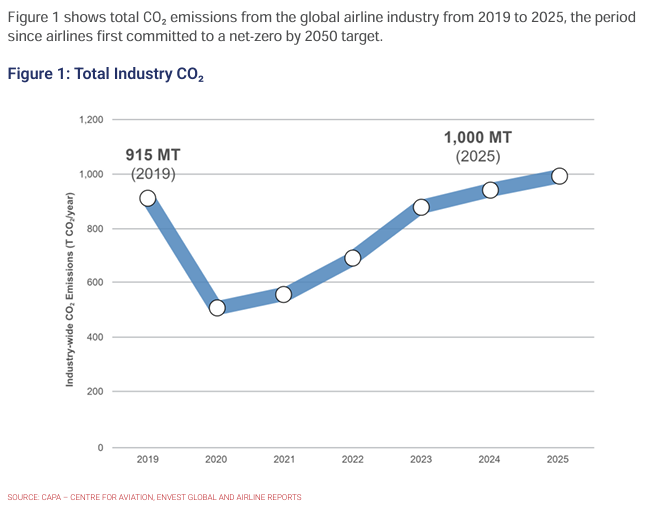
A new report from the Centre for Aviation and Envest Global has found that since 2019, carbon emissions produced by commercial airlines have increased by 10%, reaching one billion tonnes in 2025, which was the highest on record:
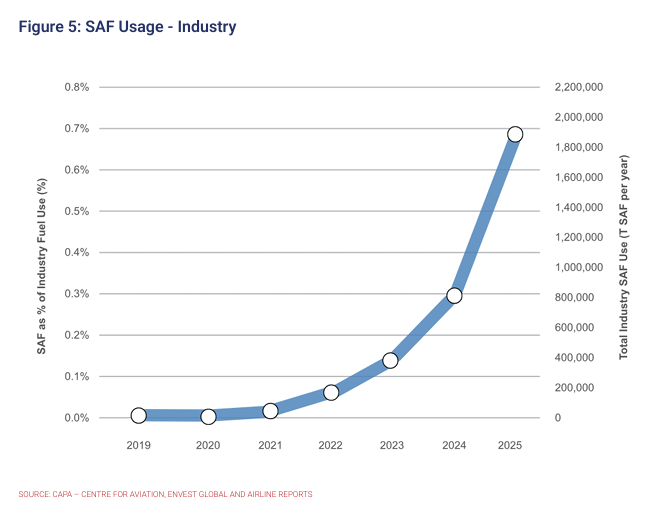
The airline sector has a target of sustainable aviation fuel (SAF) accounting for 10% of its overall fuel use by 2030. SAF is a synthetic, low‑carbon alternative to conventional kerosene-based jet fuel, made from renewable feedstocks such as used cooking oil, fats, plant oils, and various biomass or waste materials.
SAF has proven uneconomic to produce. As a result, it accounted for just 0.7% of the aviation sector’s overall fuel use in 2025:
Advertisement
The full text of this article is available to MacroBusiness subscribers
Cancel at any time through our billing provider, Stripe
About the author

Leith van Onselen is Chief Economist at the MB Fund and MB Super. He is also a co-founder of MacroBusiness.
Leith has previously worked at the Australian Treasury, Victorian Treasury and Goldman Sachs.
Advertisement