
Australian dwelling values are days away from recording their largest decline in more than 40 years of records, according to Cotality’s daily dwelling values index.
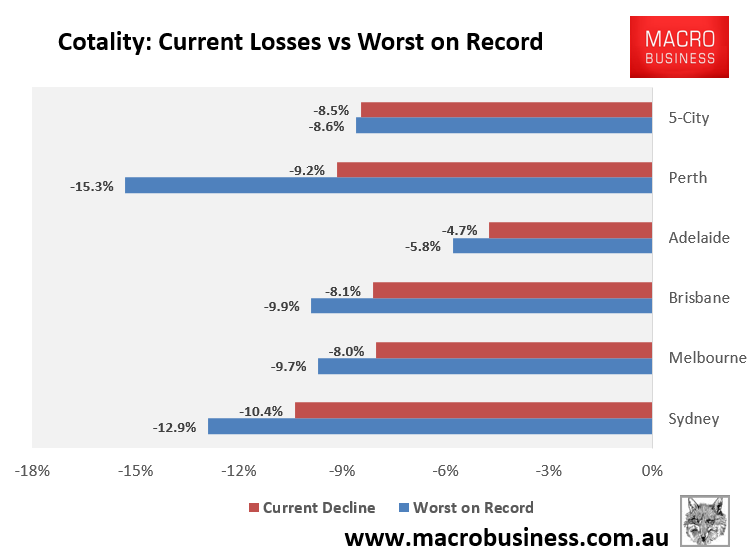
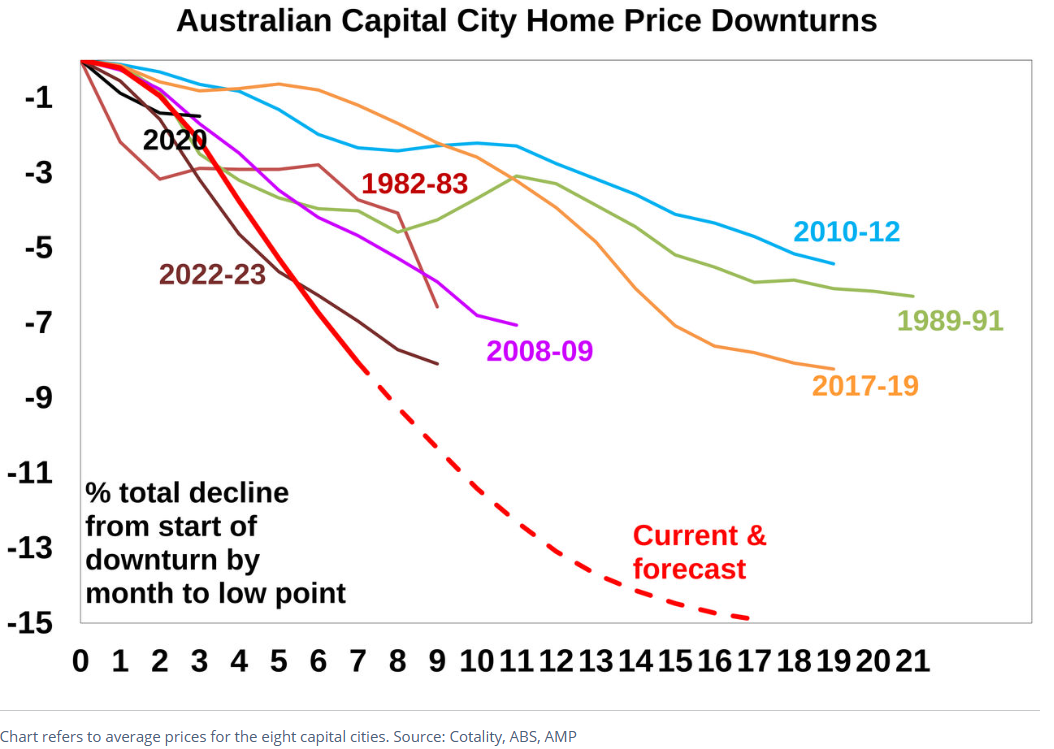
Across the five major capital city markets, values have declined by 8.5% from their 10 April 2026 peak, just a whisker below the peak decline of 8.6% between November 2017 and May 2019:
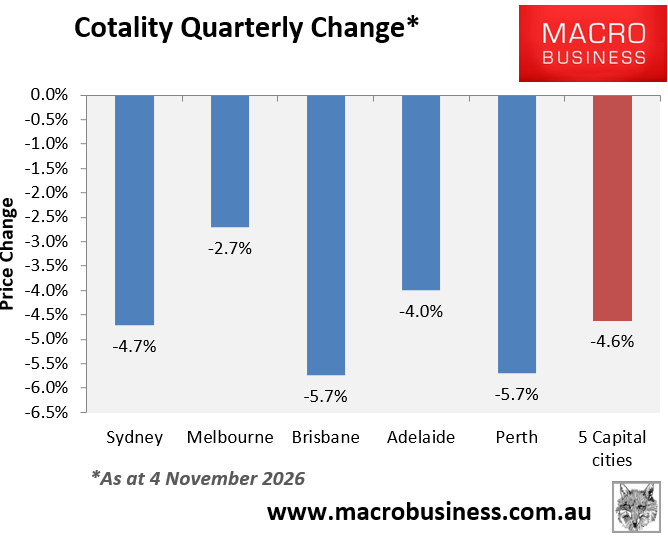
The pace of decline has also steepened, with values plummeting by 4.6% over the past quarter across the five major capital cities:
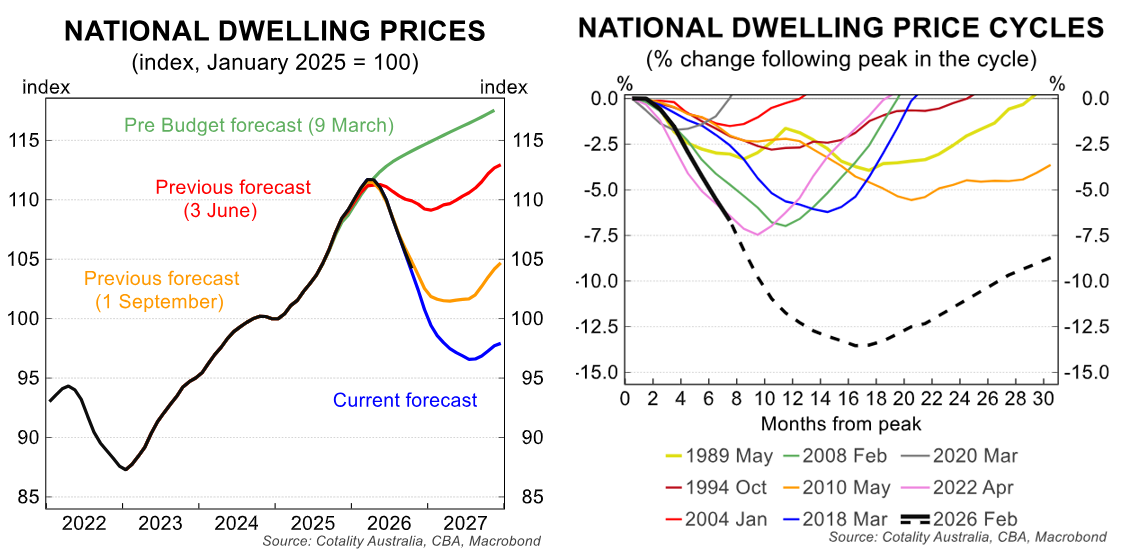
Following the Reserve Bank’s 0.25% interest rate hike on Tuesday – the fifth hike of the year, taking the rate to an 18-year high of 4.85% – various banks now anticipate a far greater decline in house prices.
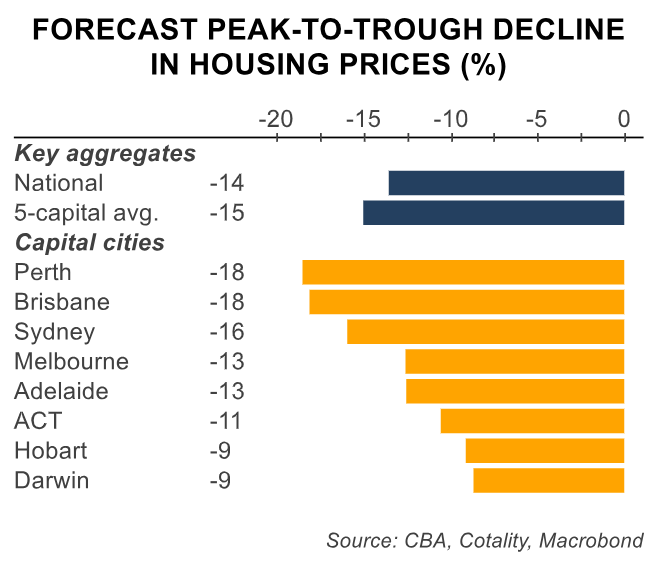
CBA now expects that national dwelling values will decline by 14% peak-to-trough, while values across the five major capital city markets will fall by 15%:
Perth (-18%), Brisbane (-18%), and Sydney (-16%) are forecast to record the greatest peak-to-trough decline:
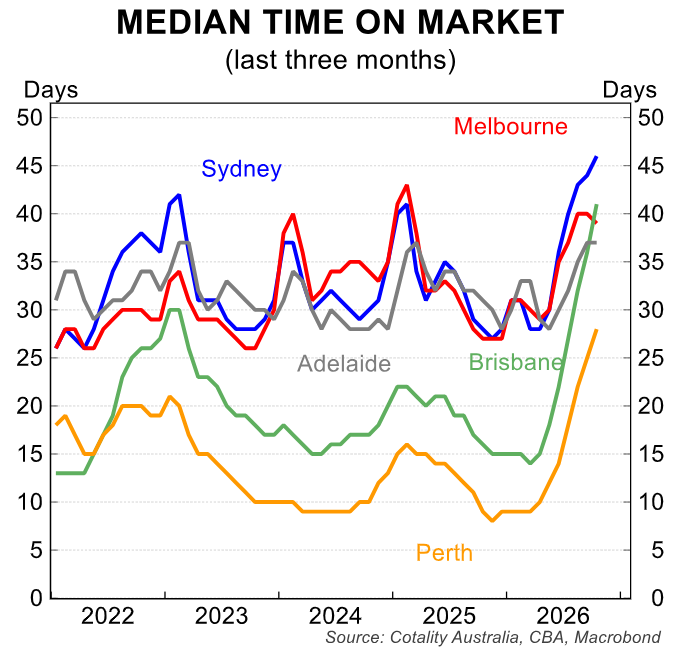
CBA notes that the median days on market have risen most in Perth and Brisbane, highlighting the weakening of demand:
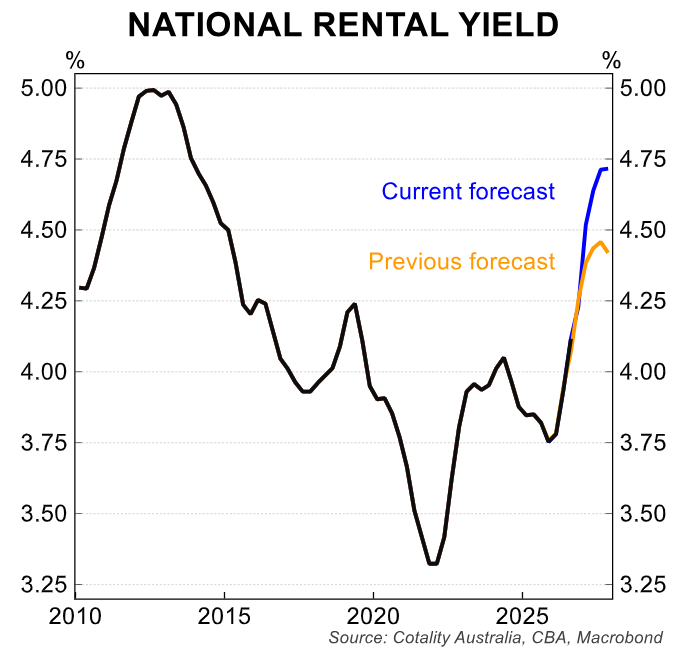
The 14% projected decline in national dwelling values is expected to lift the national gross rental yield to around 4.75%:
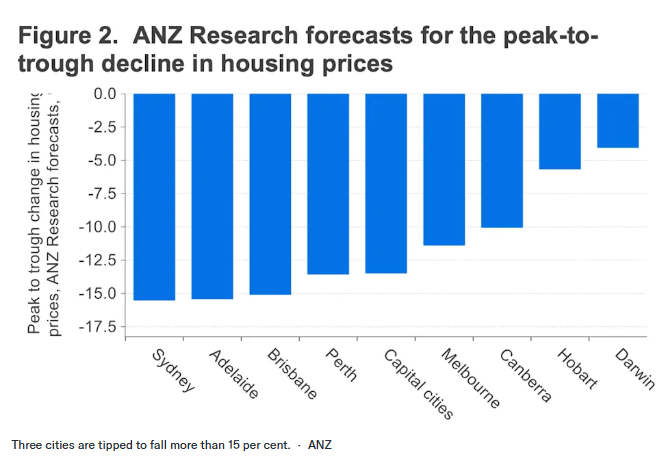
AMP and ANZ forecast a similar house price decline:
AMP chief economist Shane Oliver has also updated his forecast decline from peak and expects a 15% decline across the combined capital cities, “consistent with the perfect storm now hitting the property market”:
ANZ also last week updated its house price forecasts, tipping a 13.5% peak-to-trough decline across the capital cities, with Sydney, Adelaide and Brisbane expected to fall by more than 15%.
“The combination of rising interest rates, global uncertainty and tax policy changes has dampened sentiment”, the ANZ economists wrote. “Clearance rates have been mostly below 50% since May 2026 (when Labor handed down its budget) and various indicators, such as sentiment and time on the market, suggest demand is weak”.
“While the Sydney and Melbourne markets have been the most affected so far, there are signs that some of the smaller capitals are starting to catch up”, ANZ wrote.
The only way is down:
With dwelling values already down around 8.5% from their peak across the combined capital cities, these forecasts say we are only about 60% of the way through the downturn.
My view remains unchanged: Australia will experience a New Zealand-style house price crash, with values falling sharply over an 18-month to two-year period, then trading broadly sideways for many years and declining in real, inflation-adjusted terms.
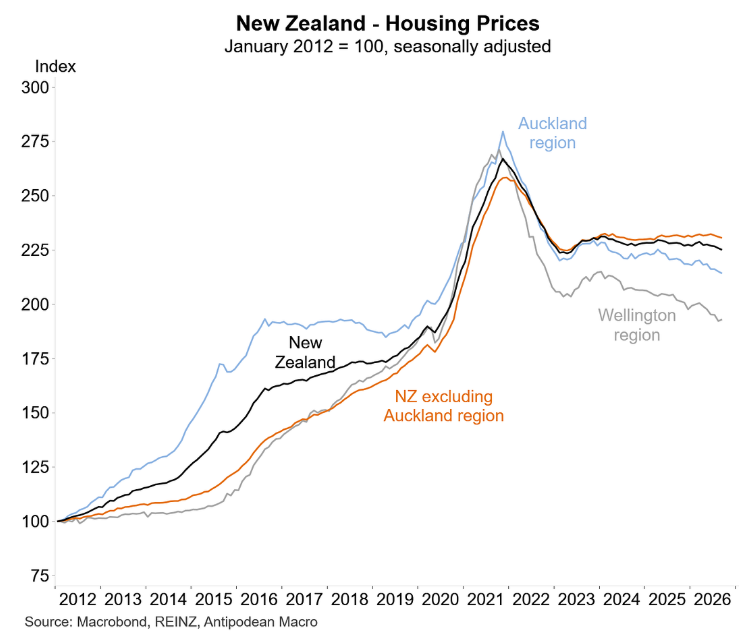
Chart from Justin Fabo (Antipodean Macro)
