
Cotality data shows that for-sale listings are piling up across Australia, up 22% across the combined capital cities over the past year, driven by a surge in older listings in Brisbane, Perth and Adelaide:
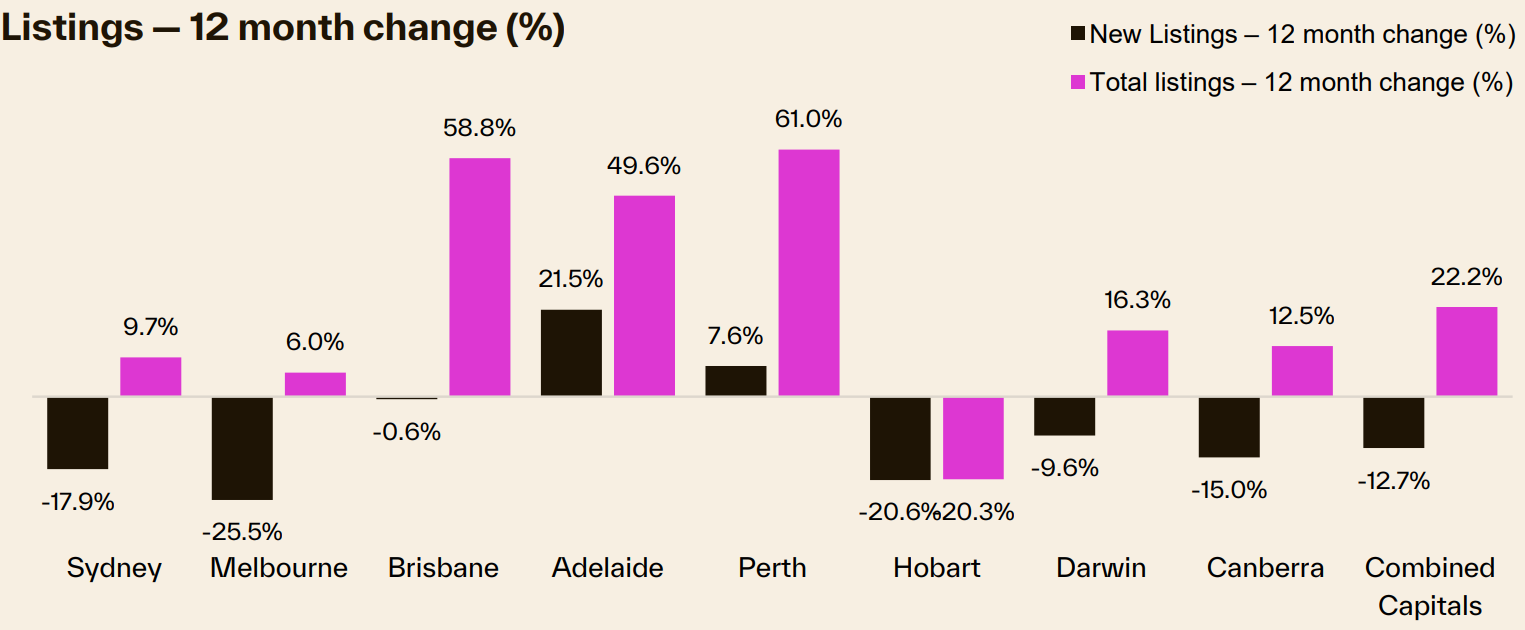
Source: Cotality
At the same time, weak buyer demand has driven housing turnover down 19.1% year-on-year and is now tracking 13.3% below the five-year average.
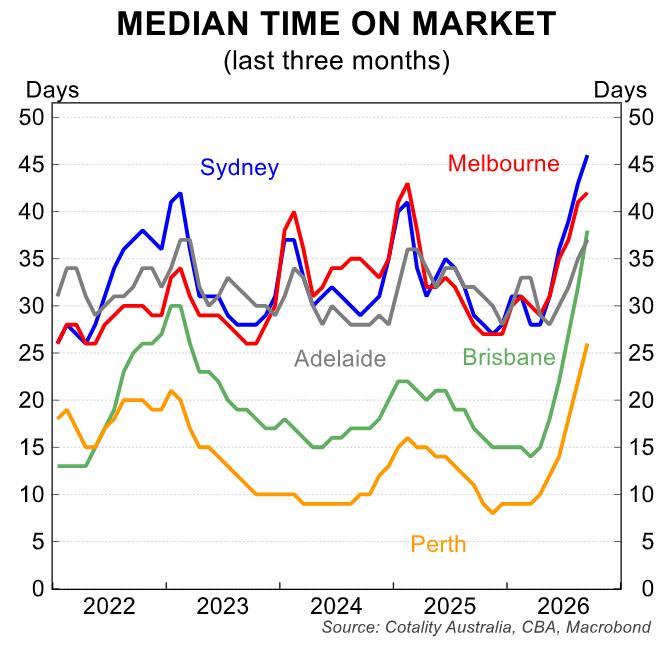
The median days on market have also lifted across all major markets, reflecting the weakening demand and rising supply:
Not surprisingly, weak buyer demand has also driven a rise in so-called ‘stale stock’, defined as homes sitting on the market for more than 180 days.
According to SQM Research, the number of old listings has risen by 10.5% over the past year, driven by increases of more than 25% across Sydney, Melbourne, and Brisbane:
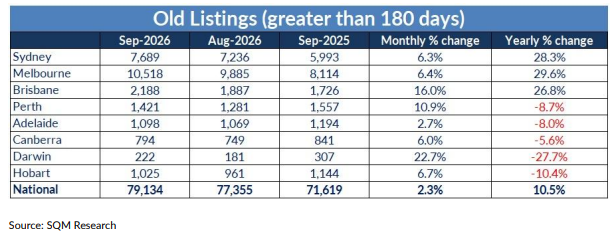
In Melbourne, more than 21% of homes listed for sale have been on the market for more than 180 days, according to SQM, compared with 18% in Sydney and more than 10% in Brisbane.
Nationally, including regional markets, 28% of homes listed for sale have been on the market for more than 180 days.
“Something has gone seriously wrong. Some people say, ‘maybe the property isn’t a good enough quality’. Well, everything has its price”, said SQM managing director Louis Christopher said to The AFR.
“Sellers need to understand in markets like this if they want to sell, they’ve got to meet the market. The market’s not catching up to them”.
“This is a symptom of a very soft and weak market, and an illustration of what happens when sellers decide they are not going to meet the buyers”, Christopher said.
Harcourts Berwick principal Brad Nicholls suggested that vendors are deluding themselves, believing that their property can achieve the same sale price as last year, even though the market has clearly shifted.
Nicholls also believes the market is the most difficult that he has seen in 30 years.
“People don’t want to think that they’re losing money. They think they’re going to put their house on the market this year, and they’ll get the price that they would have got for it last year, and they don’t want to listen to the agent saying that things have changed”, Nichols said.
“This market is the most difficult market I have ever worked in. At half of our open for inspections, we’re not having anyone. I talk to all the other agents in the southeast – that’s all the same”.
Australians need to come to terms with the fact that the 25-year housing supercycle is finished, that values have much further to fall, and that the ensuing rebound is likely to be soft.
I wouldn’t be surprised if home values in a decade aren’t much higher than today in nominal terms and have fallen further in real terms.
Indeed, this looks to be the scenario playing out in New Zealand and Canada, where real home prices have fallen by around 30% over nearly five years with no rebound in sight.
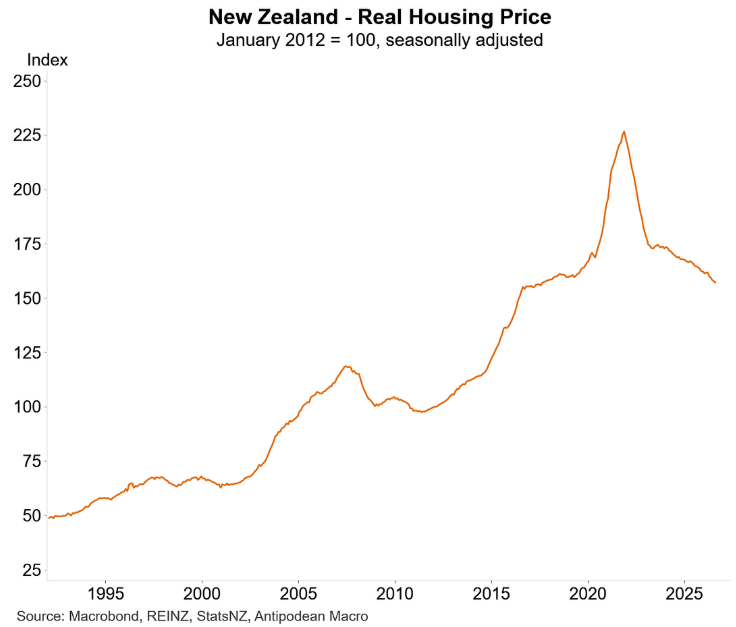
Chart from Justin Fabo (Antipodean Macro)
Listings have also swelled to decade highs in New Zealand amid chronically weak demand:
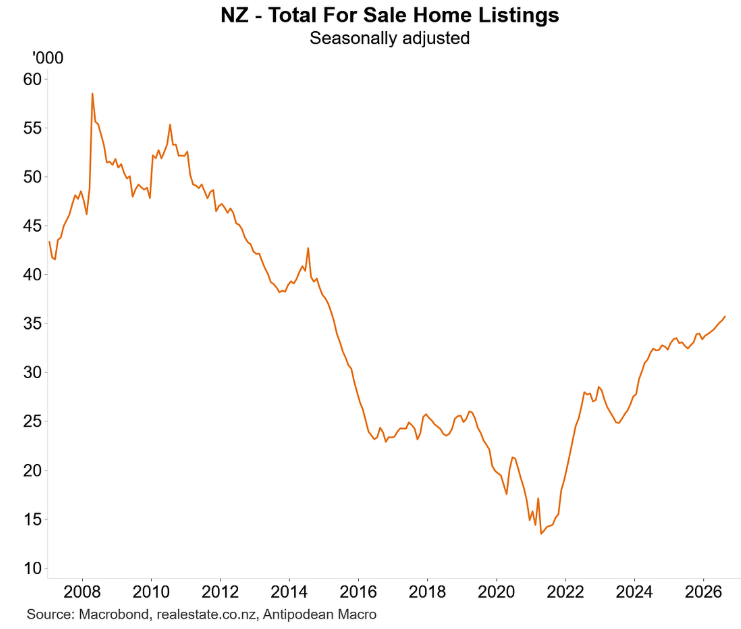
Chart from Justin Fabo (Antipodean Macro)
The reality is that Australian housing values have detached so far from incomes that a major readjustment is now required to return them to equilibrium, as seems to be occurring in New Zealand.
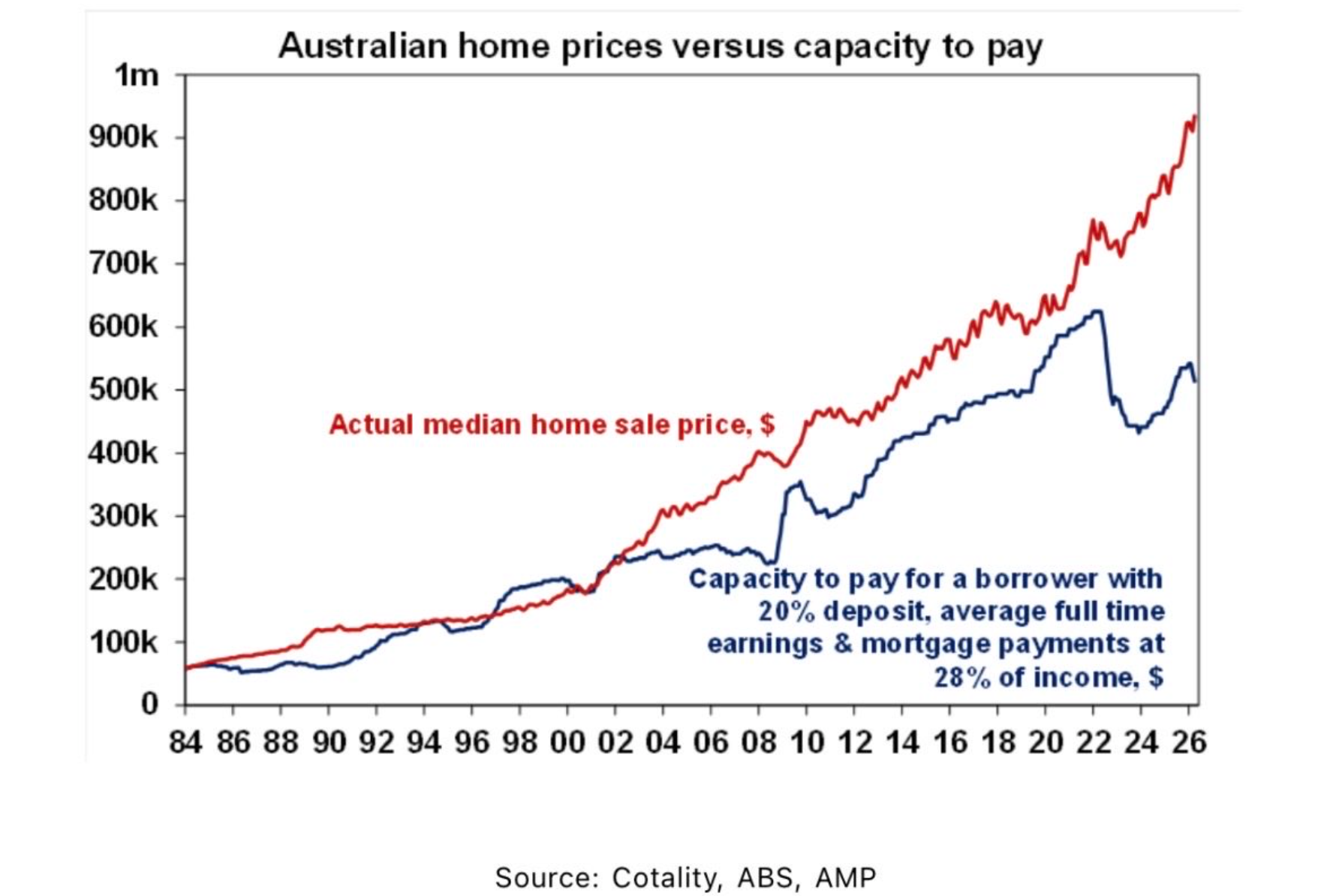
Chart from Shane Oliver (AMP)
The gap between home prices and capacity to pay must close.
