
Nobody wants to build housing in falling market
Two reports suggest Australia’s residential construction market is weakening significantly amid falling prices, rising interest rates, and the federal budget changes to negative gearing and capital gains tax.
Stockland, the country’s largest listed residential developer, reported its lowest level of housing inquiries in at least seven years. Higher interest rates, worsening affordability, rising construction costs and recent investor tax changes are causing prospective buyers to delay decisions, raising concerns about a future decline in housing construction.
Stockland reported that inquiries for new housing fell to 10,452 in the September quarter, almost half the 20,183 inquiries recorded earlier in the year and the lowest level published since at least 2020. The company views inquiries as a leading indicator of future housing sales.
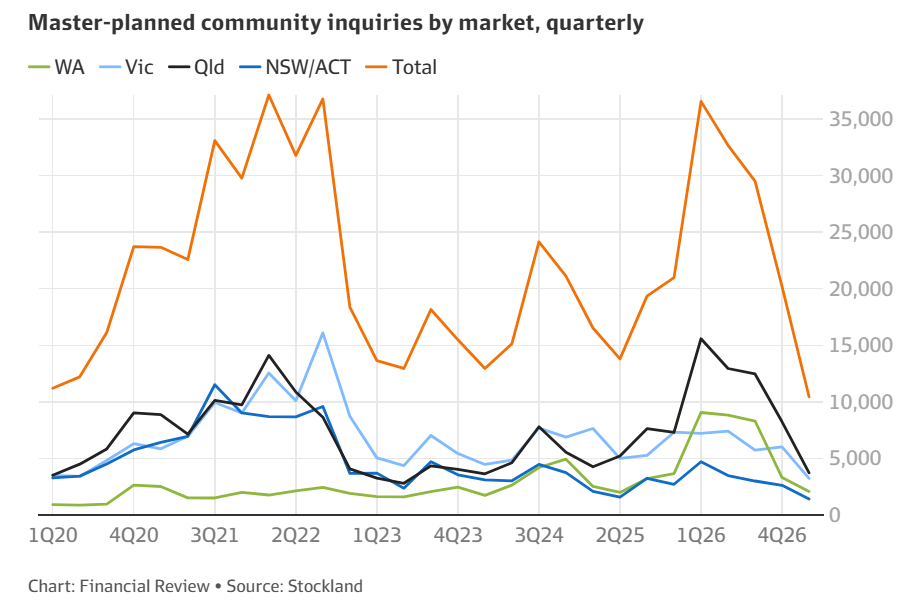
Net residential sales fell to 1,506 in the September quarter, down from 1,936 in December and 2,324 at the June-quarter peak.
According to Tarun Gupta, CEO of Stockland, buyers are facing a combination of:
- Higher interest rates.
- Cost-of-living pressures.
- Reduced housing affordability.
- Federal investor tax changes.
The company said residential demand has softened across most markets following recent rate increases and tax policy changes.
As reported on Tuesday by Tarric Brooker, the Housing Industry Association’s new home sales series fell by 17.5% in the September quarter, the weakest result in 18 months. In year-on-year terms, sales for the September quarter were down 16.4%.
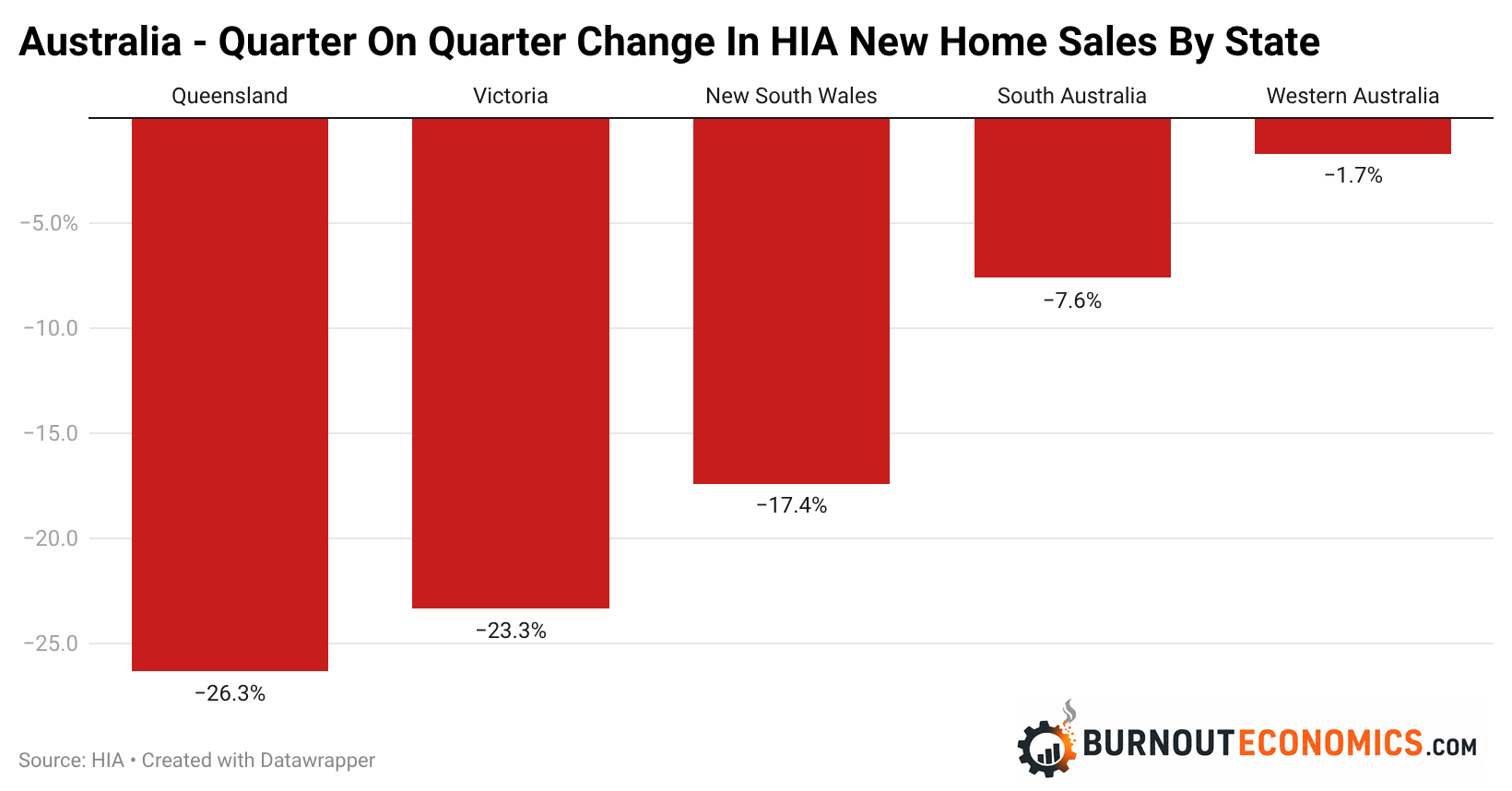
The results reinforce concerns that a significant housing construction downturn is emerging. HIA chief economist Tim Reardon said buyers are largely waiting for greater certainty before committing to new housing purchases.
Meanwhile, new mortgage data suggests that Labor’s housing tax reforms are not achieving their intended goal of redirecting investor demand towards newly built housing. Instead, investor lending has fallen sharply across both established and new housing, prompting developers to argue the reforms are reducing confidence, constraining supply and worsening rental shortages.
The May budget reforms aimed to reduce investor demand for existing homes and encourage investment in new builds through a negative-gearing carve-out, increasing supply and improving affordability.
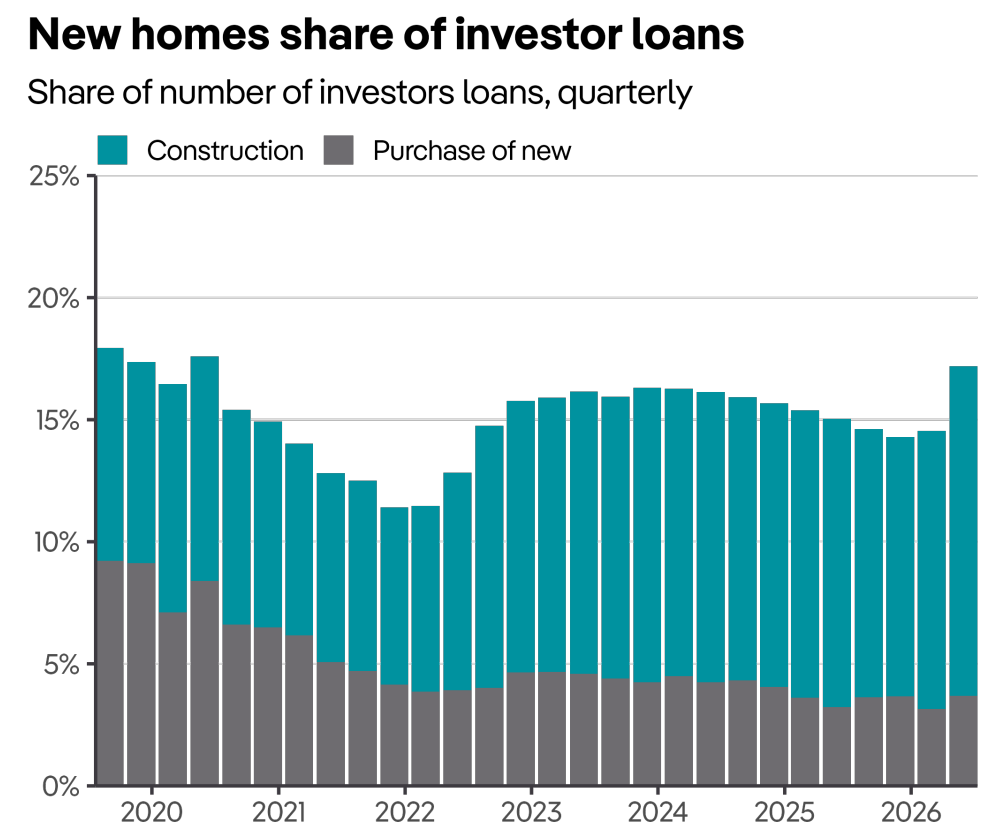
However, the article argues that investors have not yet shifted into new housing in sufficient numbers. Instead, investment activity has declined across the market.
Investor loan values for established properties fell by 56%, while mortgages on new housing stock were also 10% lower during the past 10 months.
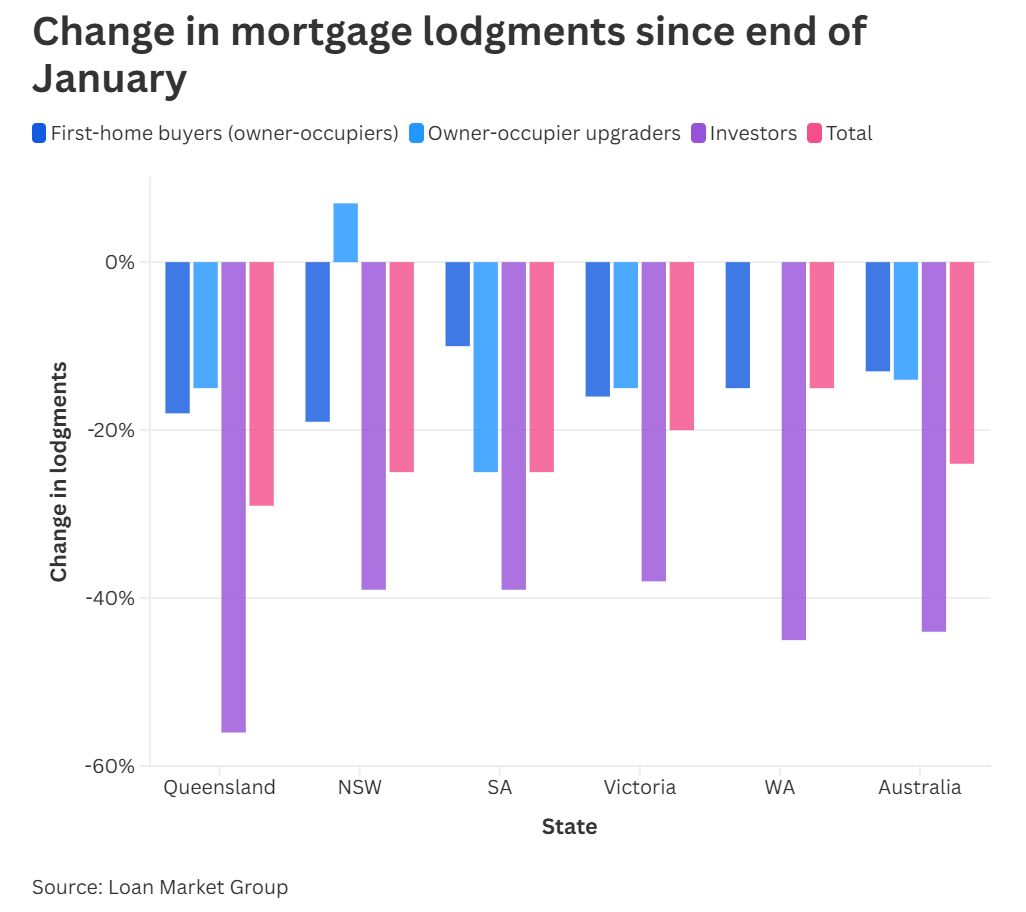
These findings follow PropTrack’s recent analysis showing that while overall investor mortgage demand has fallen significantly since the federal budget’s changes to negative gearing and CGT, the share of demand going towards new builds has increased:
The development sector faces a fundamental problem: established home values are falling sharply, while the cost of building new homes is rising. As a result, building new homes has become less profitable and riskier.
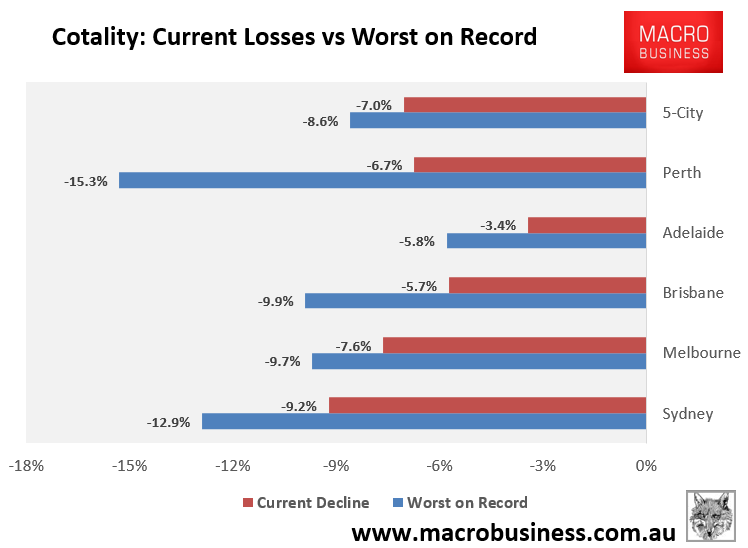
Housing construction is likely to remain weak until interest rates fall and established dwelling values begin to rise.
