
RBA throws mortgage holders under the bus
As widely expected, the Reserve Bank of Australia (RBA) unanimously lifted the official cash rate (OCR) by 0.25% at today’s monetary policy meeting, taking the cash rate to 4.60%—a 15-year high.
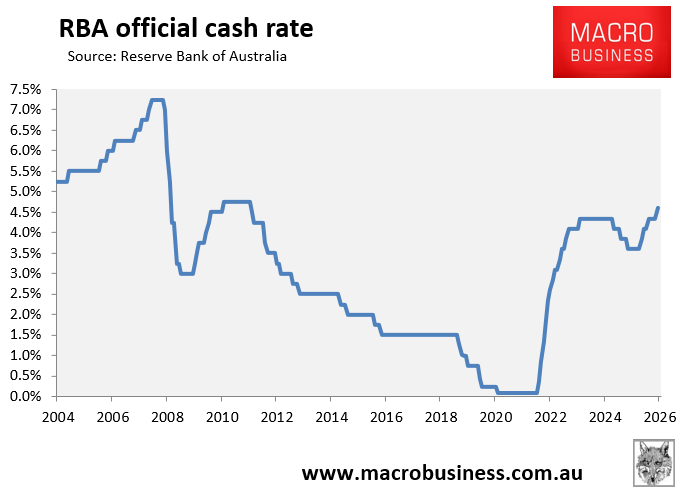
The RBA media release was hawkish and noted the following:
“Inflation remains elevated and some of the upside risks flagged in August are materialising. The conflict in the Middle East has broadened and global energy prices are now much higher than had been assumed in the August forecasts”…
“Higher fuel prices have partially been passed through to prices of other goods and services. This inflation impulse is in addition to the effect of capacity pressures in the economy”…
“Short-term measures of inflation expectations remain elevated. And recent inflation outcomes in Australia were stronger than expected at the previous meeting”…
“The Board remains focused on ensuring that high inflation does not become embedded. To achieve this, growth in aggregate demand needs to remain subdued for a period to reduce capacity pressures and bring inflation back to target”…
“Inflation is still too high and the Board judged that, in light of recent developments, a further tightening in financial conditions is warranted to support a return of inflation to target in a reasonable period”.
“The Board will continue to do what it considers necessary to bring inflation sustainably back to target, including increasing the cash rate target further if needed”.
The impact on mortgage holders from today’s rate hike is illustrated below by realestate.com.au Senior Economist Eleanor Creagh:
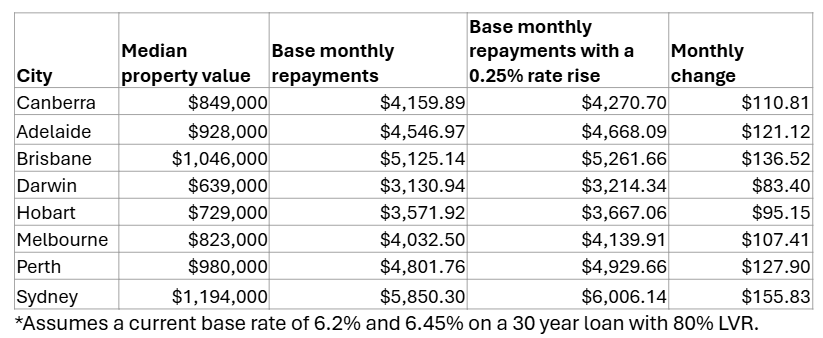
Mortgage holders across most jurisdictions face an increase of more than $100 a month in their mortgage repayments, with Sydneysiders most affected.
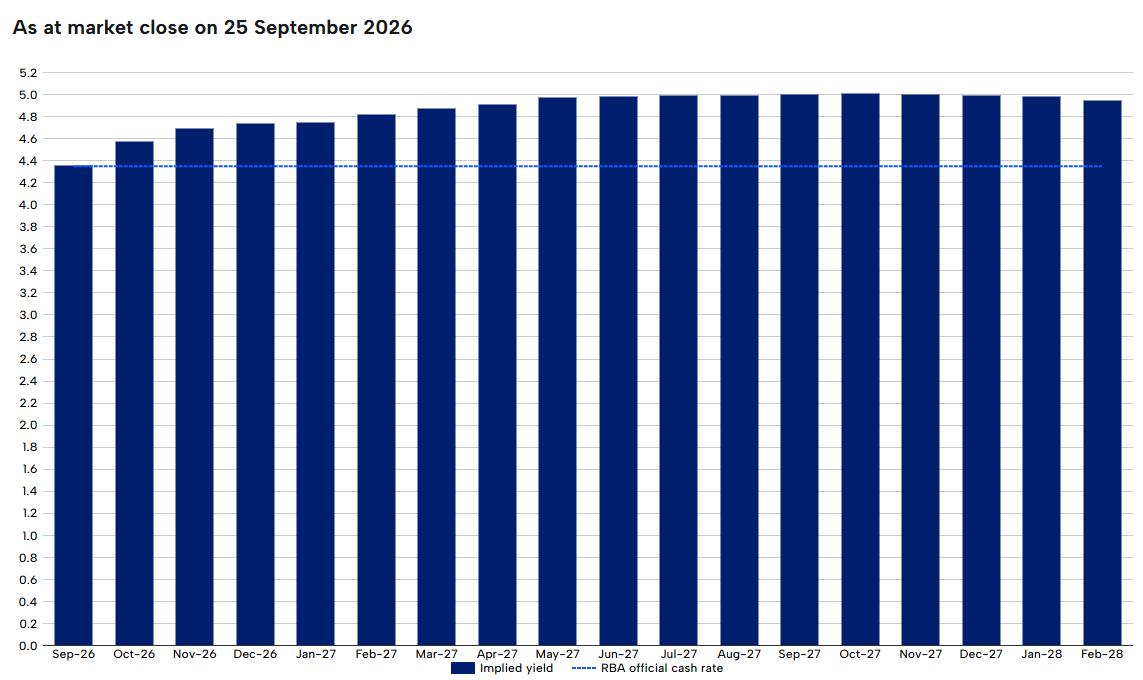
The latest financial market pricing suggests that the RBA will lift the OCR another one to two times:
Australian mortgage holders were already dedicating a near-record share of their incomes to mortgage repayments.
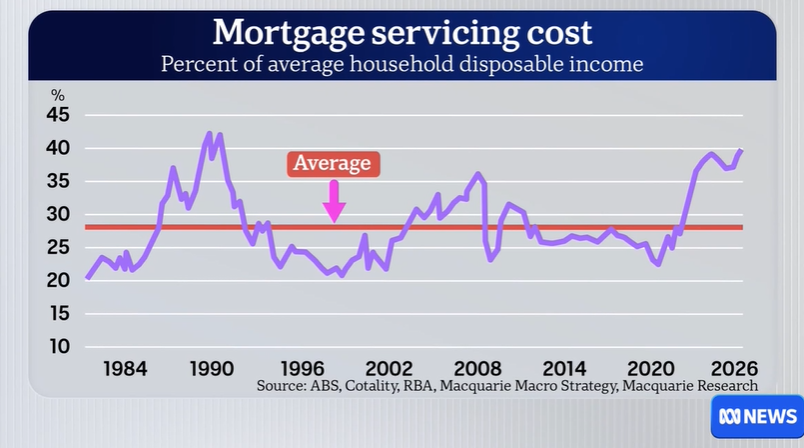
Thus, another one or two hikes, as projected by financial markets, would see repayments reach levels seen in the late-1980s and early 1990s, when mortgage rates hit 17%. Only this time, mortgage rates would be just below 7%:
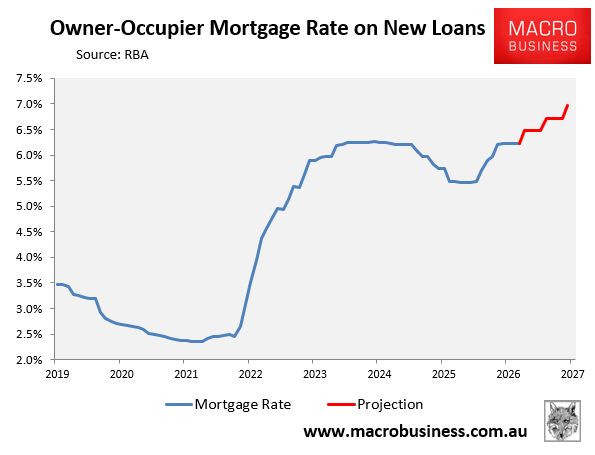
Mortgage stress is likely to be most acute for recent first home buyers who purchased using the federal government’s 5% deposit scheme, which came into effect on 1 October 2025.
These purchasers bought at the peak, and many have already seen mortgage rates rise three times, with the prospect of potentially three more hikes (including today’s).
Many face the prospect of negative equity and being trapped in mortgages they can no longer afford to service.
