
Property chiefs want more migrants to build homes for migrants
Australia’s construction and property leaders warn that the country cannot meet its housing and infrastructure targets without more skilled migrant workers.
McNab Group founder Michael McNab says political debate on migration has become sensationalised and disconnected from economic reality.
Productivity has fallen so far that Australia now needs more workers to build the same volume of housing as pre‑COVID.
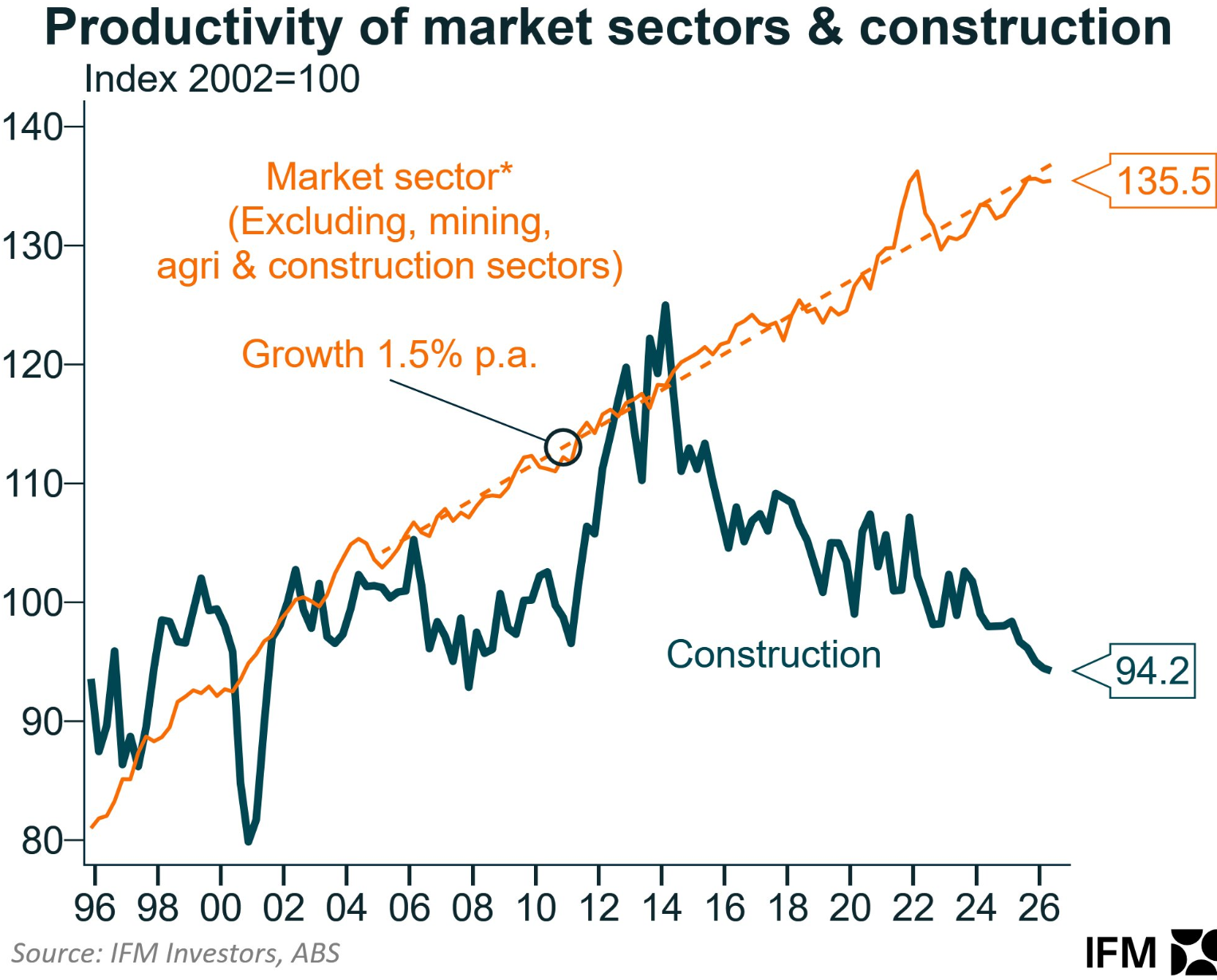
Chart from Alex Joiner at IFM Investors
McNab argues that skilled migration is “mission critical” for construction and that any reduction would be “madness”.
“I’m disappointed with all sides of politics at the moment around the lack of sophistication in the debate around skilled migration”, he said. “It’s more about the politics, in my humble view, than the economics. Our productivity is terrible”.
“We need more people to build the same amount of buildings that we did pre-Covid. There’s a bunch of industrial relations issues that sit inside that, but skilled migration is mission critical and for us to even contemplate any reduction in it is just madness”, McNab said.
Construction workers currently sit in the third‑priority tier of the skilled‑migration system — far below what industry believes is needed.
McNab argues the political fight over migration ignores the urgent workforce shortages that threaten housing supply and major projects.
“The industry needs structural change and, unfortunately, until we get that we just need significant migration”, he said.
Australia’s population grew by an extraordinary 8.5 million (45%) over the first 25 years of this century, far exceeding that of other advanced nations.
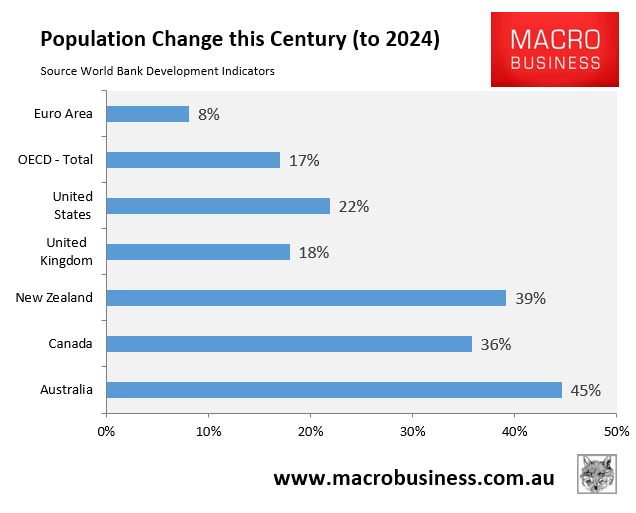
If importing workers from abroad were the solution to skills shortages, Australia’s situation would have improved, not worsened, over decades of high immigration.
Instead, world-leading levels of immigration have failed to address skill shortages across the economy, resulting in a futile game of “Whack-a-Mole”.
Over two decades, the nation has imported millions of migrants. However, skills shortages in Australia are now more severe than ever, and the country’s labour productivity growth is alarmingly low:
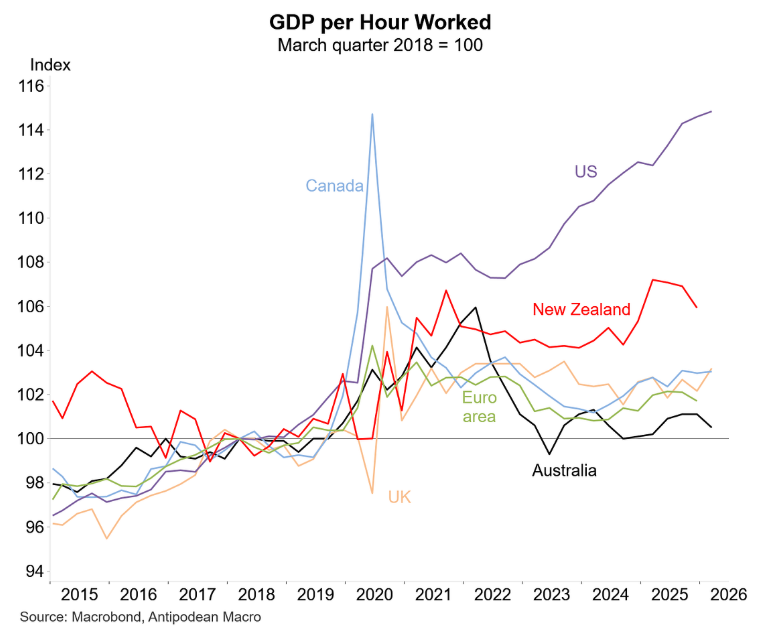
Chart from Justin Fabo at Antipodean Macro
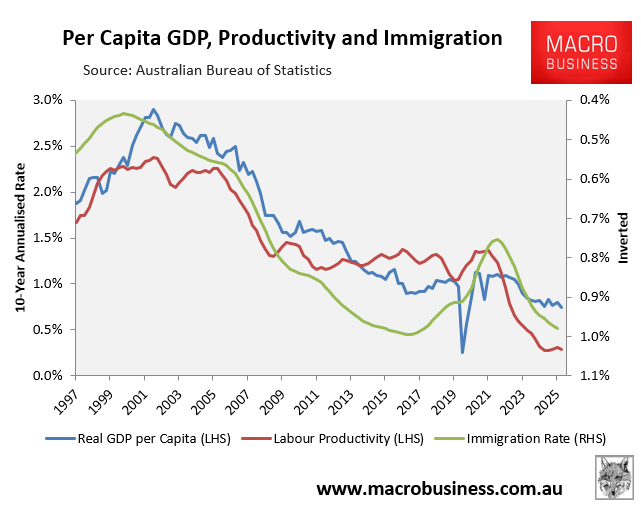
Australia’s productivity and per capita GDP growth have declined alongside the rise in immigration:
Australia is experiencing chronic shortages of housing and infrastructure, yet only a tiny proportion of migrants work in the construction industry:
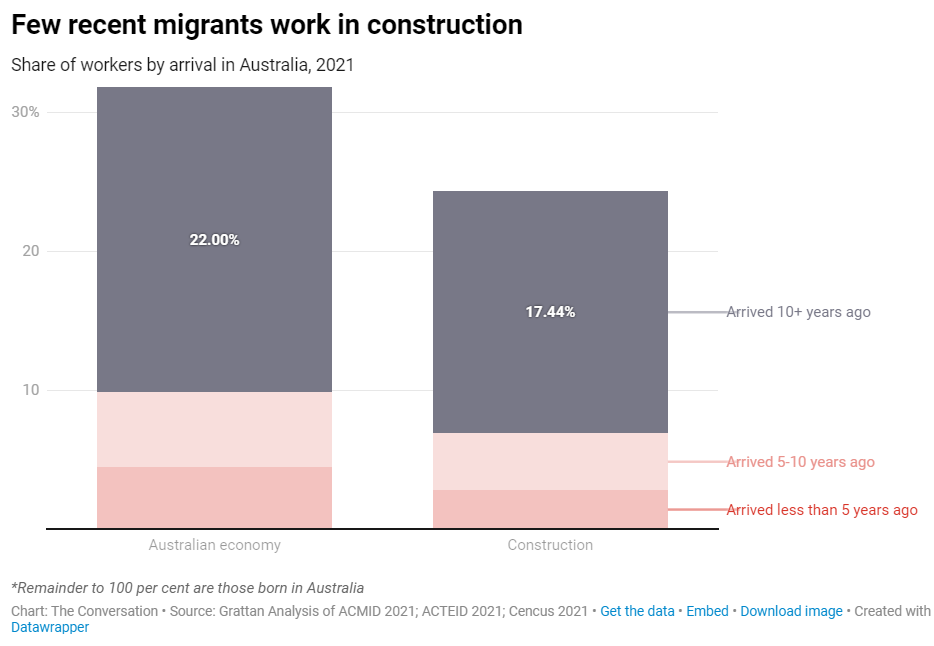
Chart by the Grattan Institute
As a result, housing construction rates in Australia collapsed as immigration soared:
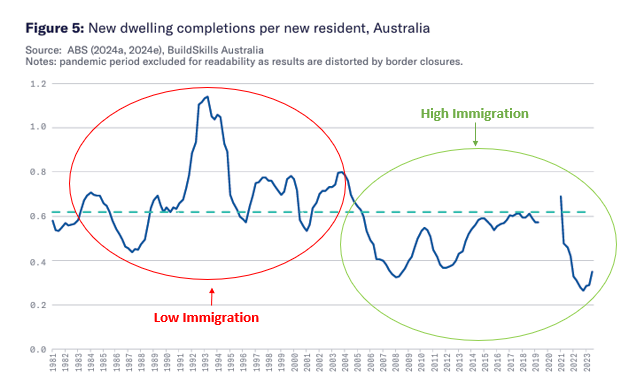
Chart by Build Skills Australia
High volumes of overseas migration have greatly expanded demand for housing and infrastructure without lifting supply.
The entire concept of bringing in migrants to build homes for migrants is a classic case of ‘tail wagging the dog’ economics, as illustrated below:
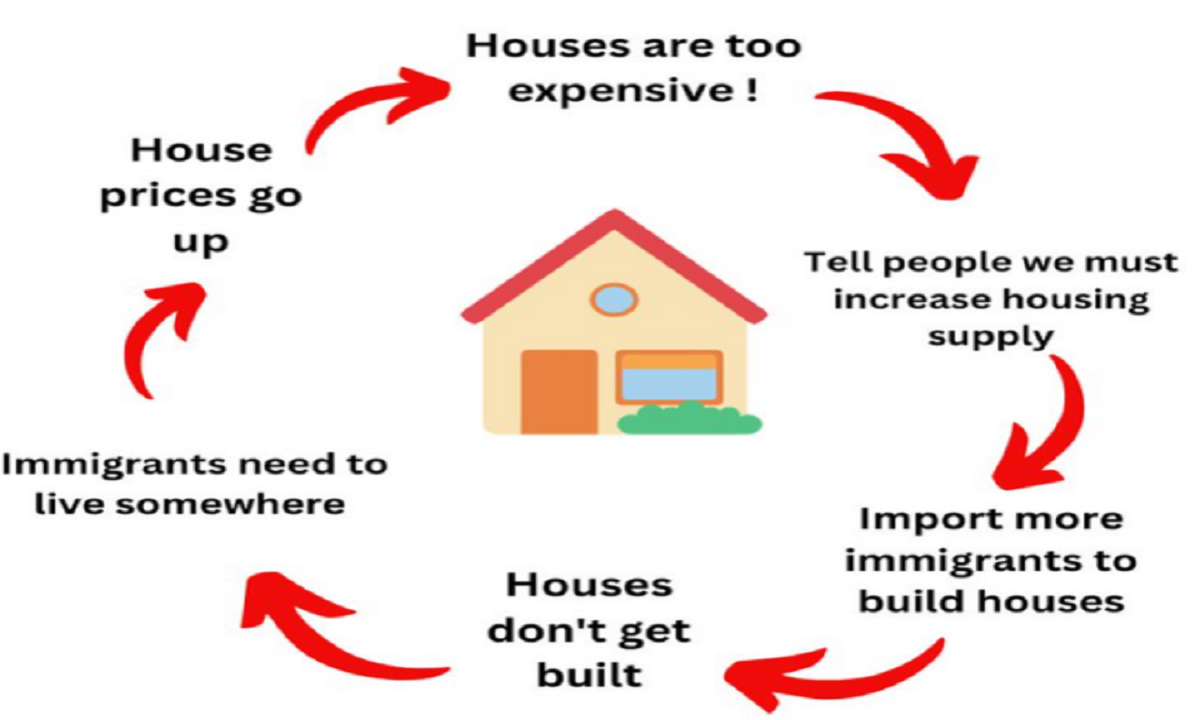
It is nonsensical to import more migrants to address a housing crisis that is caused by importing too many migrants.
The latest Population Statement from Treasury’s Centre for Population projects that Australia’s population will balloon by around 13 million people in just 40 years on the back of permanently high net overseas migration of 235,000, more than double the 90,000 average net migration in the 60 years following World War II:
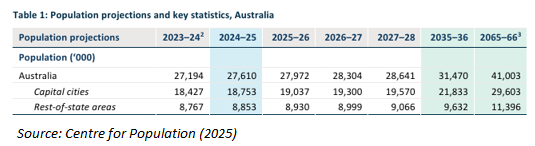
This 13 million projected population increase is equivalent to adding another Sydney, Melbourne, and Perth to the nation’s current population in only 40 years.
The housing, infrastructure, water supplies, and energy encompassed in these three major cities would need to be replicated in just 40 years to maintain current living standards, let alone improve them.
Australia did not build enough homes or infrastructure during the past 20 years of ‘Big Australia’ immigration. It will not do so in the next 40 years of ‘Big Australia’ migration.
These are the inconvenient facts that policymakers and industry continue to ignore.
Australia needs a migration program that is significantly smaller and better targeted at the genuine skills the economy needs.
Then we might actually solve the nation’s chronic housing and infrastructure shortages and boost productivity growth.
