
Australia’s economy has experienced some of the weakest per capita growth in the OECD over the past four years, with per capita GDP declining by 0.3% between Q2 2022 and Q2 2026.
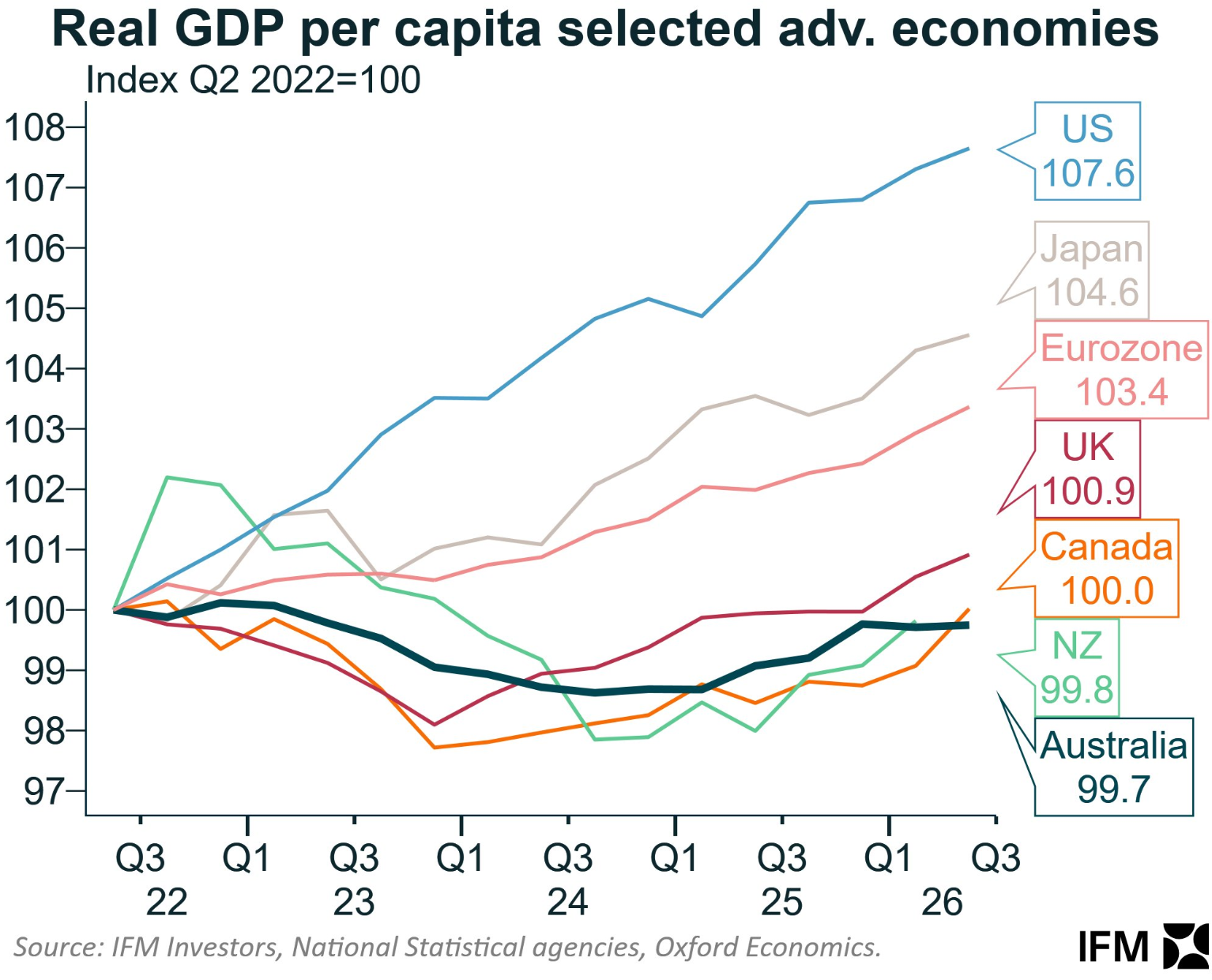
Chart from Alex Joiner (IFM Investors)
The only thing keeping the Australian economy from experiencing an actual technical recession is the nation’s strong population growth (via immigration), which is tracking well above other advanced nations:
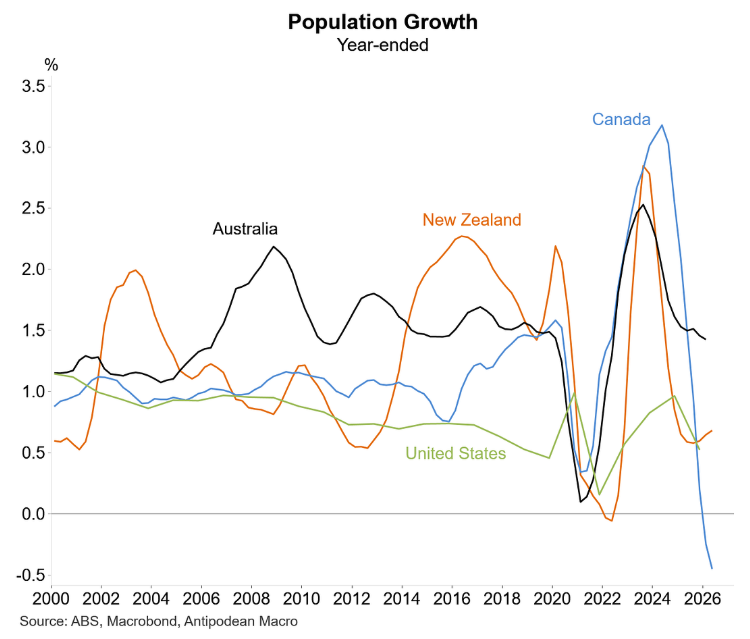
Chart from Justin Fabo at Antipodean Macro
However, despite Australia’s world-leading population growth preventing the economy from slipping into a technical recession, the odds of a recession in 2027 have risen dramatically.
Because of its enormous geographical size and heavy reliance on mining and agriculture, the Australian economy is among the world’s most dependent on diesel.
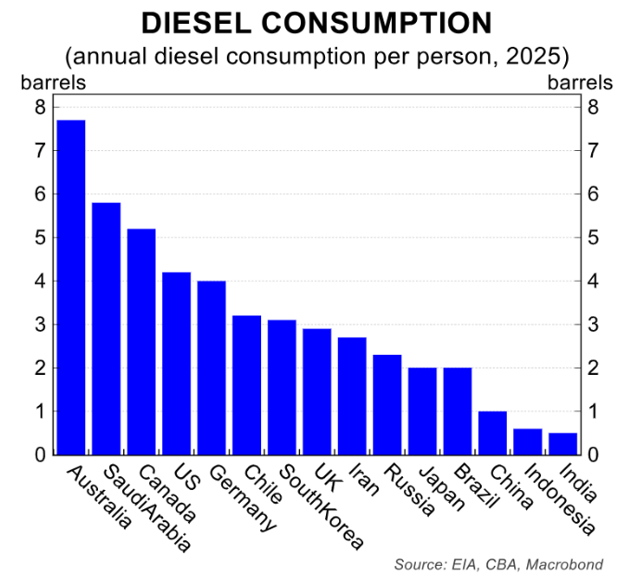
Chart from CBA Economics
Diesel fuel costs have soared recently due to the resurgence of the conflict in the Middle East.
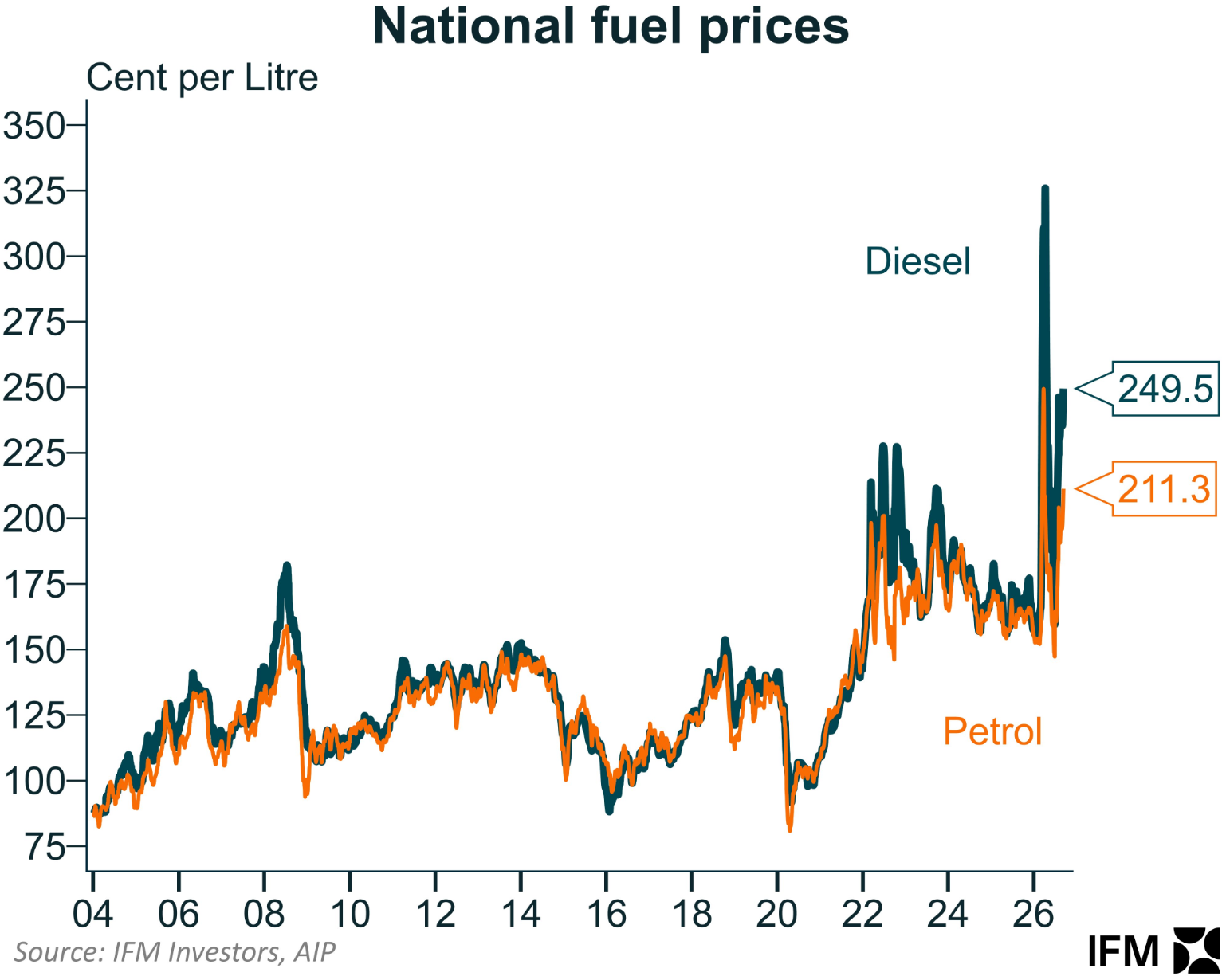
Chart from Alex Joiner (IFM Investors)
The biggest risk to the economy is that critical industries like freight, mining and agriculture experience fuel shortages, resulting in a contraction in output:
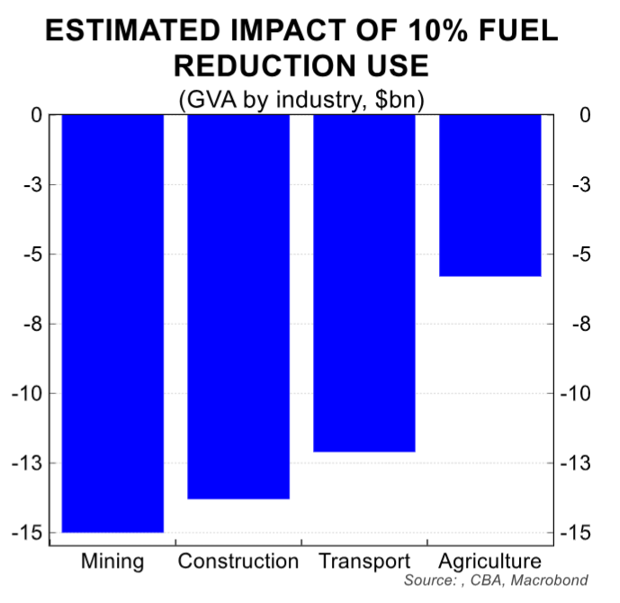
Chart from CBA Economics
However, even if physical shortages are avoided, rising fuel costs are likely to result in significant cost-push inflation across the economy as firms pass on higher costs.
As a result, the Reserve Bank of Australia (RBA) is more likely to lift interest rates, which will further hammer the housing market and reduce economic growth.
Already, financial markets have fully priced in two more rate hikes (to 4.85%), with a strong chance of a third (to 5.10%):
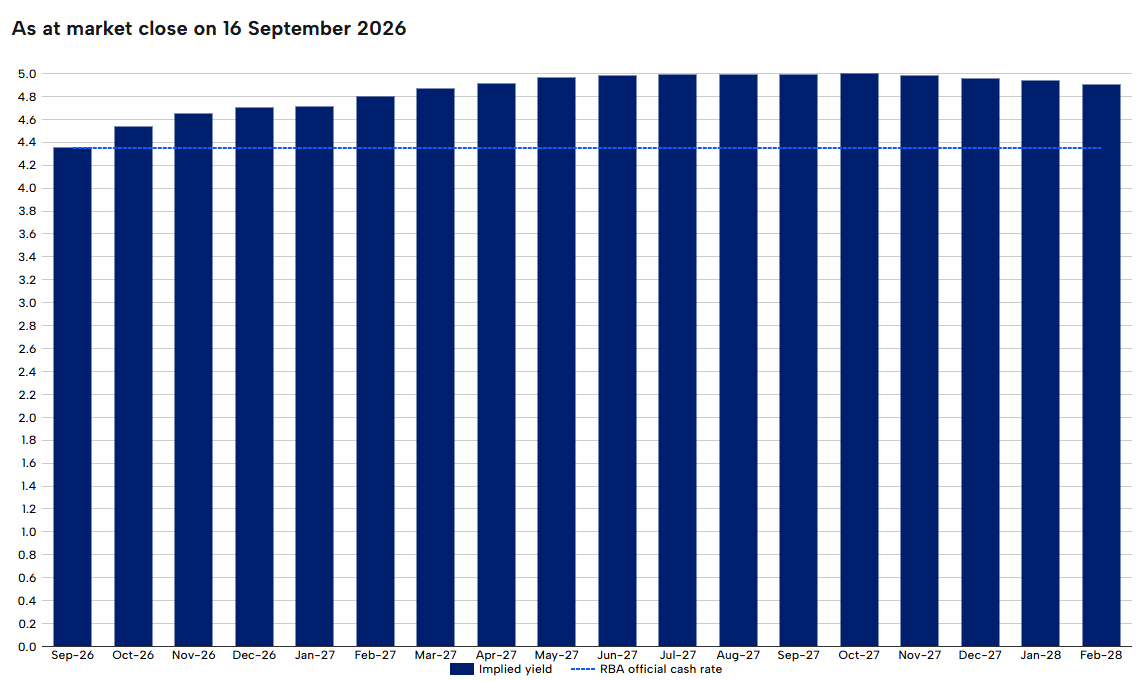
RBA implied interest rates (Source: ASX)
New research from HSBC chief economist Paul Bloxham warns that the housing downturn sweeping across the country will weigh on consumer spending and reduce gross domestic product by 1%.
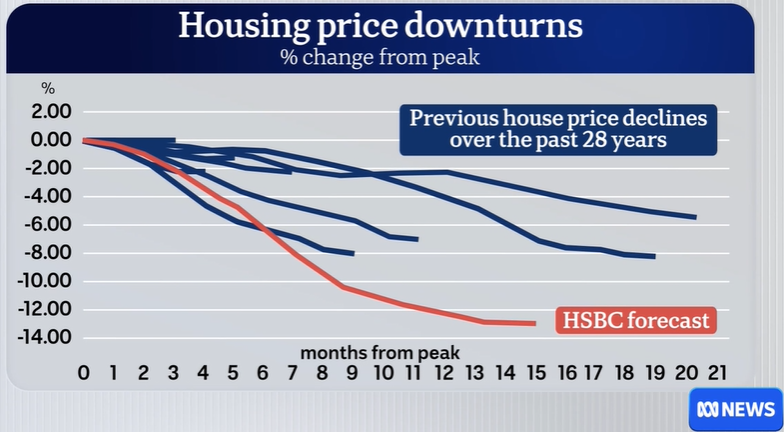
Chart by Alan Kohler (ABC)
HSBC has forecast a 13% peak-to-trough decline in capital city home values, which will drag on the economy through four reinforcing channels: consumer spending, housing turnover, state revenues, and construction activity:
Empirical model estimates suggest a 5% decline in housing prices typically weakens consumer spending by 0.8% over two years, with around half the impact in just two quarters (our 13% assumed peak-to-trough decline would mean around 0.4% less GDP in two quarters, and 1% less GDP over time).
Second, falls in housing prices typically mean less housing turnover as seller and buyers both retreat. With less moving between dwellings, households buy fewer durable goods – one of the mechanisms for the negative wealth effect. In addition, the ‘housing turnover industry’ – think real estate agents, transfer lawyers and mortgage brokers – has less activity. During the 9% housing price decline between 2017 and 2019, ownership transfer costs fell 27%, taking 0.4ppts off annual GDP growth.
Third, stamp duty revenues fall, which weighs on state government revenues and could constrain their spending. The fall in turnover in New South Wales since March has already seen a 30% fall in monthly state stamp duty revenues.
Fourth, falling housing prices tends to weaken housing construction. In the face of rising construction costs, a fall in housing prices makes it harder to profitably build as many dwellings. The 2017-19 housing price downturn coincided with an 18% contraction in residential investment.
Thus, Australia’s economy faces a perfect storm of factors that could pull it into a technical recession next year, alongside a deep per capita recession: 1) rising fuel prices and potential shortages; 2) rising interest rates; and 3) an accelerating housing downturn.
