
No wonder Aussie mortgage holders are hurting
The Reserve Bank of Australia (RBA) will hand down its interest rate decision later today, with financial markets and economists widely tipping a 0.25% increase in the official cash rate (OCR).
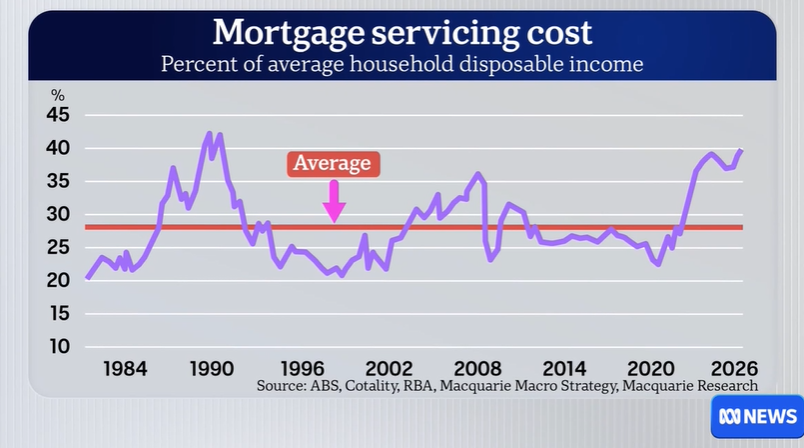
The likely OCR increase comes at a time when mortgage holders already spend a near-record share of their incomes servicing their loans.
Financial markets are tipping two to three further rate hikes from the RBA, which, if they all come to fruition, would see the OCR rise to 5.10%, up from a low of just 0.1% during the height of the COVID-19 pandemic in 2021.
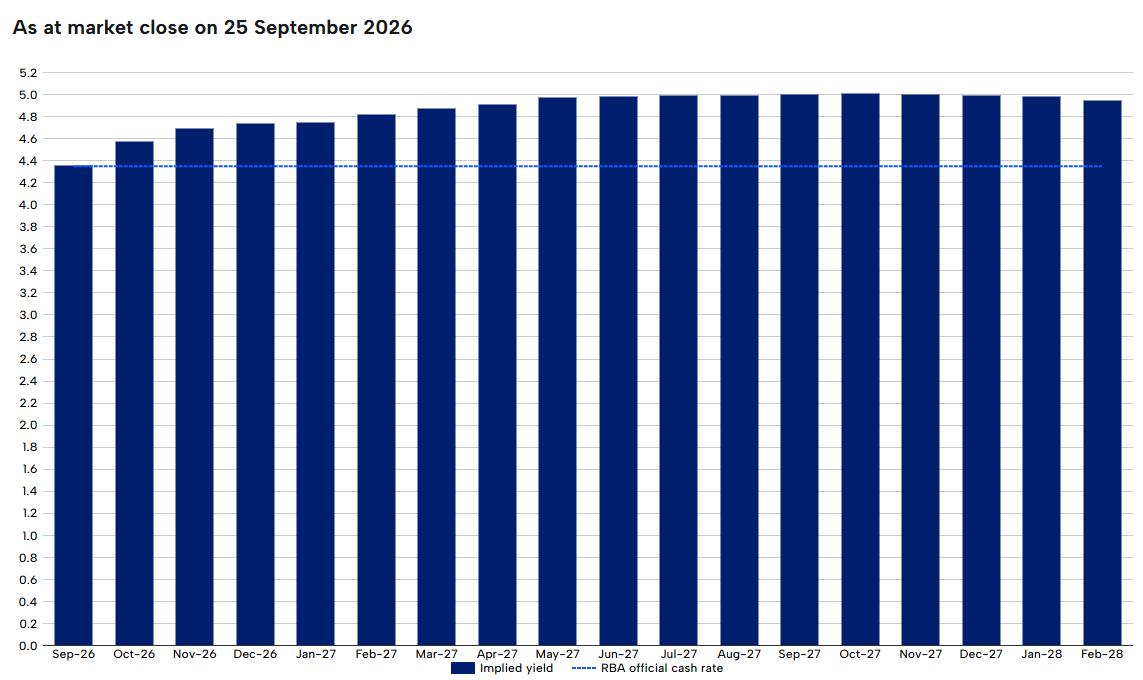
RBA rate tracker based on ASX 30-day cash rate futures implied yields
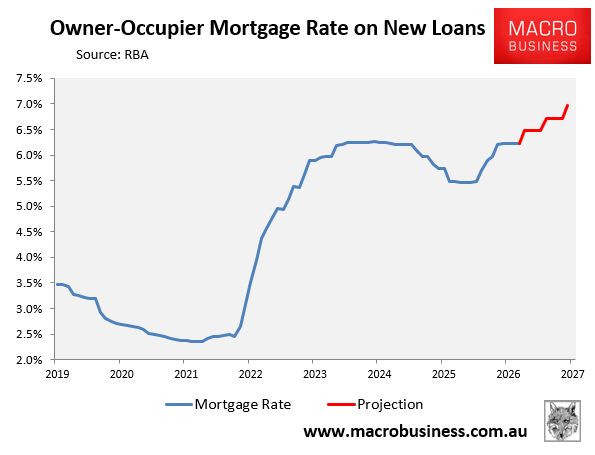
As a result, the average variable mortgage rate on new owner-occupier mortgages would rise to around 6.95%, up from a low of only 2.35% in 2021:
The impact on mortgage holders is illustrated below based on the current average owner-occupier loan size of $731,000:
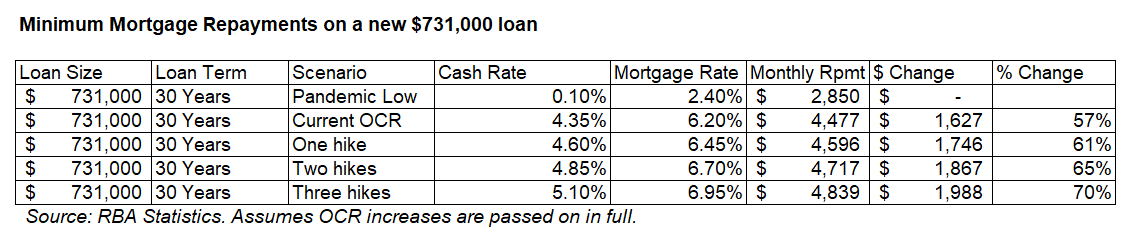
If mortgage rates were at their record-low level of 2.40%, achieved in the second half of 2021, the average monthly mortgage repayment on a $731,000 mortgage would be $2,850.
At the current variable mortgage rate of 6.20%, borrowers with the average $731,000 mortgage must pay $4,477 per month in repayments, a $1,627 (57%) increase from the 2021 low.
For each additional 0.25% increase in the OCR from here, monthly mortgage repayments on an average $731,000 new mortgage would increase by around $120. If the RBA delivers three rate hikes, average monthly loan repayments would increase by a cumulative $362.
The above analysis shows why Australian mortgage holders are under intense financial pressure and why further RBA rate hikes could push many households with large mortgages over the edge.
First home buyers who purchased in late 2025 or early 2026 using the Albanese government’s 5% deposit scheme are the most exposed cohort.
These borrowers bought near the peak and have seen sharp declines in property values, on top of three rate hikes already delivered this year and the prospect of three more beginning today.
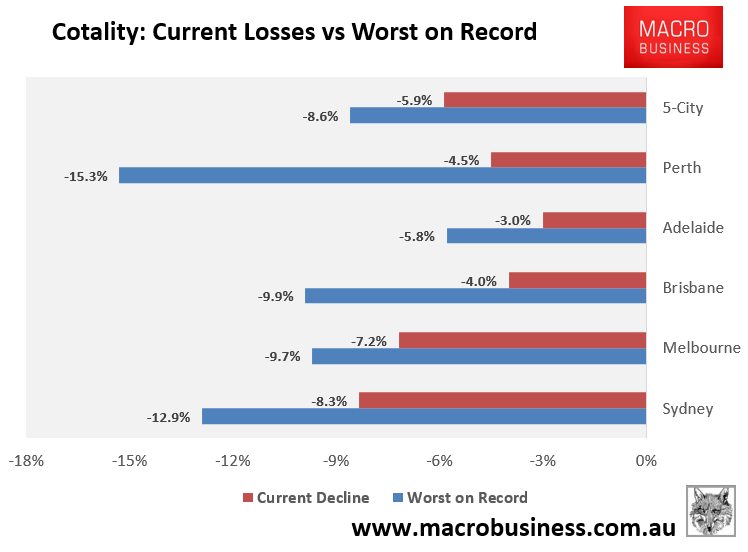
Many face negative equity and the prospect of being trapped in homes with mortgages they can no longer afford.
