
Japan hoses Aussie gas all over as East Coast starves
Effin Albo. As industry and the energy transition run off the rails owing to our perverse gas shortage, Japan is reselling Aussie gas hand over fist.
The biggest Japanese LNG importer and largest power producer, JERA, plans to sell liquefied natural gas in the long term as part of a strategy to tap global LNG markets and sell any excess gas supply if domestic demand is low, a senior executive has said.
JERA wants to “identify additional markets where we can sell,” Irtiza Sayyed, chief executive officer of the newly-created JERA Global Energy Solutions, told Bloomberg in an interview published on Wednesday.
Earlier this summer, JERA said it is creating a wholly-owned subsidiary to develop and manage its LNG, upstream, low-carbon fuels, and shipping businesses.
The new company, JERA Global Energy Solutions (JERA GES), will be the Japanese utility giant’s response to increasingly volatile and complex energy markets. JERA GES will be a vertically integrated LNG company which can quickly respond to the market needs while maintaining security of supply for Japan as its highest priority.
And.
Mitsui OSK Lines, a top Japanese shipping firm, doesn’t expect LNG shipments through the Strait of Hormuz to resume soon, signaling a prolonged disruption that could keep prices elevated and curb demand across Asia.
“As long as this situation continues, it’s almost impossible to carry the LNG cargoes” through Hormuz, Chairman Takeshi Hashimoto said on the sidelines at the Gastech conference in Bangkok on Wednesday. “At the moment, we are quite pessimistic about the near future.”
Here’s my chart reconstruction of what we know. Japanese resale volumes are confirmed. The resold Australian volumes are confirmed minimums.
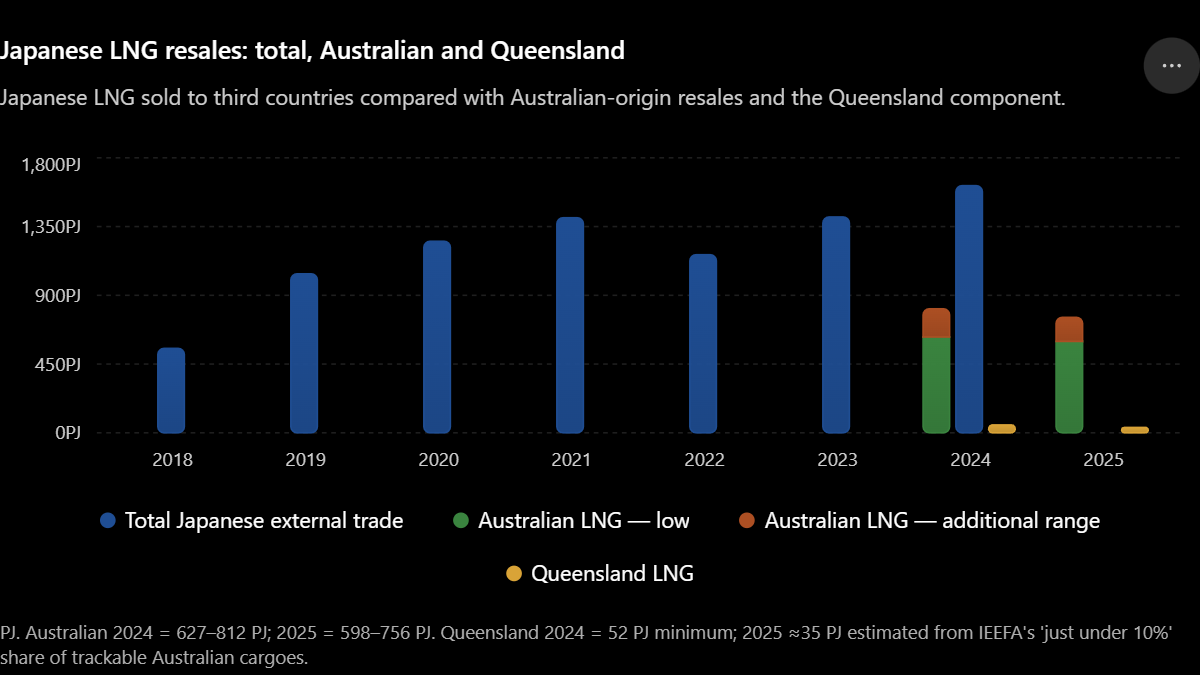
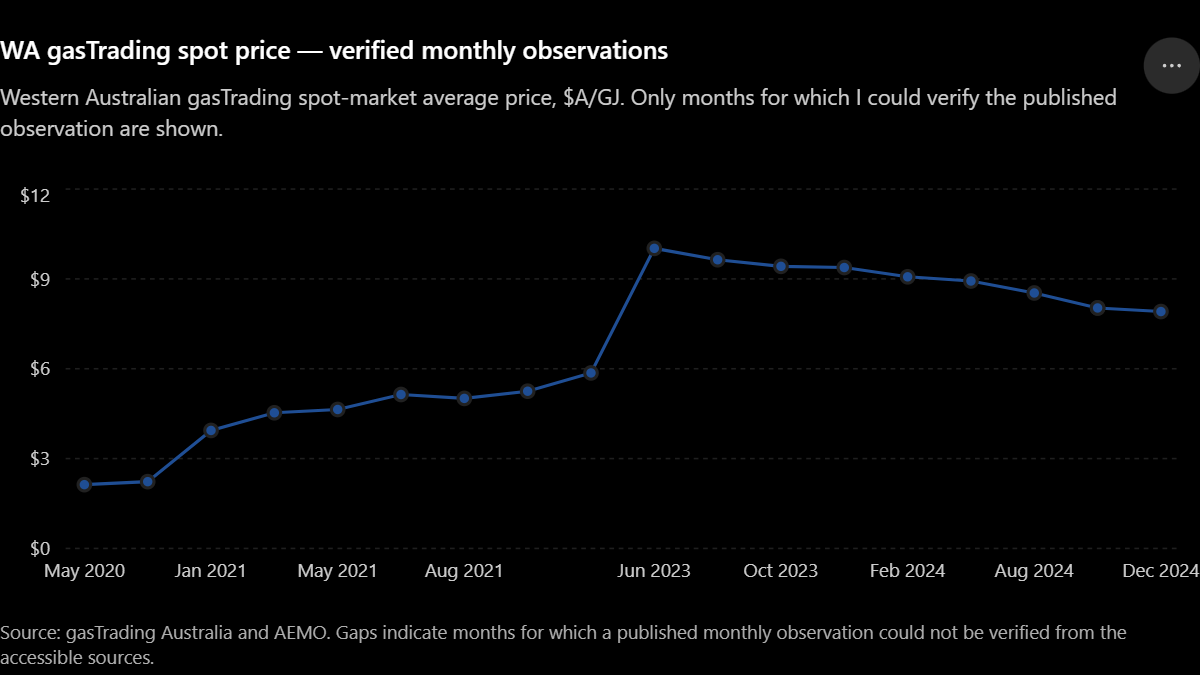
This is a fuck tonne of gas that Japan is reselling from Australia. It also had a bad effect in WA. At least the WA government acted in June 2023 to stop the incipient squeeze brought on by Woodside rorting, even if the price is still too high.
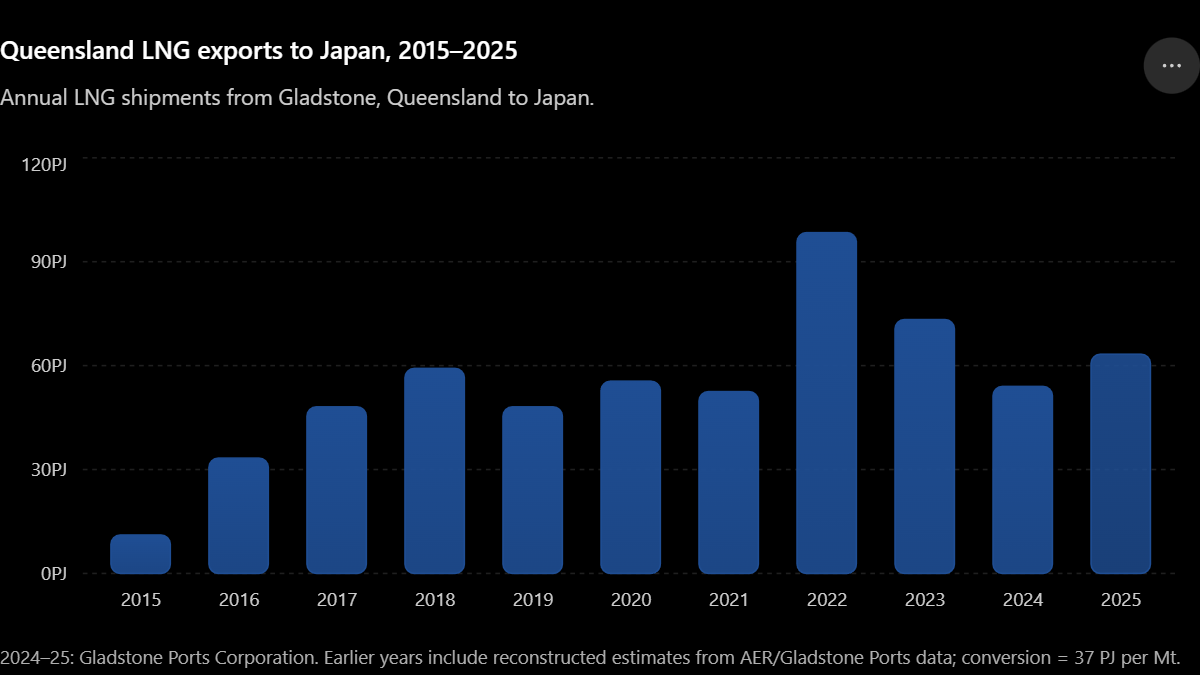
Back to the East Coast, here are the total exports from QLD.
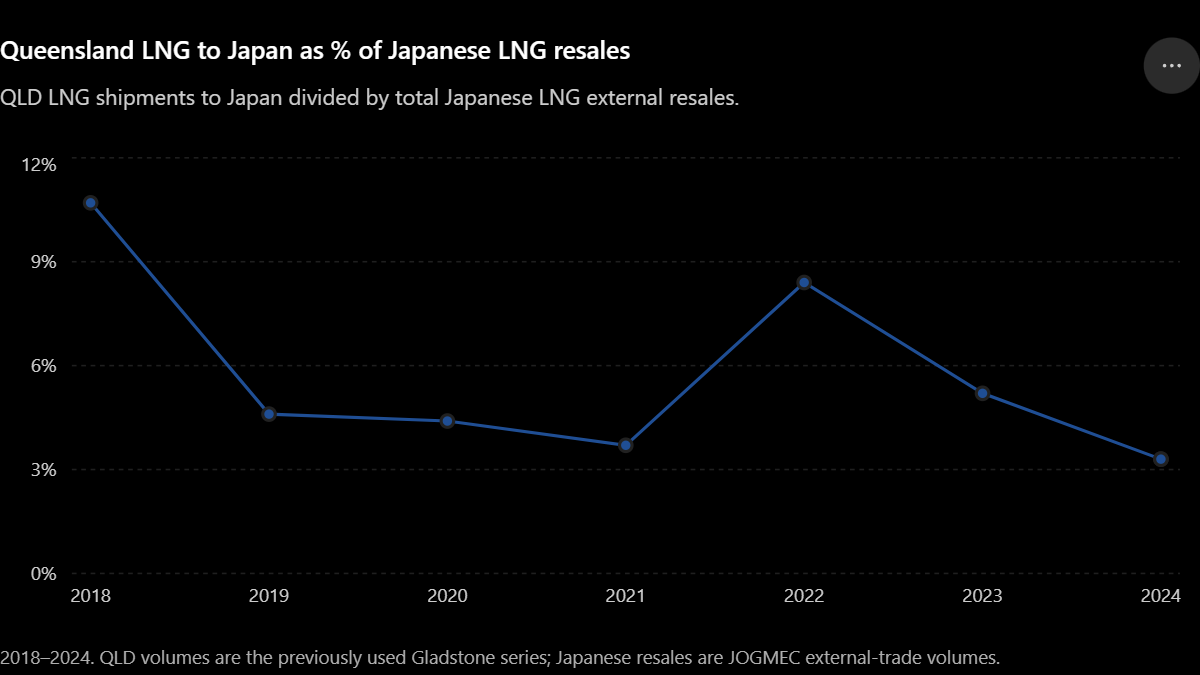
WTF are we giving away this gas when it is a very meaningful amount for the domestic economy, but in context, it is such a tiny amount for Japan’s resale business? Usually around 3-4% of Japanese gas resales in the region.
This situation is maddening when you consider the fallout. Industrial hollowing out.
| Industry / capability | What happened | Approx. date |
|---|---|---|
| Passenger car manufacturing | Ford, Holden and Toyota all ceased local vehicle production | 2016–17 |
| Automotive engine manufacturing | Local engine production ended with the car plants | 2016–17 |
| Large-scale automotive component manufacturing | Huge contraction following the end of local vehicle production | 2016–20 |
| Oil refining — Sydney | Shell Clyde and Caltex Kurnell closed | 2012–14 |
| Oil refining — Brisbane | BP Bulwer Island closed | 2015 |
| Oil refining — Melbourne | ExxonMobil Altona refinery closed | 2021 |
| Oil refining — WA | BP Kwinana refinery closed | 2021 |
| Domestic television manufacturing | Remaining local TV production disappeared; market became overwhelmingly imported | 2010s |
| Mass-market clothing manufacturing | Major contraction/relocation offshore; only niche/domestic production remains | 2010s |
| Footwear manufacturing | Large-scale domestic production largely disappeared | 2010s |
| Textile manufacturing | Major spinning/weaving/manufacturing capacity disappeared | 2010s |
| Photographic film manufacturing/processing | Domestic mass-market industry effectively disappeared | 2010s |
| Consumer electronics manufacturing | Large-scale domestic production largely disappeared | 2010s |
| Commercial shipbuilding outside defence | Large-scale commercial ship construction became extremely limited | 2010s |
| Domestic passenger rail-car manufacturing | Several traditional manufacturing operations closed; production became intermittent/specialised | 2010s–20s |
| Some paper manufacturing | Several paper mills/product lines closed, substantially reducing domestic capacity | 2010s–20s |
| Some chemical manufacturing | Individual plants/products ceased domestic production, increasing import dependence | 2010s–20s |
| Some fertiliser manufacturing | Several domestic production facilities closed or reduced output | 2010s–20s |
| Steelmaking at Whyalla | Blast-furnace steelmaking ceased in 2026 | 2026 |
And now, the collapse of the energy transition, which is not only miles behind but also faces a future without gas backup after Albo squibbed it on domestic reservation.
Nobody who might invest in gas and gas-fed industries is going to wait for a ministerial decree to supply enough gas, especially when it has never been done before.
IEEFA still hopes the LNG glut is coming.
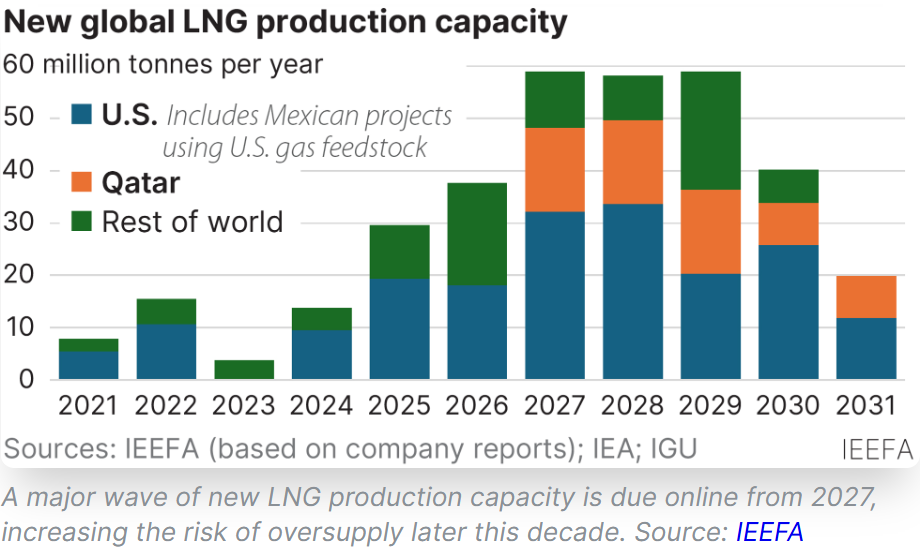
But without Qatar, the LNG glut is much smaller; inventories have run down, and El Niño will restrict LNG transits to Asia.
There is also a distinct chance that the US will be forced to curtail gas exports if Henry Hub takes off under pressure from rising export volumes.
For 25 years, I have stated the basic truth that gas is the keystone in industry and the energy transition, and here we are still fucking it up.
Gas industry power is apparently unbreakable.
Be truly thankful for batteries, which have robbed the cartel of its power to set electricity prices, too. Before batteries rolled out, gas set the price during evening peaks 15-25% of the time.
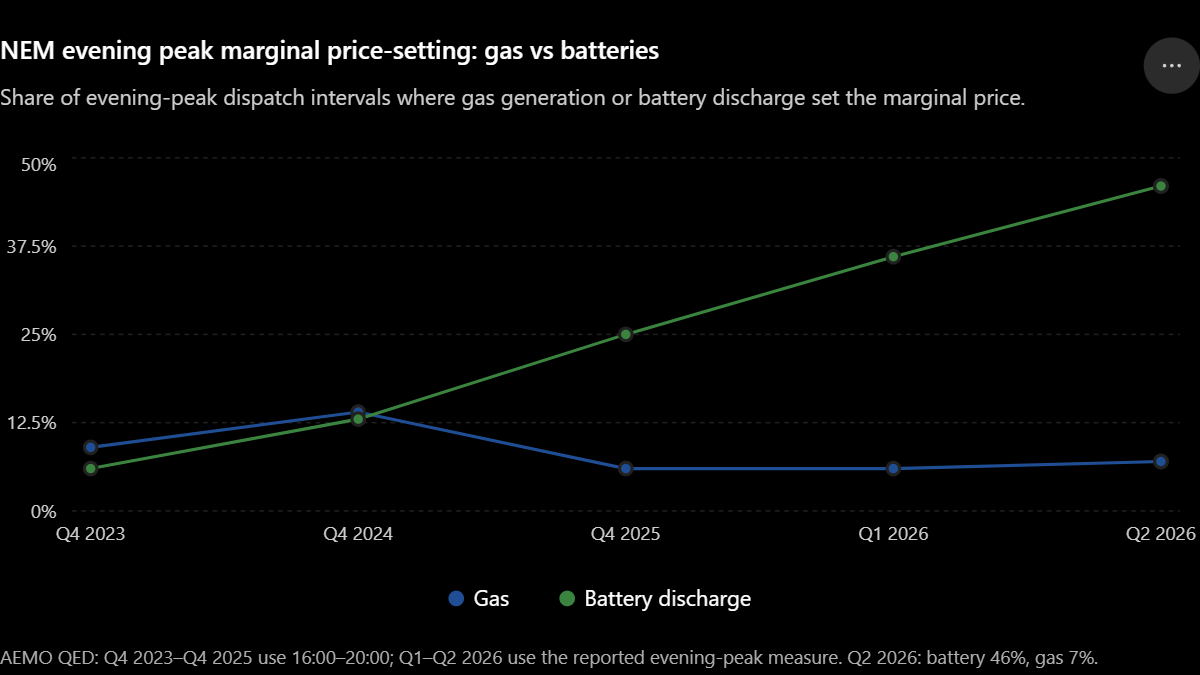
The effect on wholesale electricity prices has been profound.
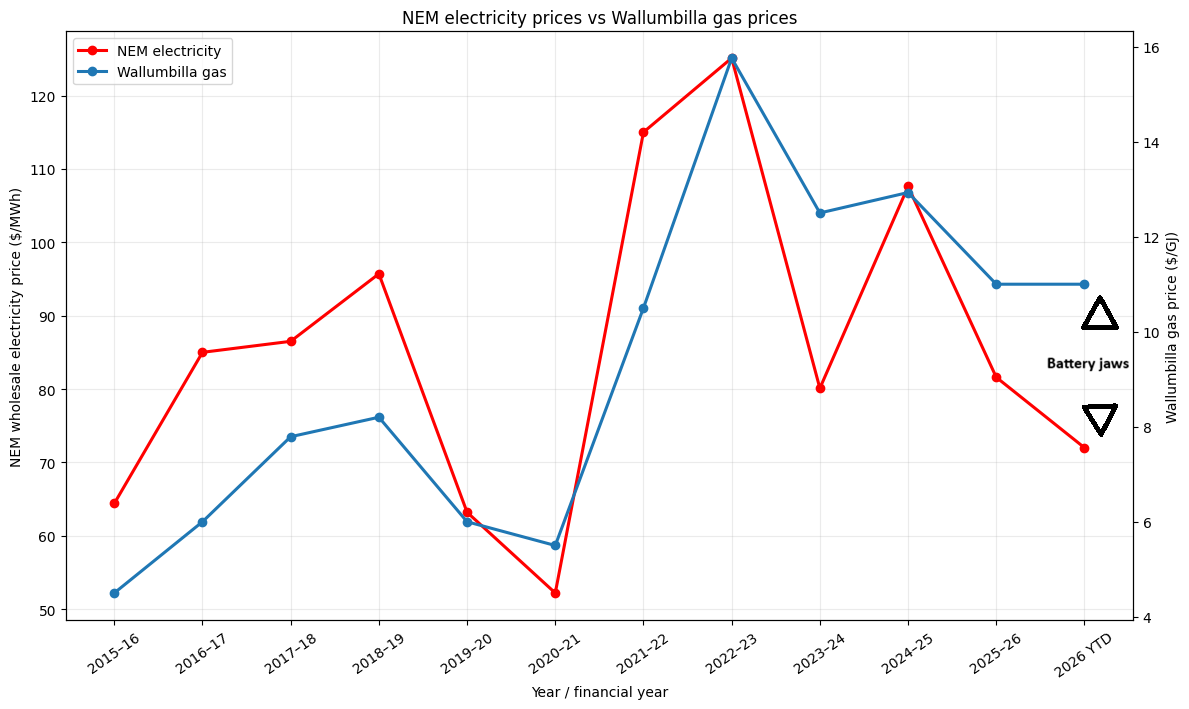
But spare a thought for industry and the climate.
