
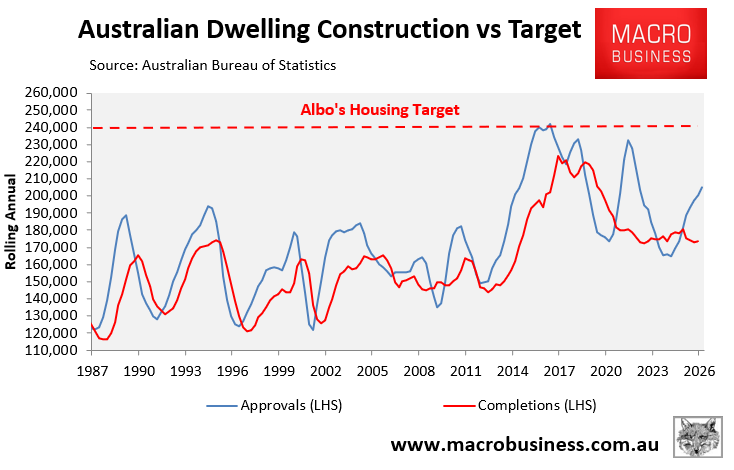
The latest dwelling completions data from the Australian Bureau of Statistics (ABS) showed that only 173,400 homes were built in the year to March 2026, 66,600 (28%) fewer than the 240,000 annual run rate required to meet the National Housing Accord’s target of building 1.2 million homes over five years.
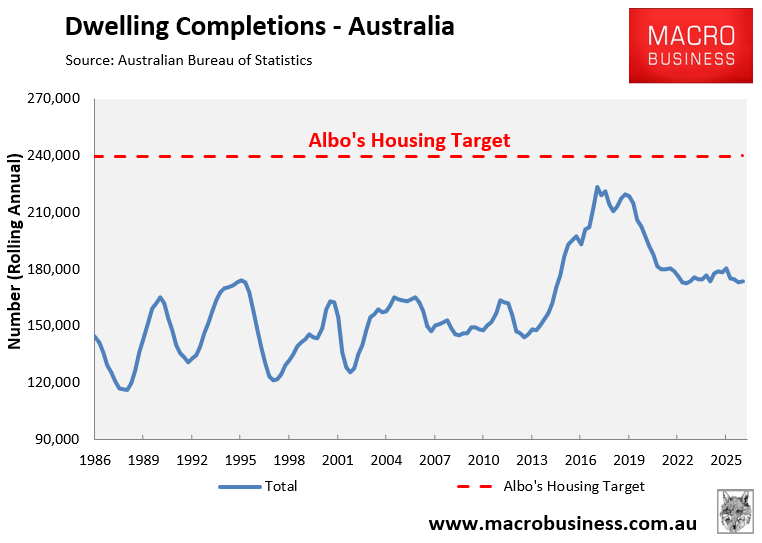
Over the first 21 months of the National Housing Accord, 112,400 fewer homes have been constructed than the target, representing a 27% shortfall. NSW and Queensland, in particular, are tracking well behind the target.
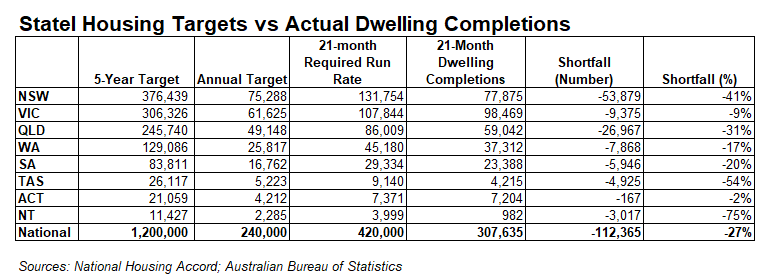
On Tuesday, the ABS released dwelling approvals data for July, showing that 206,300 homes received approval for construction over the year, the strongest result since May 2022, albeit still 33,700 (14%) fewer than the National Housing Accord’s annual target:
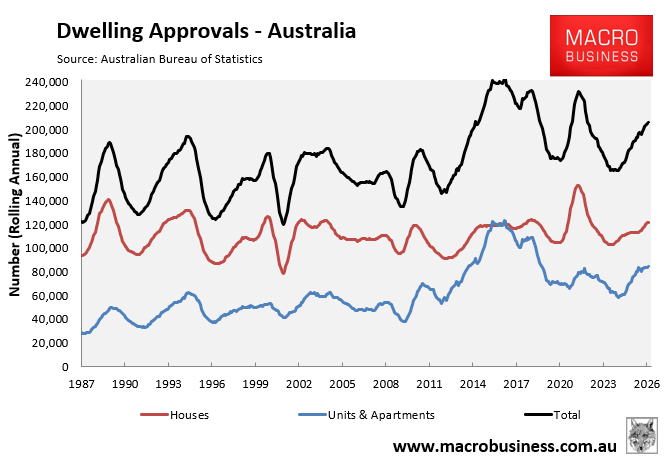
Over the first 25 months of the National Housing Accord, dwelling approvals were tracking 86,800 (18%) behind the run rate required to meet the target:
The quarterly data from the ABS shows that the gap between dwelling approvals and actual dwelling completions continues to widen:
As of the March quarter of 2026, there were 243,900 dwellings in the construction pipeline, the highest amount on record.
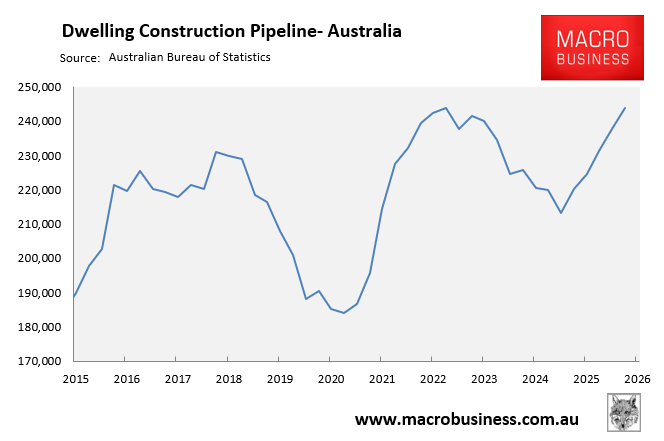
The construction pipeline is bulging because the sector is struggling to build homes, with soaring costs, labour shortages, high interest rates, and other supply bottlenecks.
The outlook has worsened recently, which will inevitably result in lower construction in the period ahead.
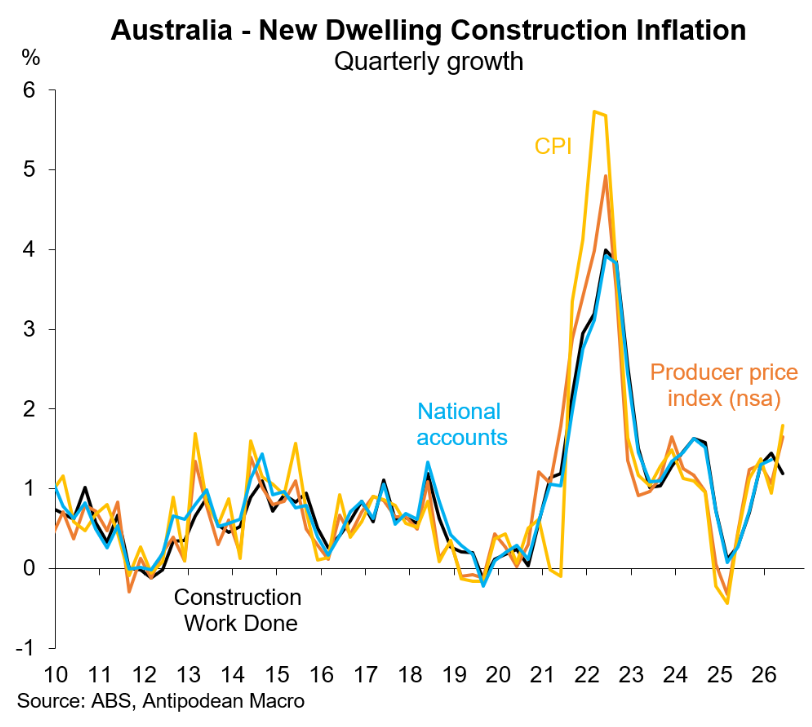
First, after rising by around 40% since the pandemic, dwelling cost inflation is accelerating once more, as illustrated below by Justin Fabo from Antipodean Macro:
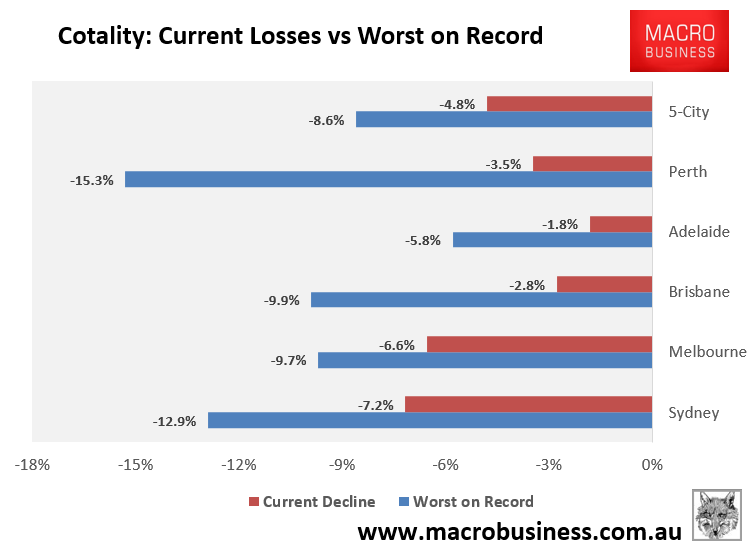
Dwelling approvals and, ergo, construction also tend to decline when values are falling:
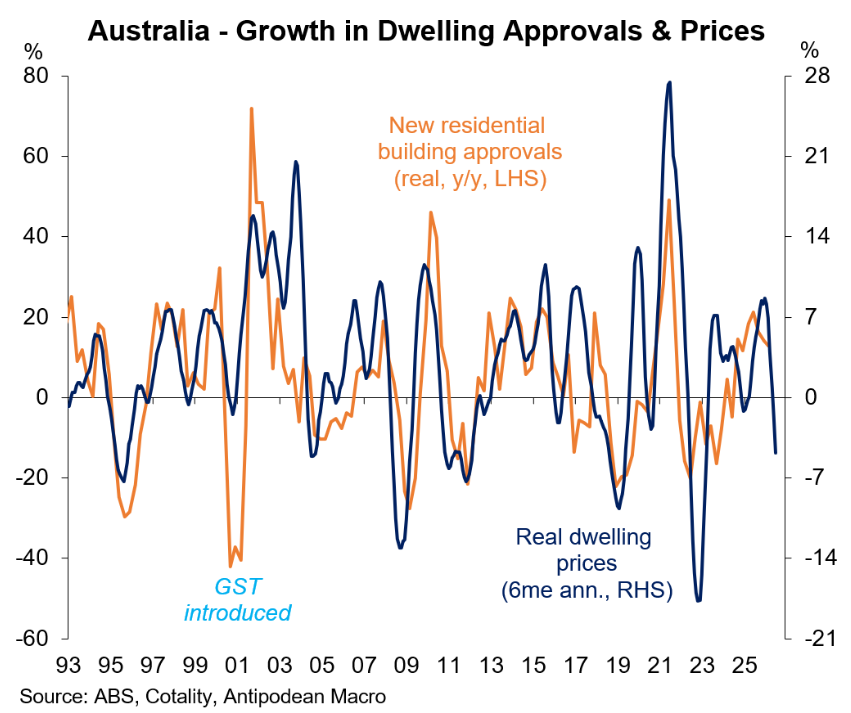
Given interest rates are set to rise further, and housing values are facing their steepest declines in at least 40 years, construction will inevitably decline.
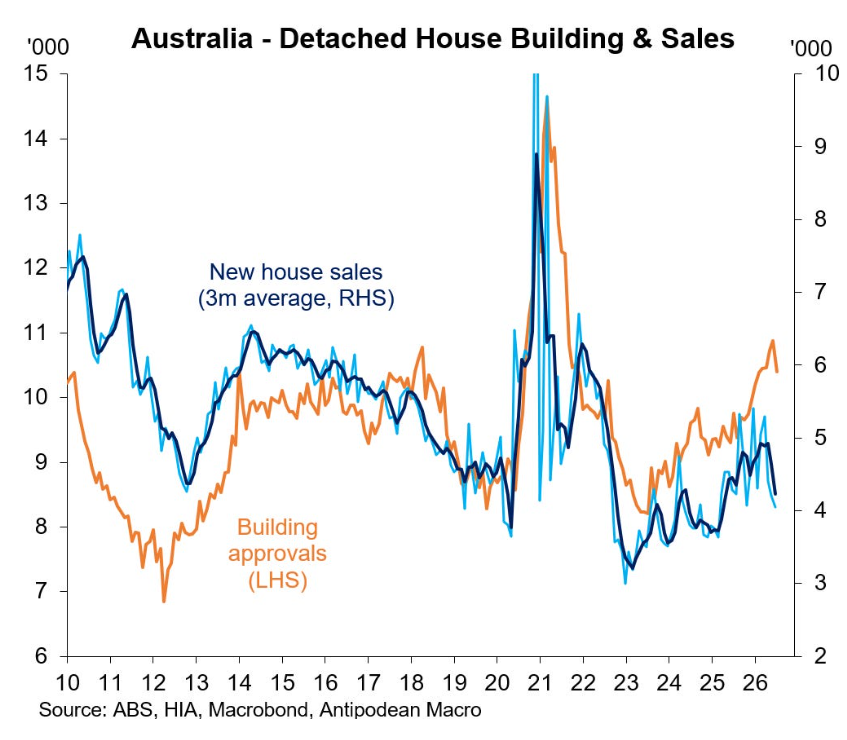
Next, detached house sales have declined, which portends further falls in approvals:
Finally, the meltdown in the private credit market following the collapse of Baltha Group — one of Western Sydney’s biggest home builders — has directly threatened 2,000 homes currently under construction and 15,000 future dwellings.
The private credit sector has grown extremely fast and is a major lender to property developers. As a result, Baltha Group’s collapse hints of deeper credit stress and risks seizing lending to property developers, further hampering construction.
The upshot is that Australian dwelling construction will very likely follow prices lower, deepening the nation’s housing shortage amid excessive immigration levels.
