
Cotality’s daily dwelling index has hit a new milestone, with values across the five major capital city markets now down by 5% from their April 2026 peak:
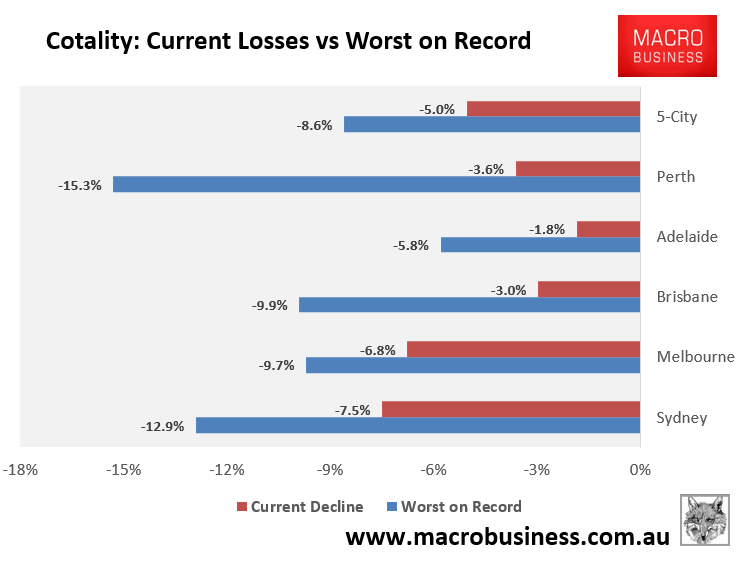
The largest decline in 40 years of records was the October 2017 to May 2019 episode, when values at the 5-city aggregate level fell by 8.6%.
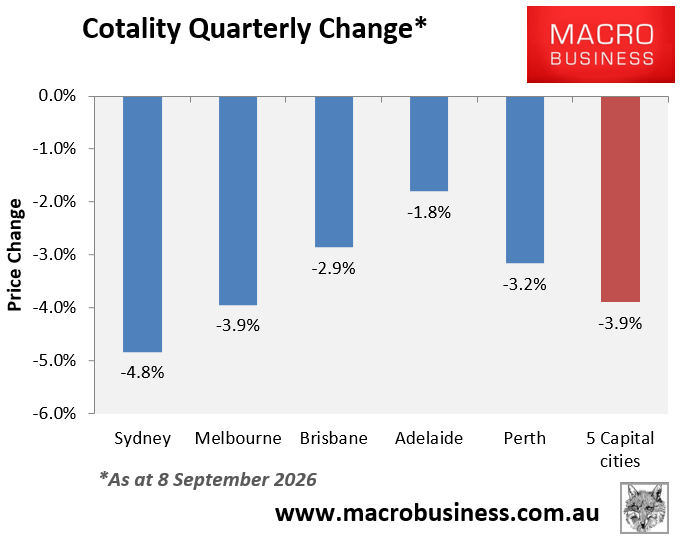
The quarterly pace of decline at the 5-city aggregate level is currently 3.9%, suggesting that the current record peak-to-trough decline could be broken by the end of 2026.
Meanwhile, for-sale listings continue to pile up, especially across the mid-sized capital city markets.
According to Cotality, there are 24.4% more homes listed for sale across the combined capital cities than at the same time last year, with listings up a whopping 53.3% in Brisbane, 41.0% in Adelaide, and 53.3% in Perth:
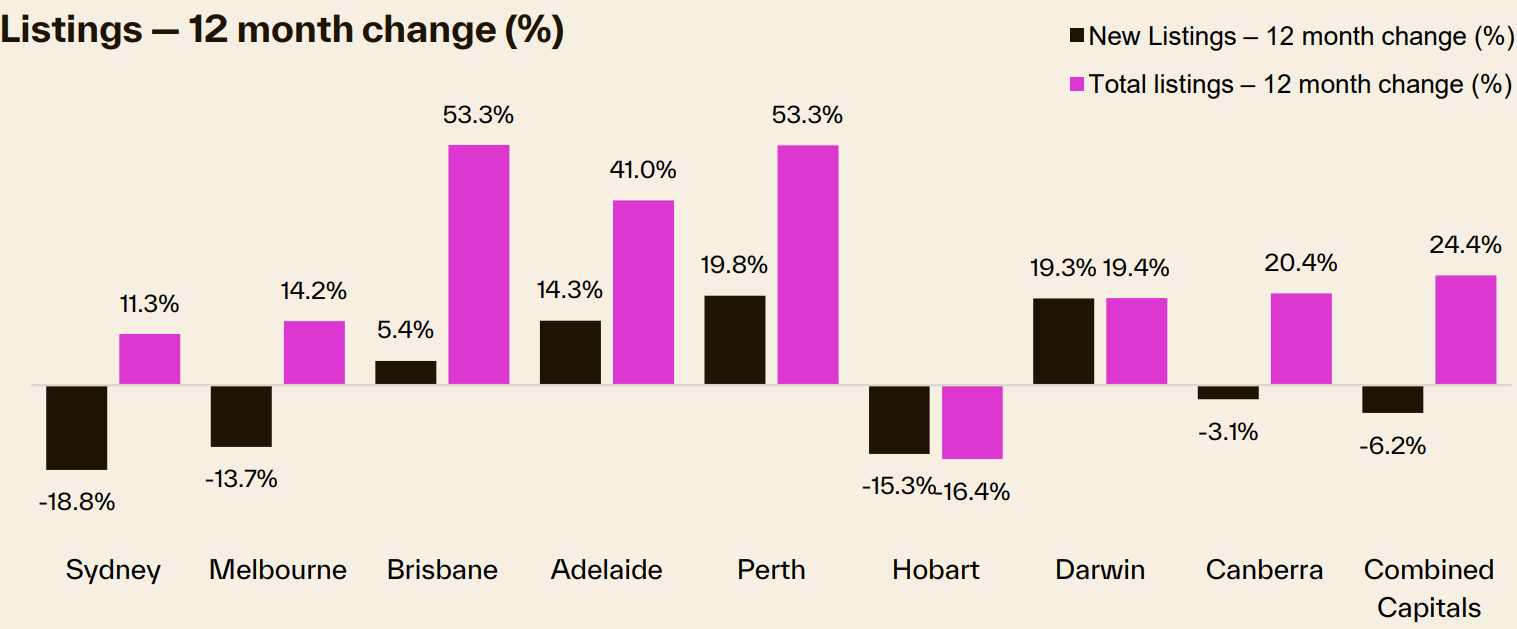
Source: Cotality
The median time taken to sell has also risen sharply across the major capitals:
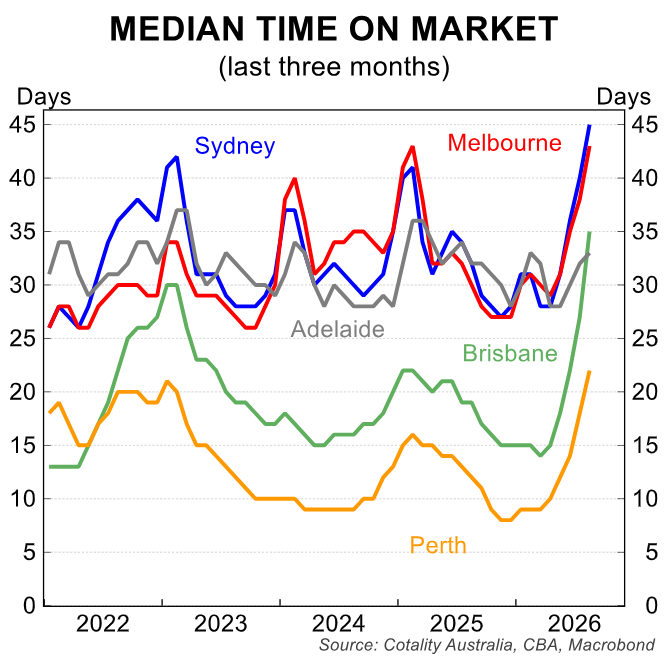
Chart from CBA Economics
With the Reserve Bank now widely tipped to hike interest rates once or twice more, sentiment regarding house prices continues to sour.
The latest Westpac-Melbourne Institute Consumer Sentiment Survey, released on Tuesday, revealed that nearly two-thirds of consumers now expect mortgage rates to rise.
Not surprisingly, dwelling price expectations fell further, with the index down by around 36% over the past six months:
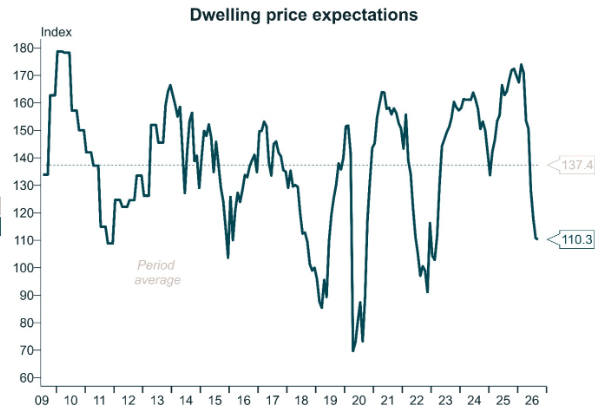
Chart from Alex Joiner at IFM Investors
Australian views of real estate as the wisest place to save also remained at a historically low level in September:
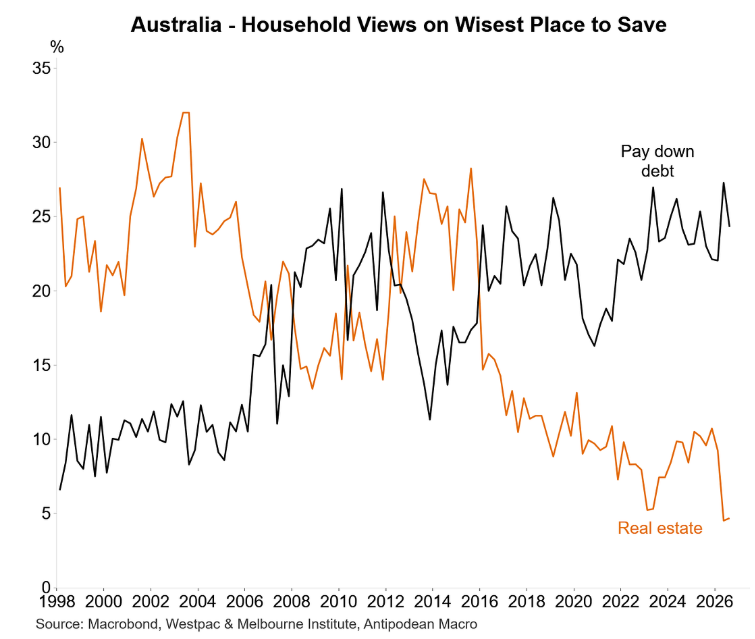
Chart from Justin Fabo at Antipodean Macro
Australia’s housing market is facing a combination of factors that will likely lead to the largest price correction in living memory, including:
- Overvaluation.
- More rate rises are expected from already 15-year highs.
- Changes to negative gearing and capital gains taxes.
- Likely lower immigration.
- New anti-money laundering rules pertaining to real estate, which took effect on 1 July 2026.
- Budget austerity as the state and federal governments try to control the growth in debt.
If anything, Australians aren’t pessimistic enough.
