
The interest rate futures market overwhelmingly expects the Reserve Bank of Australia (RBA) to lift the official cash rate by 0.25% on Tuesday.
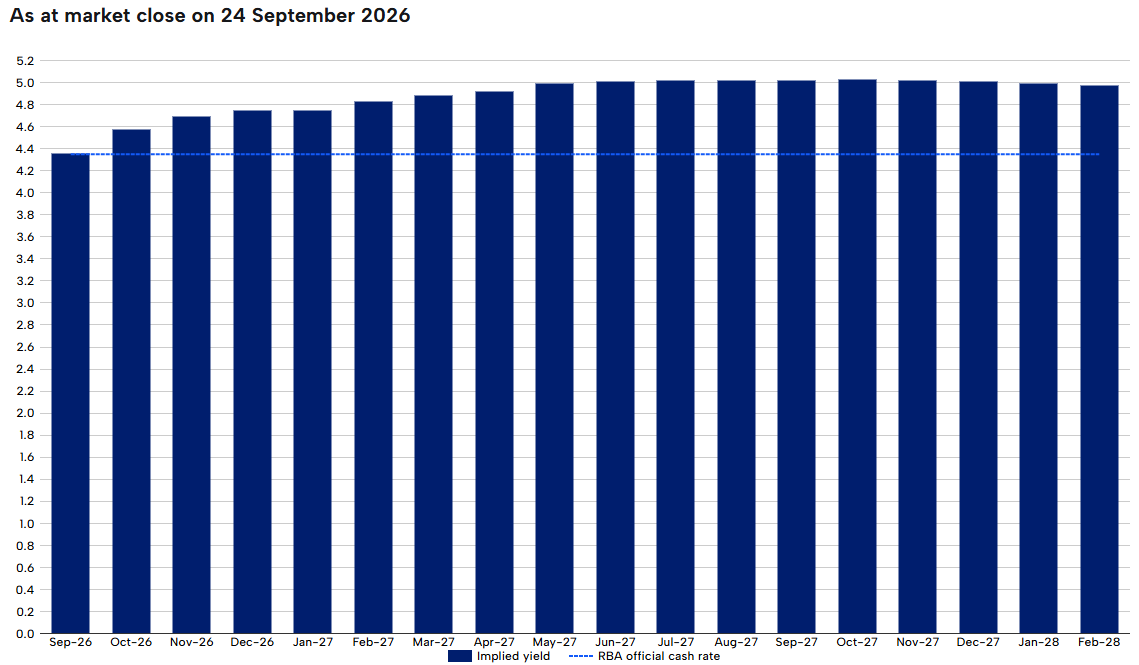
The futures market has also priced in a high probability of two further rate hikes over the next six months, which would take the cash rate to 5.10%.
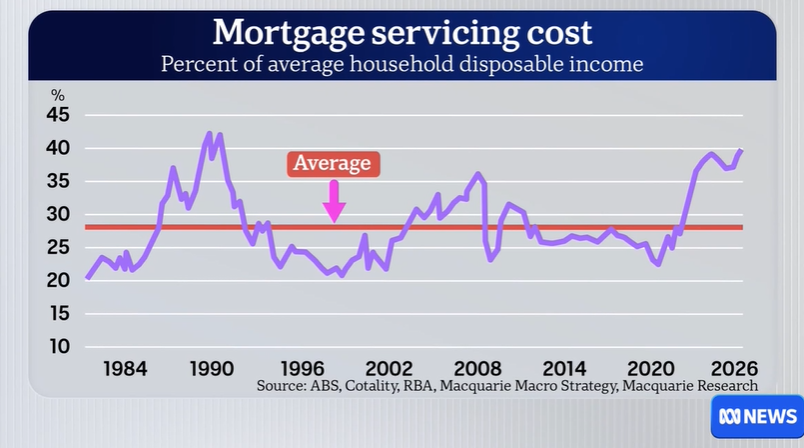
Given that mortgage payments are already taking a near-record share of household income, the prospect of two to three rate hikes has economists warning that the economy could be pushed into a technical recession next year.
While the prospect of rate hikes is indeed worrying, it is not the greatest threat to the Australian economy: fuel shortages, particularly diesel, are.
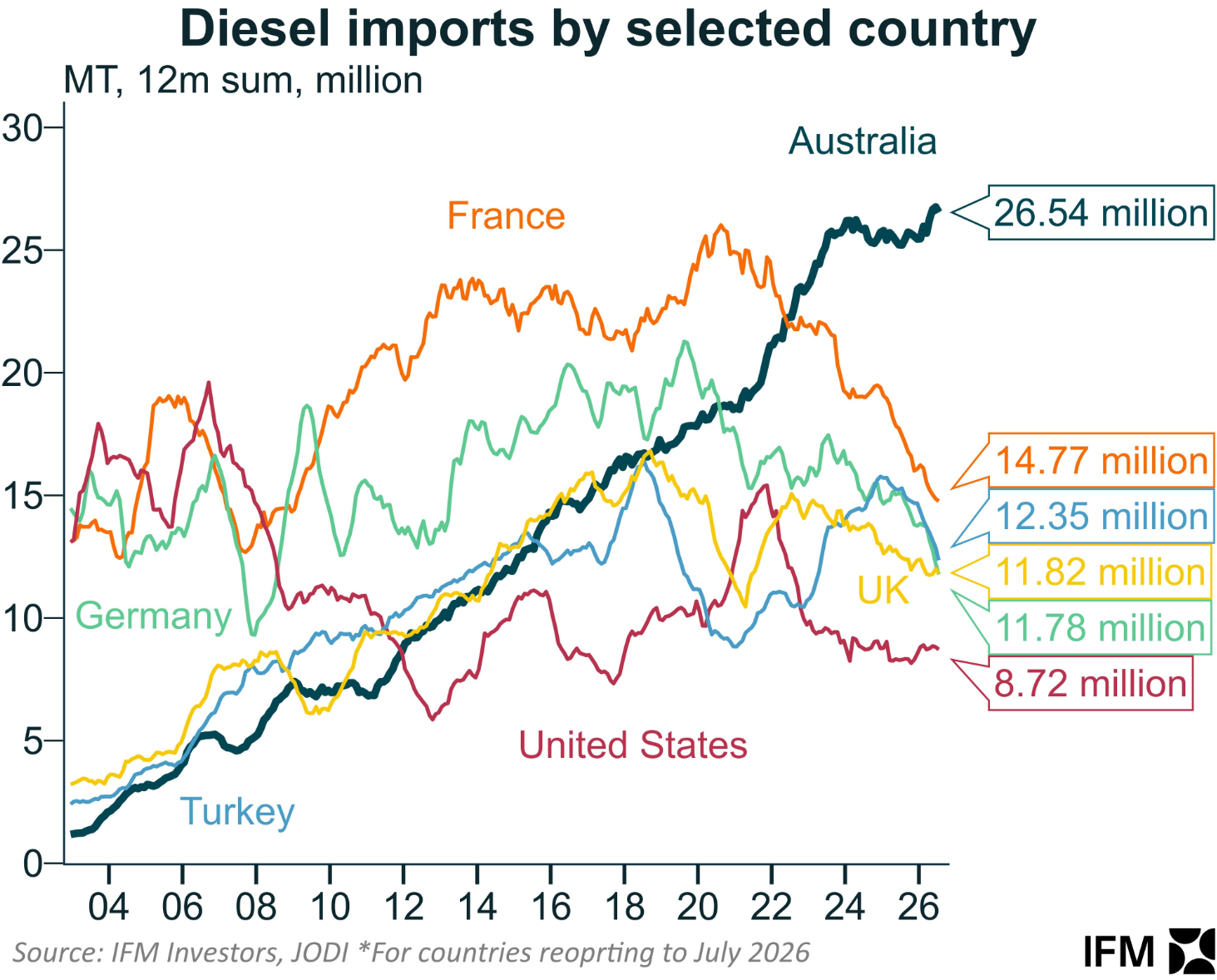
As illustrated below by Alex Joiner from IFM Investors, Australia is easily the largest importer of diesel fuel in the world:
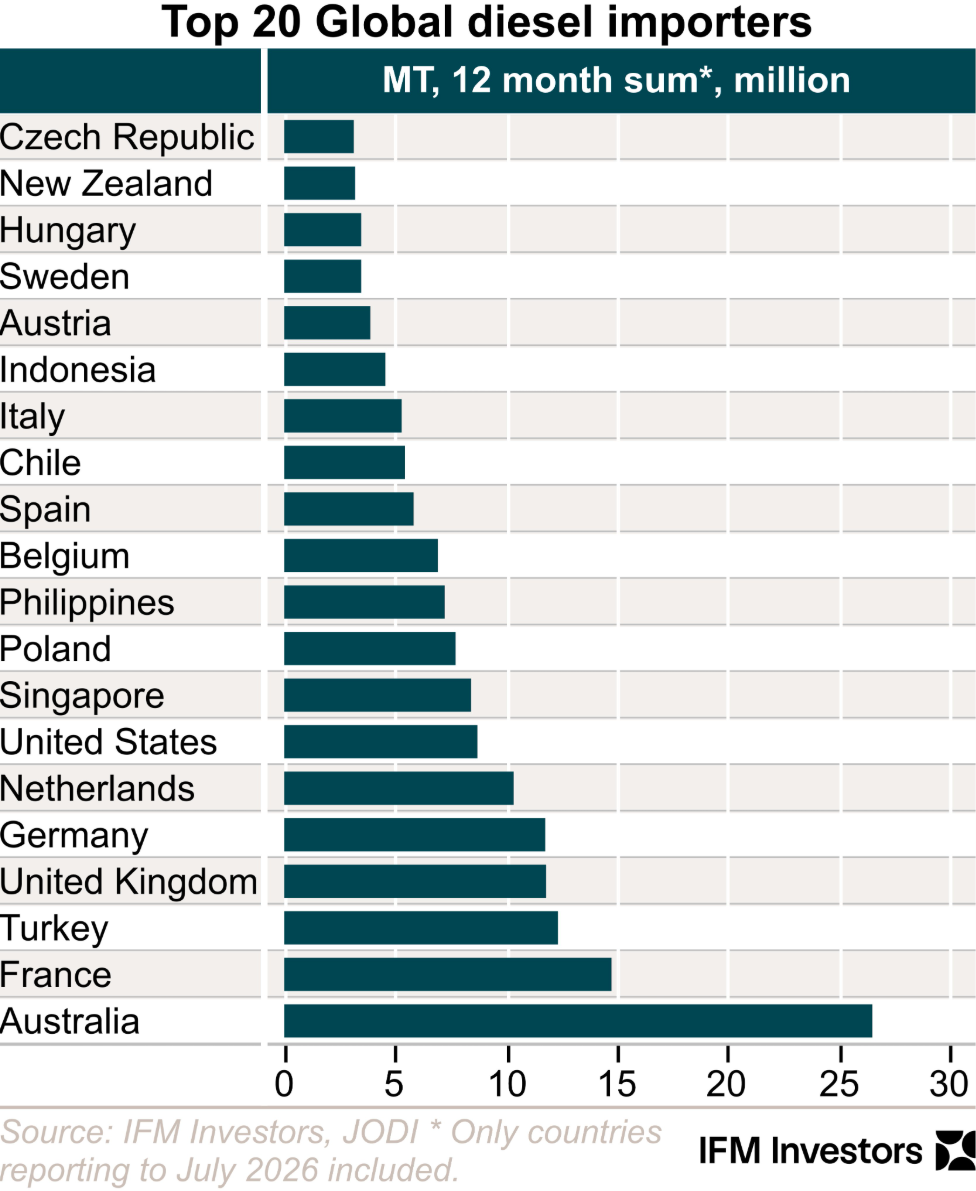
“Australia is uniquely exposed to this diesel price shock given our reliance on imported product, which is by far the highest in the world, not as a % of GDP or per capita but outright”, Joiner wrote on X (Twitter).
“This comes as other countries have scaled back imports and Australia’s have accelerated due in part to refinery closures”.
To add further insult to injury, Sky UK posted the following chart showing that Australia has very low stocks of diesel in reserve:
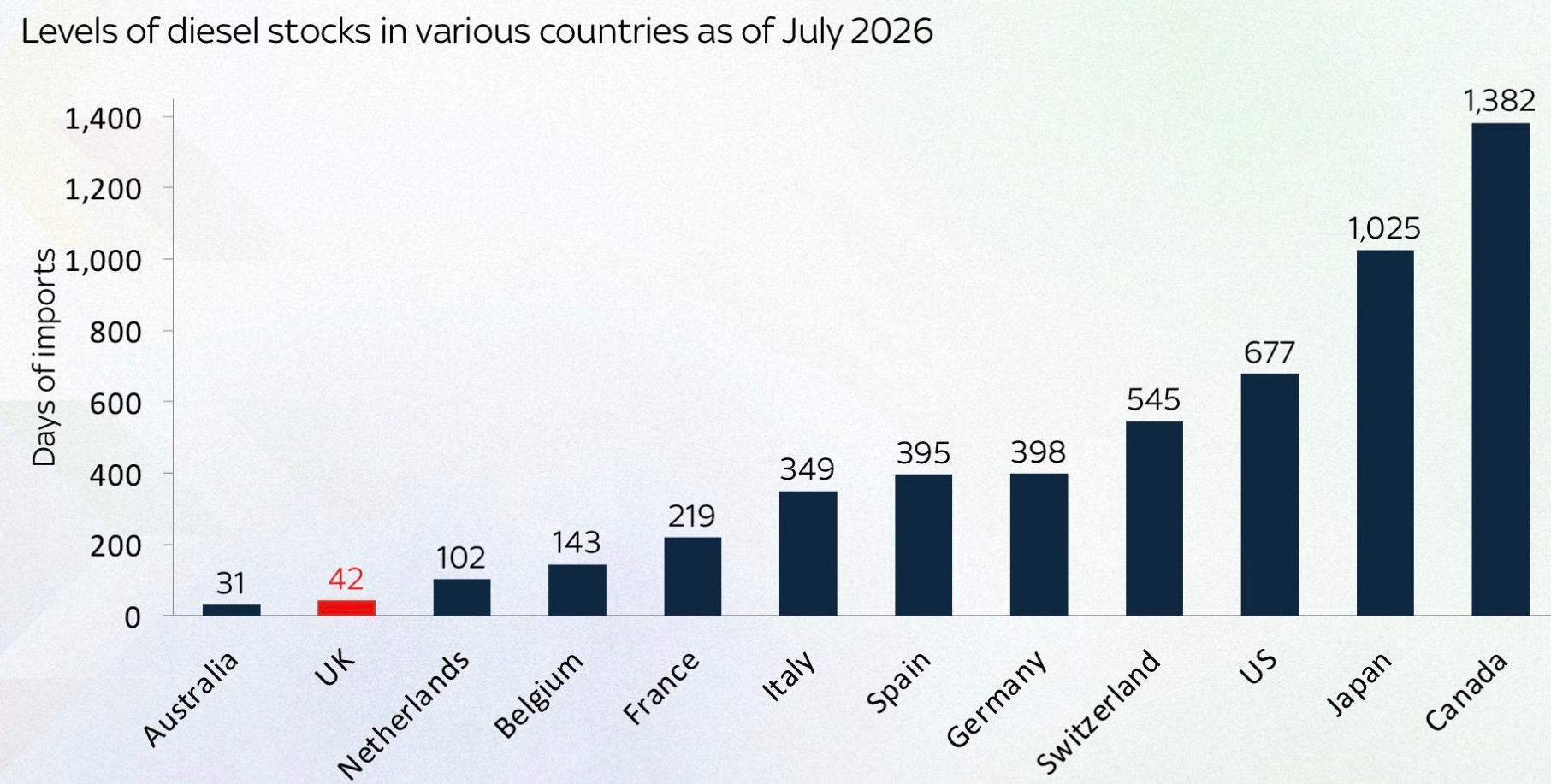
Source: Sky UK
Thus, with the two straits in the Middle East effectively shut and oil flows ceasing, Australia is the most exposed economy on earth to diesel shortages.
The following chart from CBA shows what a 10% reduction in diesel supply would mean to key sectors of the Australian economy—namely mining, construction, transport, and agriculture:
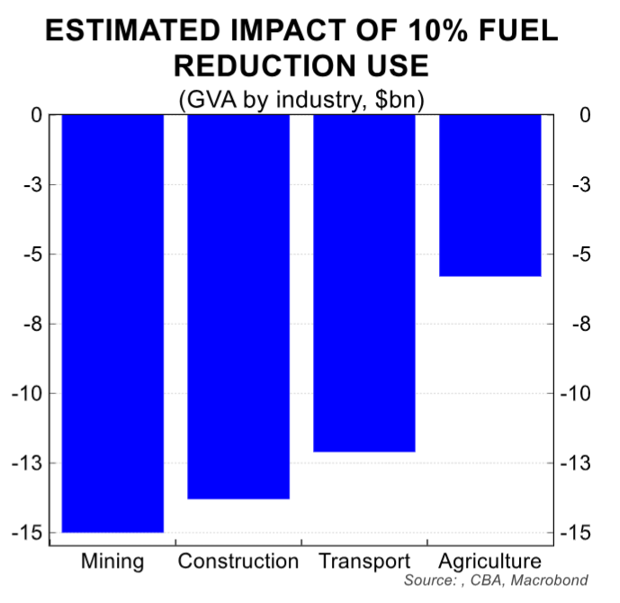
The economic impact would be enormous, effectively shutting down large swathes of the economy. Unemployment would also rise materially.
Even if shortages are avoided, the economy faces severe energy cost inflation, resulting in significant cost-push inflation as firms pass on higher costs.
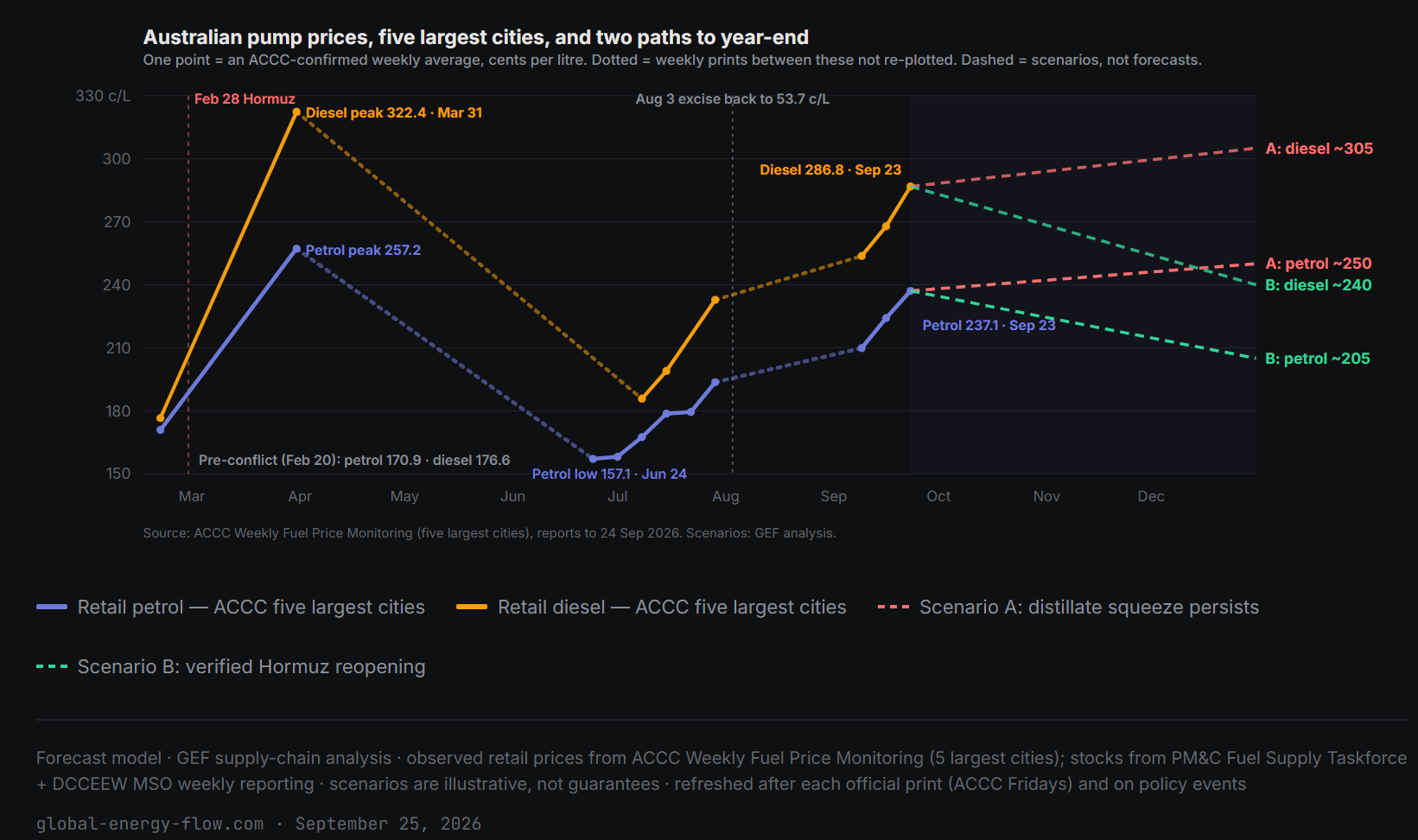
Diesel Price Forecasts (Source: Global Energy Flow)
As a result, overall CPI inflation would rise, increasing pressure on the RBA to hike further.
Higher interest rates alongside rising unemployment would exacerbate the housing downturn, impacting consumption (via the wealth effect) and industries reliant on turnover (e.g., state budgets via stamp duty, real estate agents, mortgage brokers, banks, and retailers).
Indeed, HSBC has forecast a 13% peak-to-trough decline in capital city home values, alongside a 1% reduction in GDP growth, due to slower consumer spending and reduced housing turnover.
Thus, rising fuel prices and/or shortages, higher interest rates, and an accelerating housing downturn have left Australia’s economy facing a technical recession in 2027, alongside a deep per capita recession.
