
According to Cotality, the largest capital city house price decline on record, based on 40 years of data, was between October 2017 and May 2019, when values declined by 8.2%.
Cotality’s dwelling value results for August revealed that values across the combined capital cities have already declined by 4.6%, with a hefty 3.7% decline recorded over the August quarter.
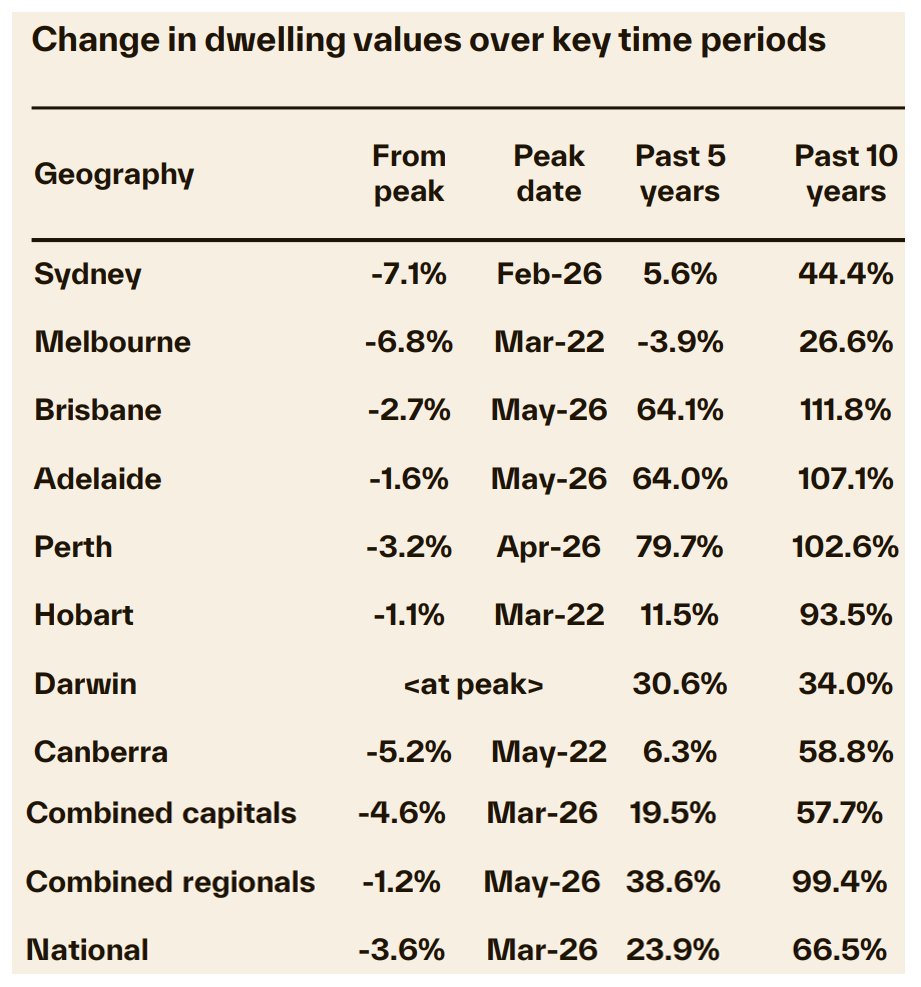
Source: Cotality
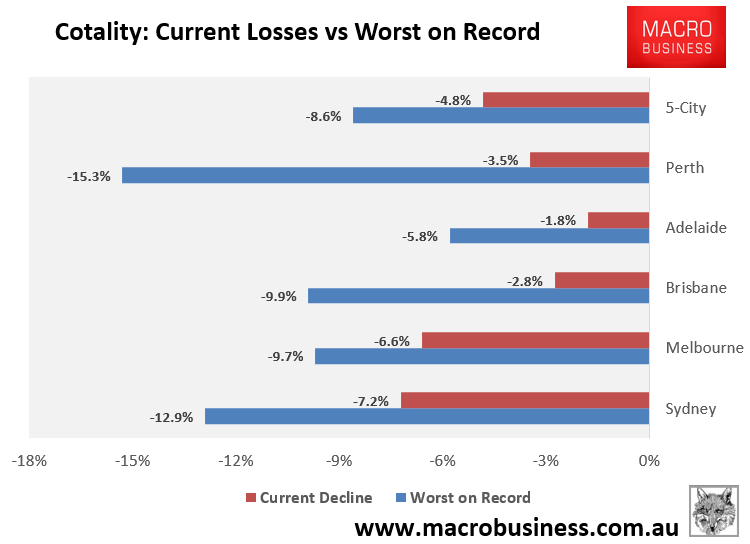
Across the five major capital city markets, Cotality’s daily dwelling values index has recorded a decline of 4.8% to date, compared with the largest decline on record of 8.6%:
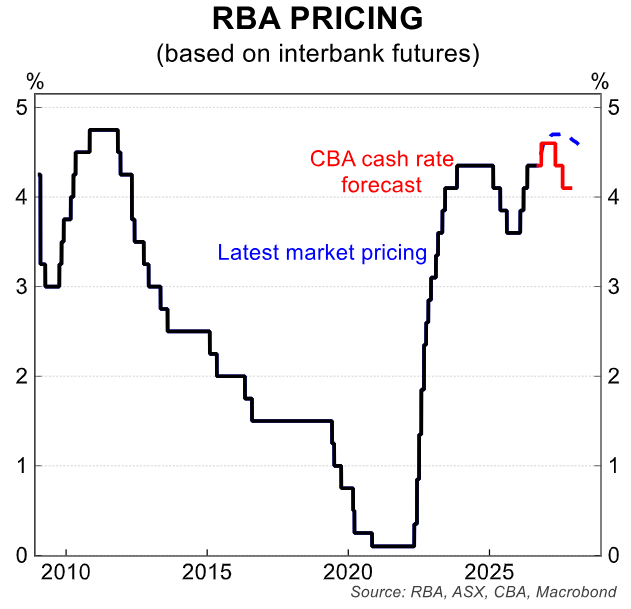
The Reserve Bank of Australia (RBA) is now widely expected to raise interest rates again, with financial markets ascribing a 72% probability of a rate hike at its September meeting and, if not then, a rise at the November meeting.
Financial markets have also ascribed a solid probability of a second rate hike early next year:
The speed of the current decline, combined with the prospect of further rate hikes, has led several banks to downgrade their home-price forecasts.
Australia’s largest lender, CBA, this week forecast a peak-to-trough decline in dwelling values of 10% across the five major capital cities, which would be the largest on record:
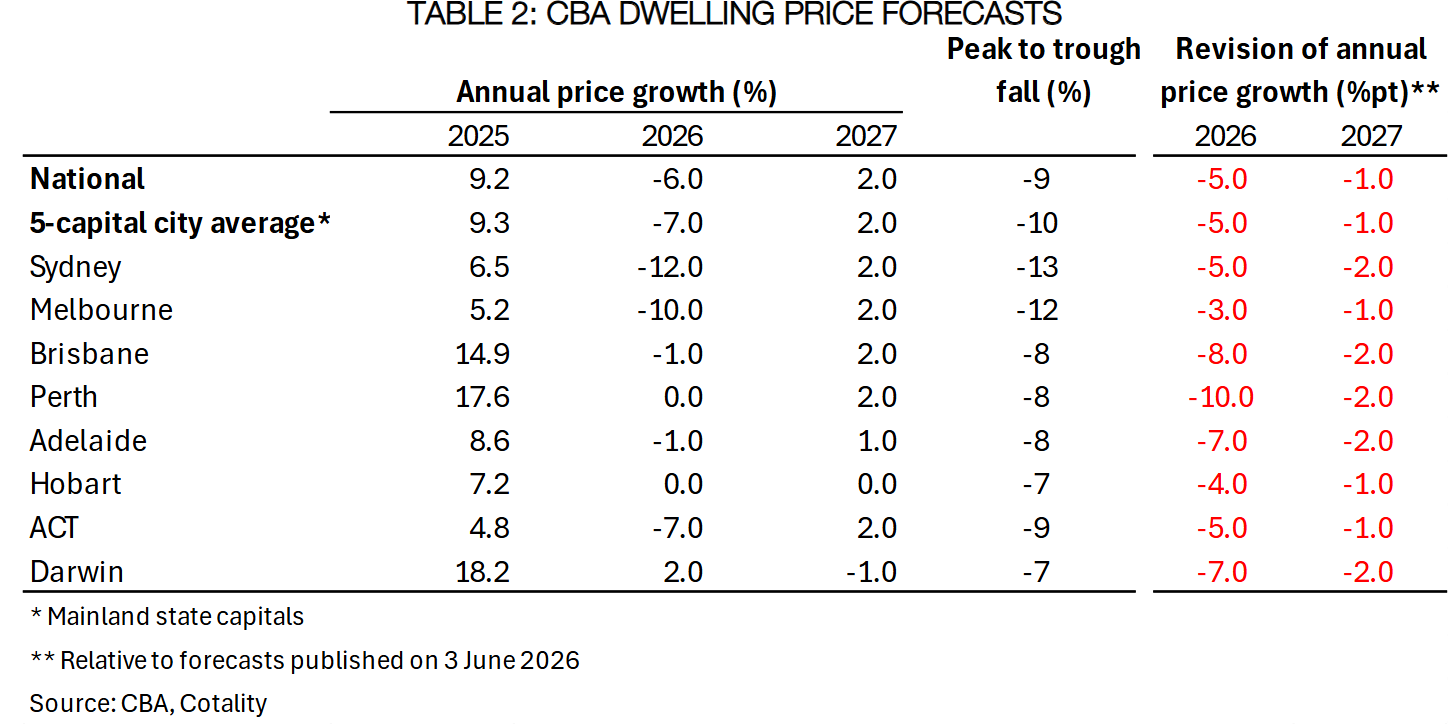
However, CBA’s forecast assumes only one further rate hike, followed by two cuts in May and August 2027. Therefore, if the RBA delivers two hikes or fails to deliver the expected cuts next year, then price falls would be steeper.
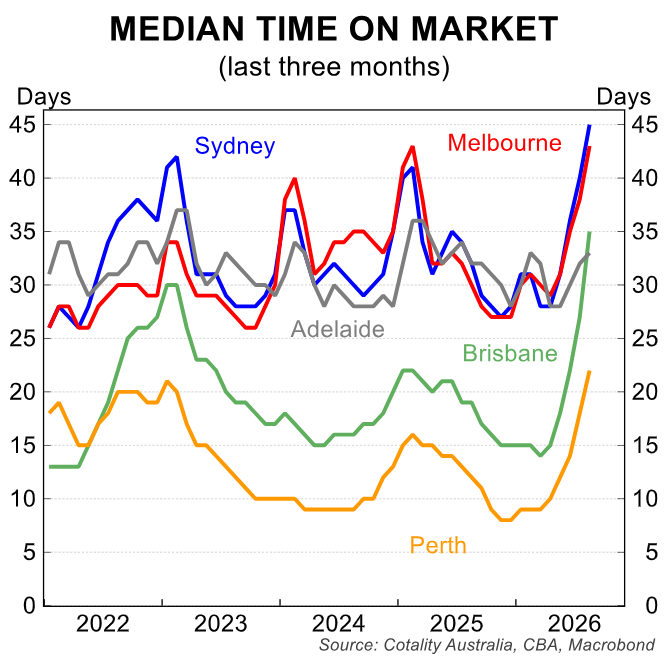
CBA also noted that the time taken to sell has shot higher, suggesting significant weakness in the market:
HSBC chief economist, Paul Bloxham, has also downgraded his forecast for Australian house prices in light of further expected rate hikes from the RBA, expecting a 13% peak-to-trough fall.
“We see this weakening growth more into 2027 and have revised down our growth forecasts such that growth nearly stalls around the turn of the year”, he said. “We expect higher rates will now mean an even bigger housing correction, with a peak-to-trough decline of 13% (previously 8%)”, he said.
To borrow a line from Paul Keating: “This is the house price downturn we had to have”.
The reality is that home values rose to absurd levels and became unaffordable to middle-class Australians.
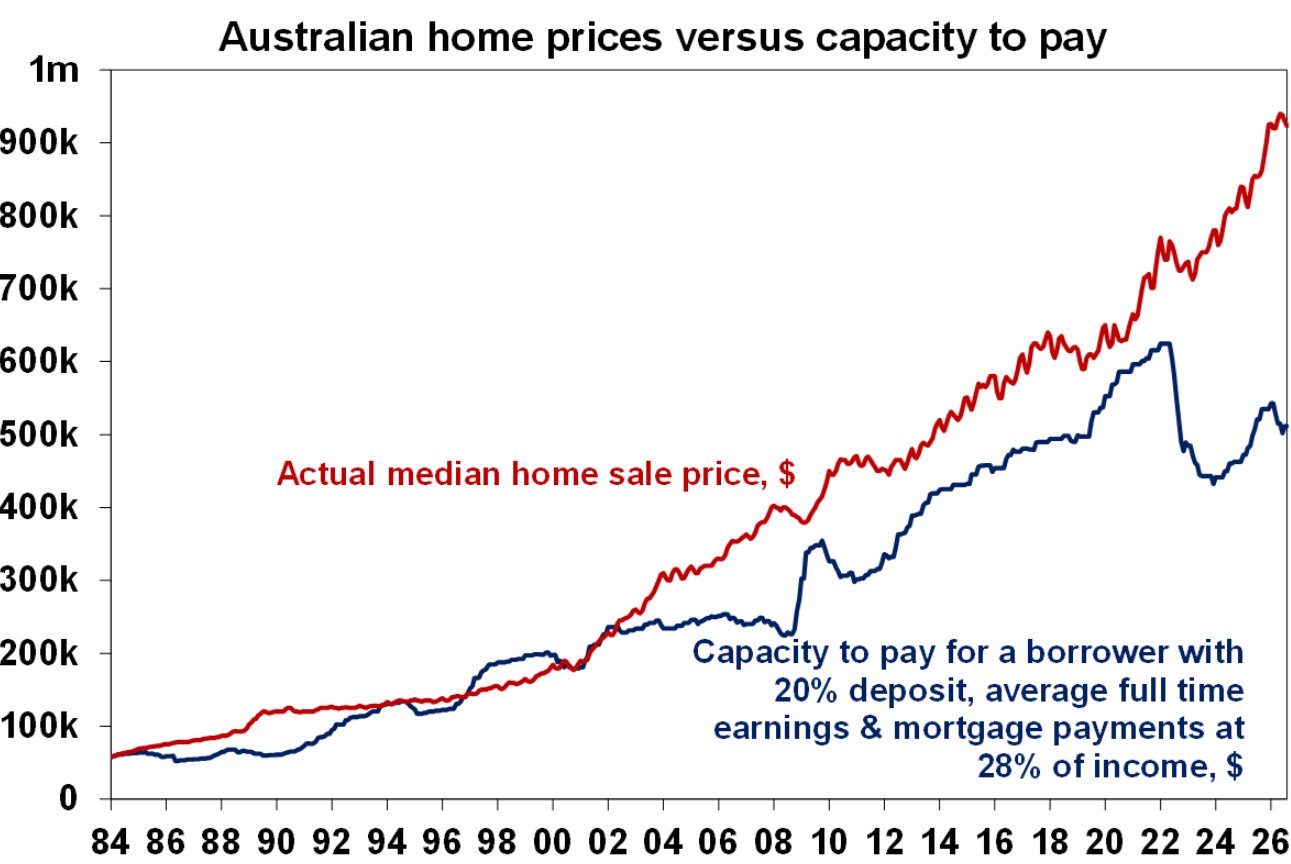
Chart from Shane Oliver (AMP)
Now prices must reset to a lower level relative to incomes, just as they have in New Zealand and Canada, where values have fallen by nearly 20% in nominal terms and far more in real terms.
Higher interest rates, the federal budget’s changes to negative gearing and capital gains tax, the implementation of anti-money laundering rules for real estate, budget austerity, and likely lower immigration are the necessary ingredients for the largest house price decline in living memory.
