
I did warn that the spineless dog would do this.
The Albanese government is set to retreat from its demand that Australia’s gas exporters set aside a fixed 20 per cent of their supplies for domestic use and will instead require them to put “up to” one fifth of their production into the local market.
The government will on Thursday release draft legislation of the closely watched gas reservation plan, which it originally said would permanently solve domestic supply issues by forcing exporters to sell a full 20 per cent of their gas locally.
However, the latest version of the proposed laws suggests the exporters will not necessarily need to reserve the full 20 per cent, as long as the domestic market is adequately supplied, according to a draft release seen by The Australian Financial Review.
The government has also delayed the beginning of the scheme by an extra six months, which is says is needed to “align with industry contracting cycles”, meaning gas exporters will not need to meet their supply obligations until January 1, 2028.
What absolute garbage. The scheme exempted current export contracts, leaving very little gas reserved for the next decade.
| Year | Exports (PJ) | Contracts (PJ) | Spot + new contracts (PJ) | Reservation Volume (PJ) | Remaining 2P (PJ) | Bass Strait Supply (PJ) |
|---|---|---|---|---|---|---|
| 2015 | 420 | 700 | -280 | -56 | 38,000 | 680 |
| 2016 | 940 | 950 | -10 | -2 | 37,060 | 650 |
| 2017 | 1,140 | 1,030 | 110 | 22 | 35,920 | 620 |
| 2018 | 1,190 | 1,080 | 110 | 22 | 34,730 | 590 |
| 2019 | 1,200 | 1,110 | 90 | 18 | 33,530 | 560 |
| 2020 | 1,120 | 1,120 | 0 | 0 | 32,410 | 530 |
| 2021 | 1,270 | 1,140 | 130 | 26 | 31,140 | 500 |
| 2022 | 1,177 | 1,150 | 27 | 5 | 29,963 | 470 |
| 2023 | 1,194 | 1,160 | 34 | 7 | 28,769 | 450 |
| 2024 | 1,250 | 1,170 | 80 | 16 | 27,519 | 430 |
| 2025 | 1,233 | 1,170 | 63 | 13 | 26,286 | 410 |
| 2026 | 1,230 | 1,170 | 60 | 12 | 25,056 | 390 |
| 2027* | 1,225 | 1,170 | 55 | +11 | 23,831 | 370 |
| 2028* | 1,220 | 1,165 | 55 | +11 | 22,611 | 350 |
| 2029* | 1,215 | 1,160 | 55 | +11 | 21,396 | 330 |
| 2030* | 1,210 | 1,150 | 260 | +52 | 20,186 | 310 |
| 2031* | 1,120 | 1,150 | 260 | +52 | 19,066 | 290 |
| 2032* | 1,100 | 1,100 | 260 | +52 | 17,966 | 270 |
| 2033* | 1,100 | 1,100 | 260 | +52 | 16,866 | 250 |
| 2034* | 1,100 | 1,100 | 260 | +52 | 15,766 | 230 |
| 2035* | 1,100 | 1,100 | 260 | +52 | 14,666 | 210 |
WA’s experience is that even with a hard requirement to supply the domestic market, volumes will be gamed and white-anted.
Albo’s “up to” a hard requirement makes the entire endeavour entirely meaningless.
Once again, your nation has been flushed down the toilet to protect commodity interests, even though half of them are so despairing at policy settings that they are cheering on much tougher measures.
This move is an enormously inflationary backdown that all but guarantees further hollowing out of Australian industry and further problems for the energy transition.
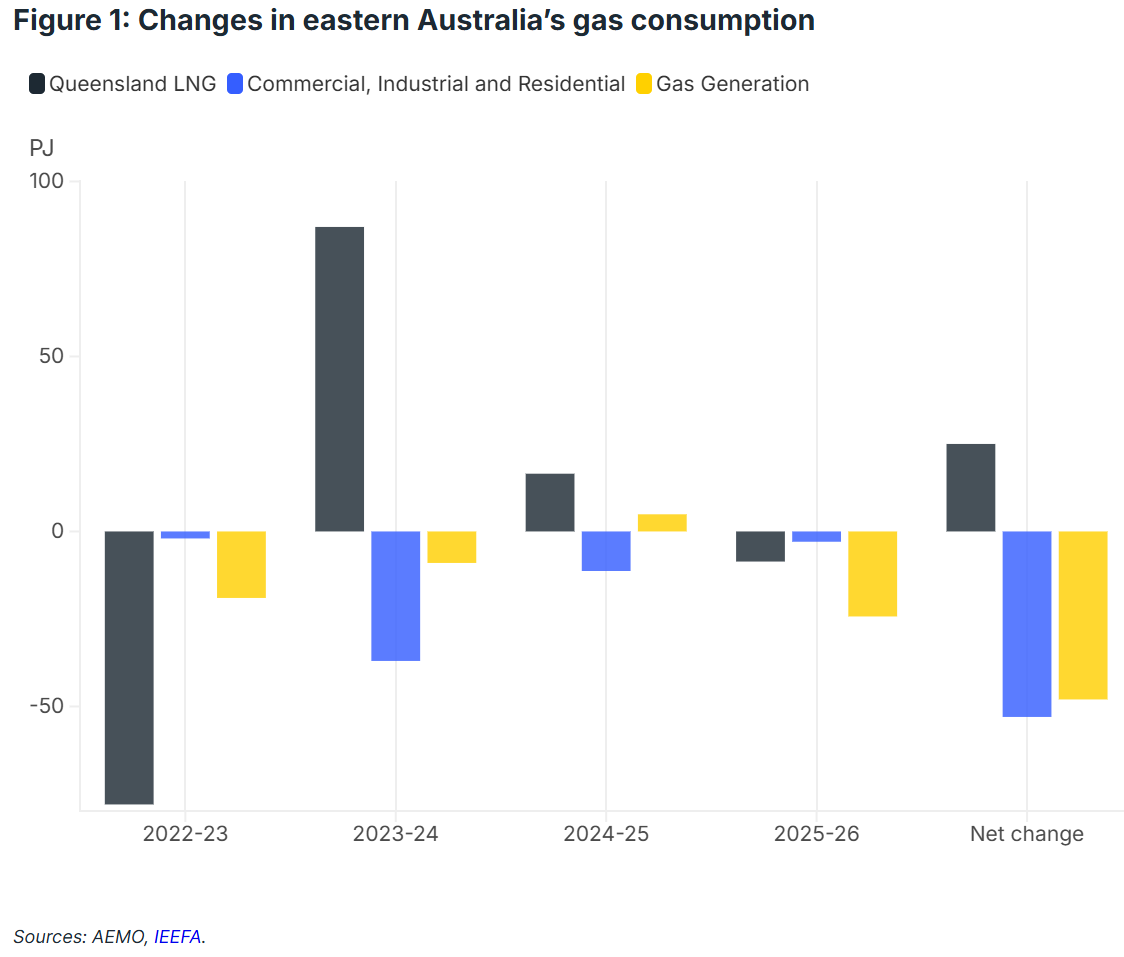
Be thankful for batteries that will at least prevent the ongoing gas price shock from spreading into electricity bills.
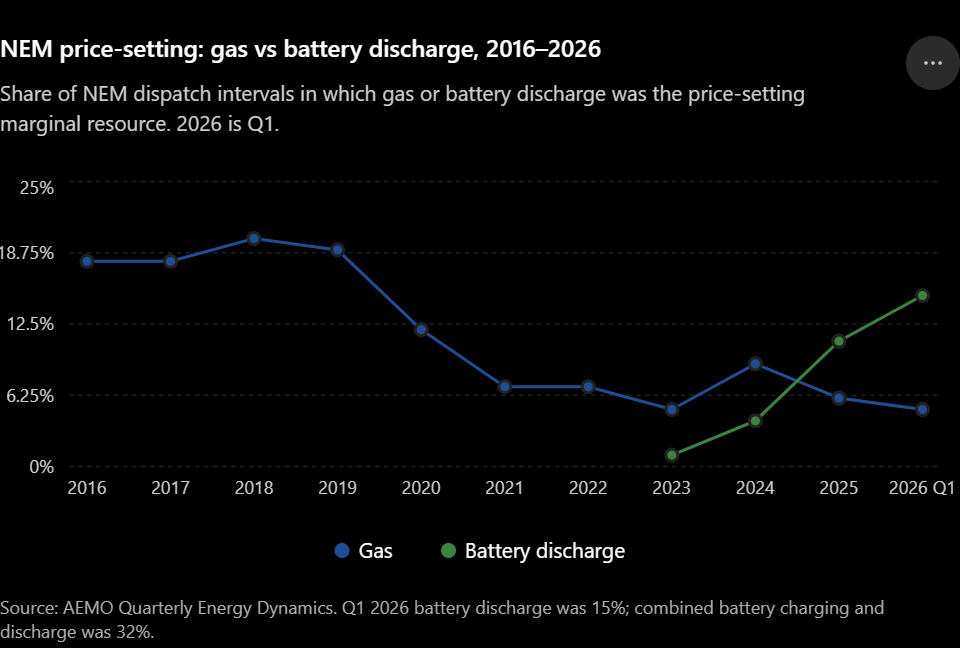
AEMO also reports that the average price when gas was the marginal price setter was $187/MWh, versus $133/MWh when battery discharge displaced it.
