
Cotality has revised its daily dwelling values index downward, making the current housing correction worse than previously thought.
The quarterly rate of decline at the 5-city aggregate level is now 3.8%, up from 3.0%, with all major markets recording significant declines.
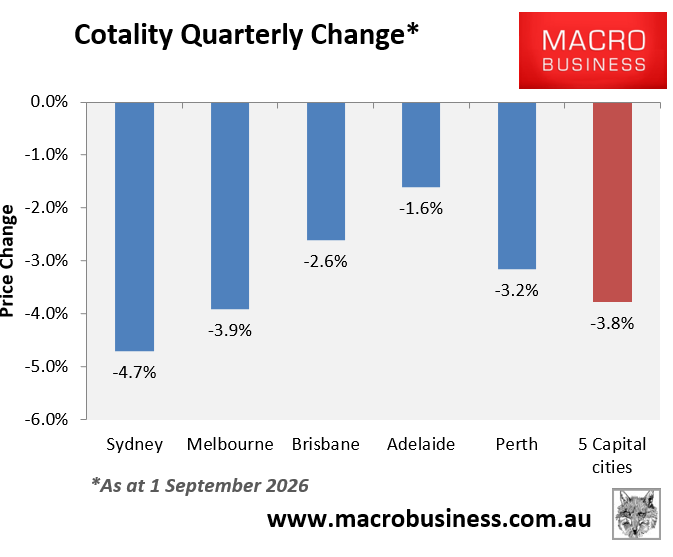
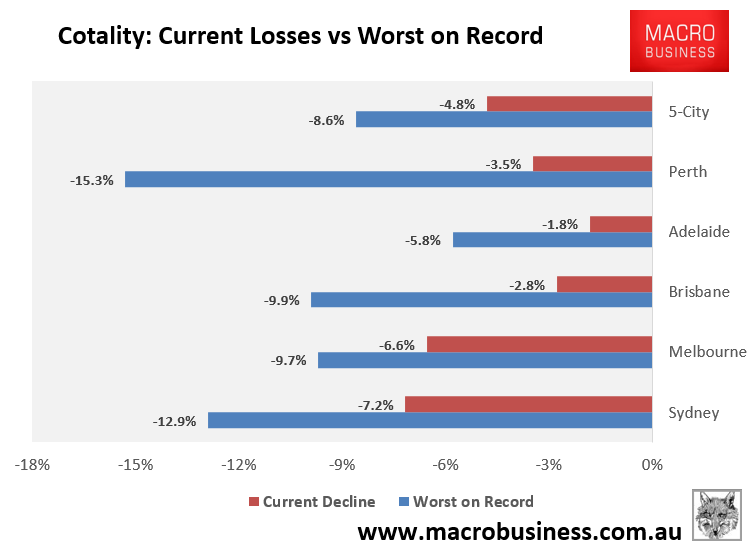
The decline from the most recent peak is also now far worse than thought, with values down by 4.8% at the 5-city aggregate level, with Sydney’s cumulative losses now greater than 7%:
Cotality noted that 93% of capital city suburbs have recorded falls, suggesting the correction is synchronised across almost every market and price tier.
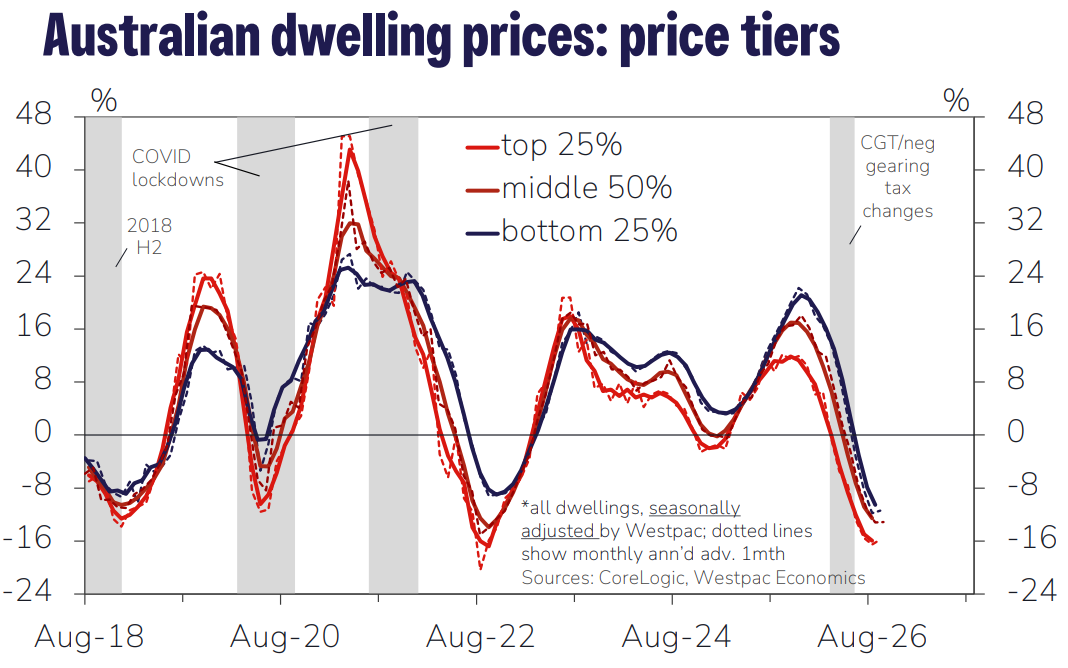
Chart from Westpac Economics
The sheer pace of the decline has led more analysts to proclaim that the market is facing its largest declines in more than 40 years – something I have been predicting for months.
“I would argue that we are headed for the largest correction in Sydney for at least the last 40 years and that view is not breaking from the pack”, Cotality’s head of research Tim Lawless remarked following the August results.
Lawless said the downturn was “entrenched” and another rate rise would only make that fall more likely.
“There is a multiplier effect from this too, which is that people feel less wealthy and they stop spending”, he said.
“There is a clear risk that we end up with the largest correction in recent history”, HSBC chief economist Paul Bloxham said. “Given the pace of decline is so significant, that usually needs a circuit break in the form of a rate cut. But there is no rate cut any time soon”.
The reality is that the housing market is facing a severe combination of factors that will continue to drive values and sales volume lower, including:
- Overvaluation – This correction started with valuations at record highs.
- The highest mortgage rates in 15 years, which are likely to rise even further amid stubbornly high inflation.
- The federal budget’s changes to negative gearing and capital gains tax have put the brakes on investor demand.
- Likely lower immigration, with all three major parties promising cuts.
- Money laundering crackdown – real estate gatekeepers (i.e., agents, lawyers, and accountants) became AUSTRAC-regulated entities for the first time on 1 July 2026.
- Budget austerity – soaring state and federal debt, along with rising interest payments, will force spending cuts, effectively a ‘reverse stimulus’.
Based on the current pace of decline, Cotality’s daily index would reach its largest decline on record (40 years) by around the end of this year.
While the falls to date have been driven by Sydney (-7.2%) and Melbourne (-6.6%), there is good reason to believe that the pace of decline across the mid-sized capitals will accelerate.
As illustrated below by Cotality, the number of homes listed for sale has ballooned across Brisbane (+51.4%), Adelaide (+40.5%) and Perth (+50.5%), offering buyers plenty of choice and leverage in negotiations:
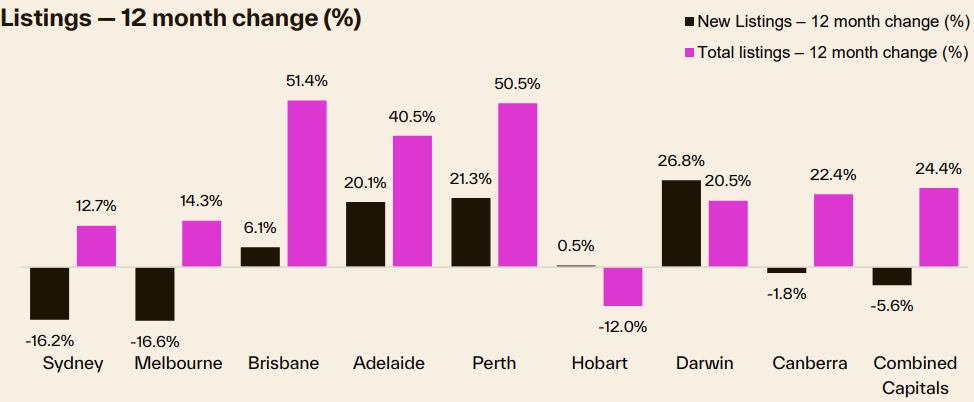
Source: Cotality
The median time on market has also shot higher:
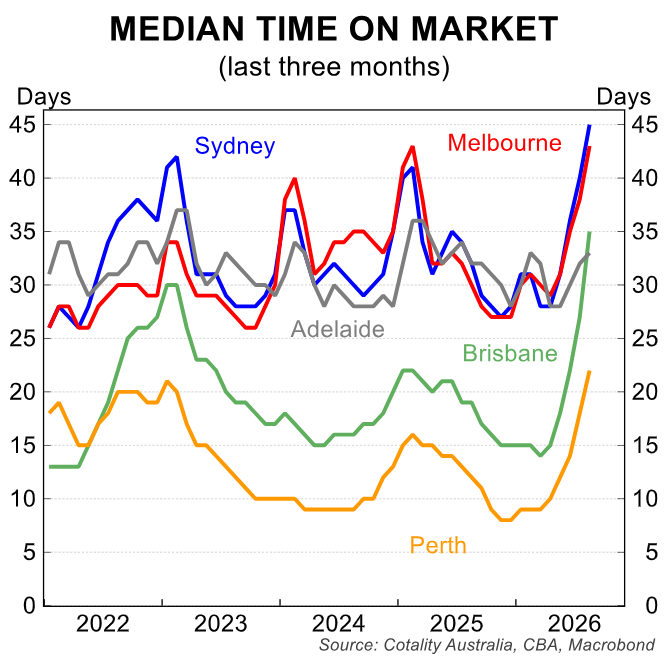
Chart from CBA
With supply surging and demand likely to stall amid further interest rate rises, Australia’s house price correction will inevitably deepen.
Preliminary estimates show the number of sales, in rolling 3-month terms, down 6.3% over the quarter and by 15.2% annually.
As a result, Australia’s deeply indebted state governments also face sharp falls in stamp duty receipts, which will worsen budget deficits and likely lead to credit rating downgrades.
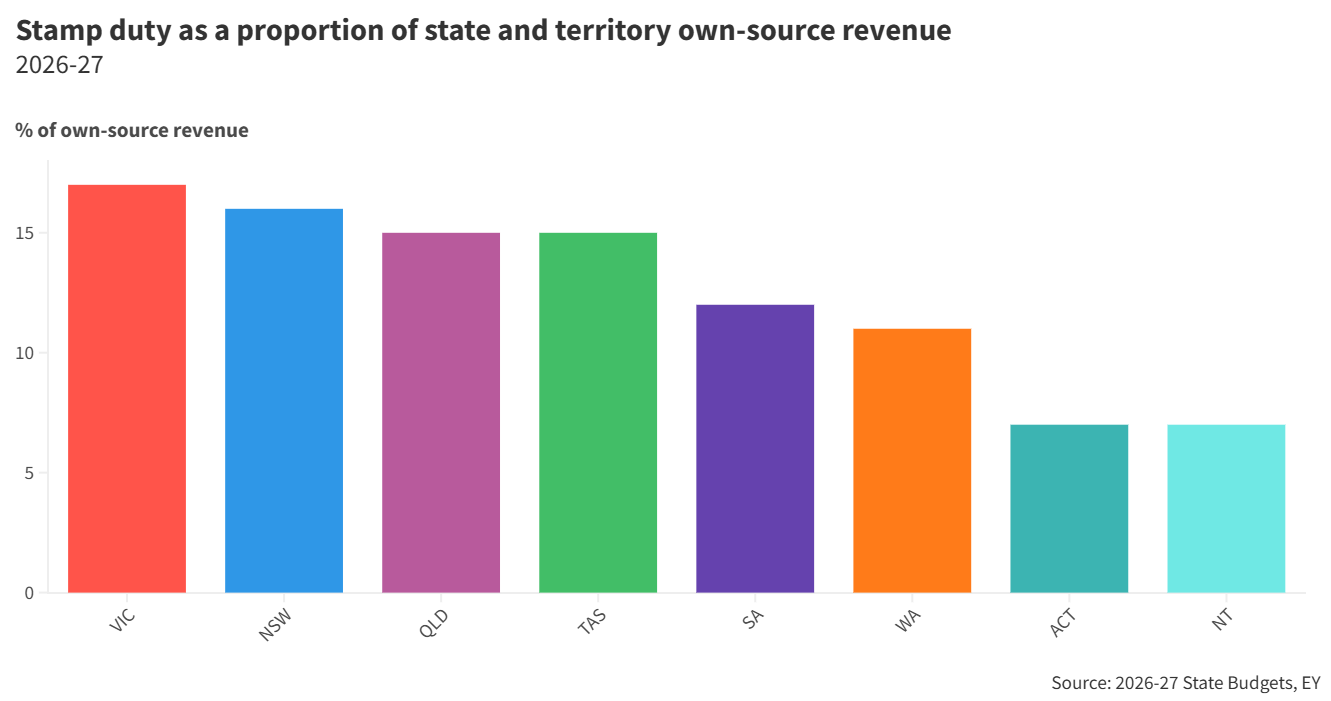
Source: EY
After 30 years of rising housing values, the tide is finally going out. And the effects will be felt throughout the economy.
To borrow a turn of phrase from former Prime Minister Paul Keating, “It is the price reset that we had to have”.
