
The AEMO provides a neat quarterly assessment of the NEM renewables rollout, giving us a snapshot of where things are at.
In short, the major reason the pipeline of renewables has slowed is that connections have not kept pace. This bottleneck is easing, but the pace of applications for new projects is accelerating much faster.
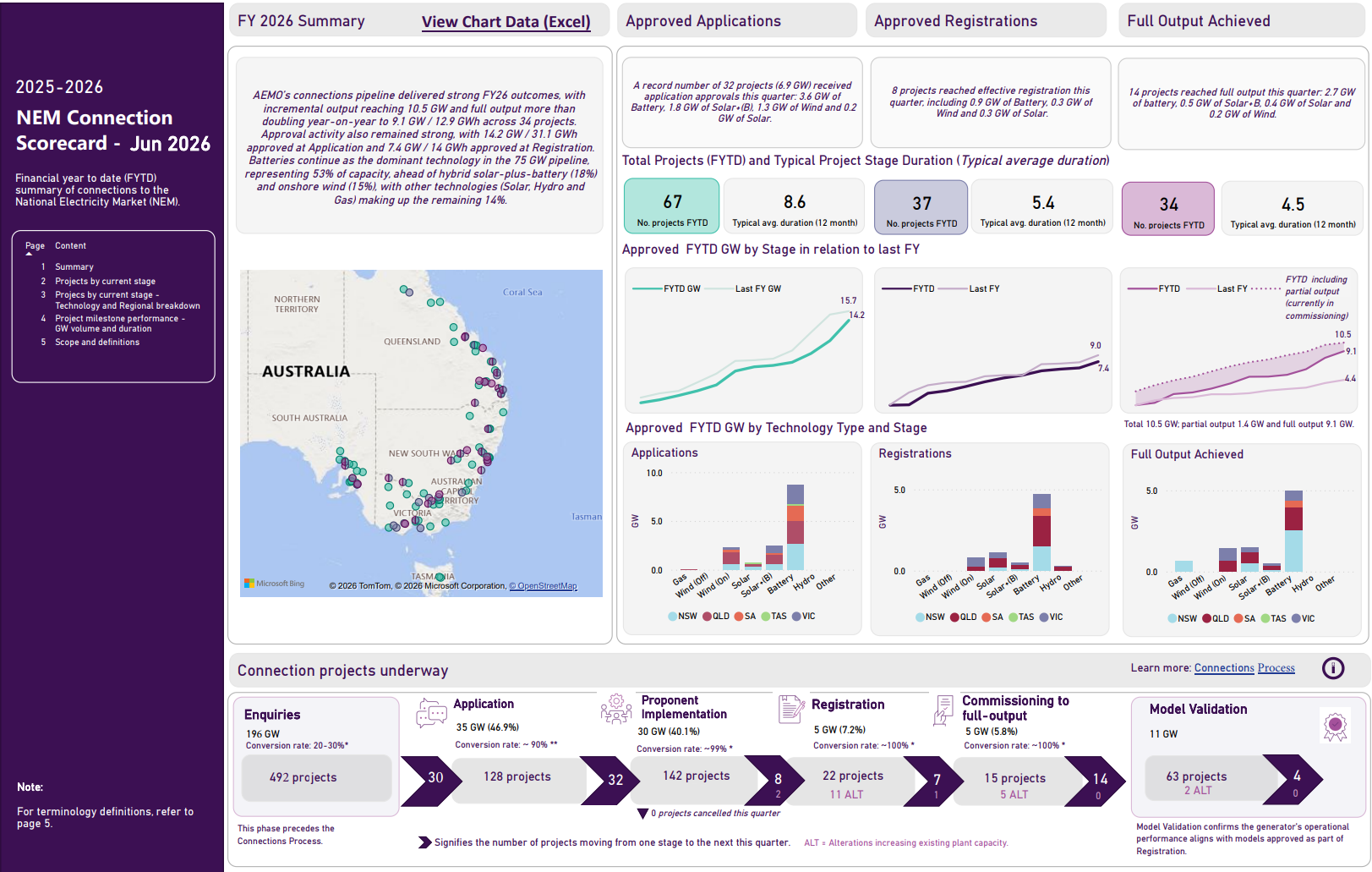
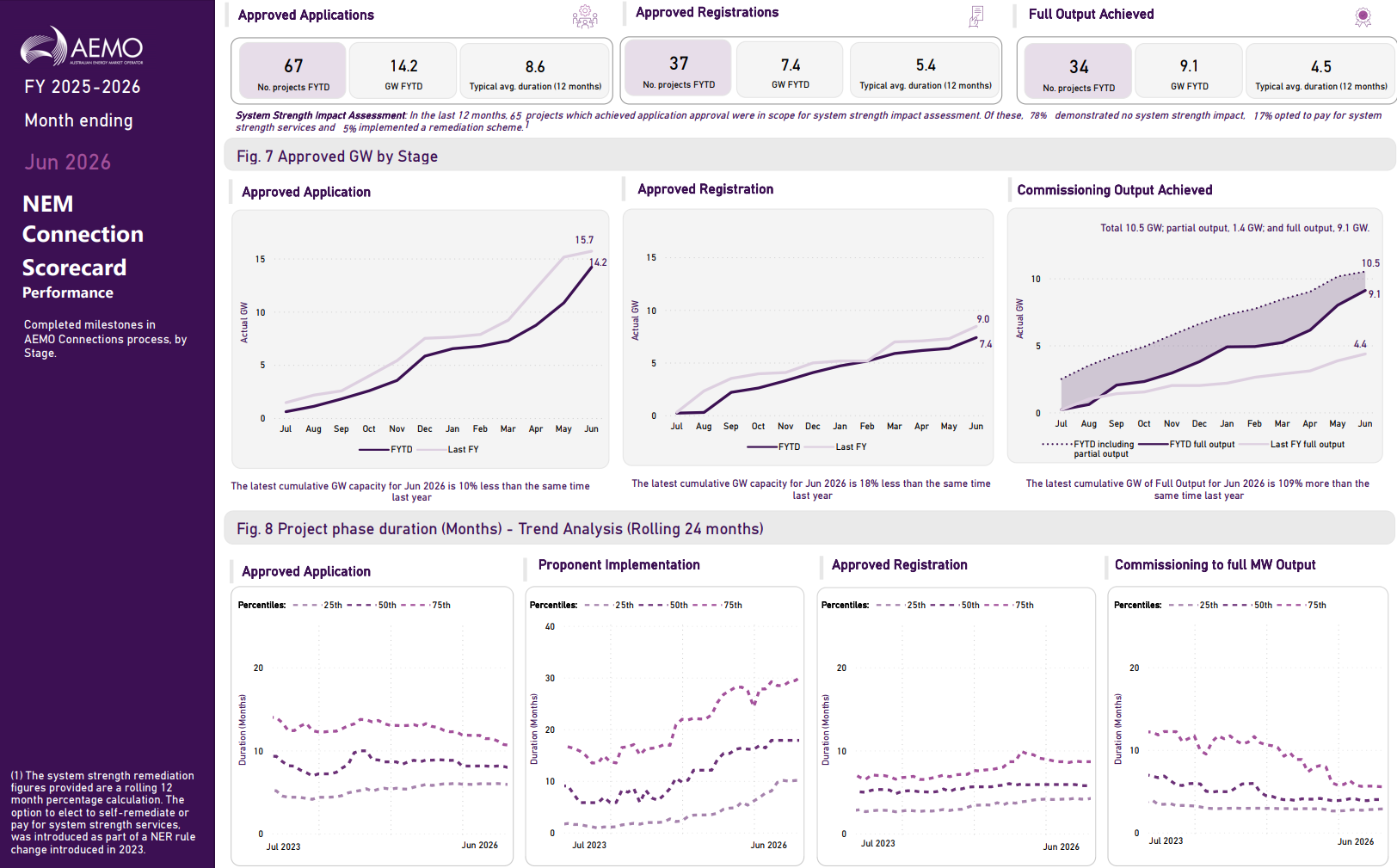
AEMO’s connections pipeline delivered strong FY26 outcomes, with incremental output reaching 10.5 GW and full output more than doubling year-on-year to 9.1 GW / 12.9 GWh across 34 projects. Approval activity also remained strong, with 14.2 GW / 31.1 GWh approved at Application and 7.4 GW / 14 GWh approved at Registration.
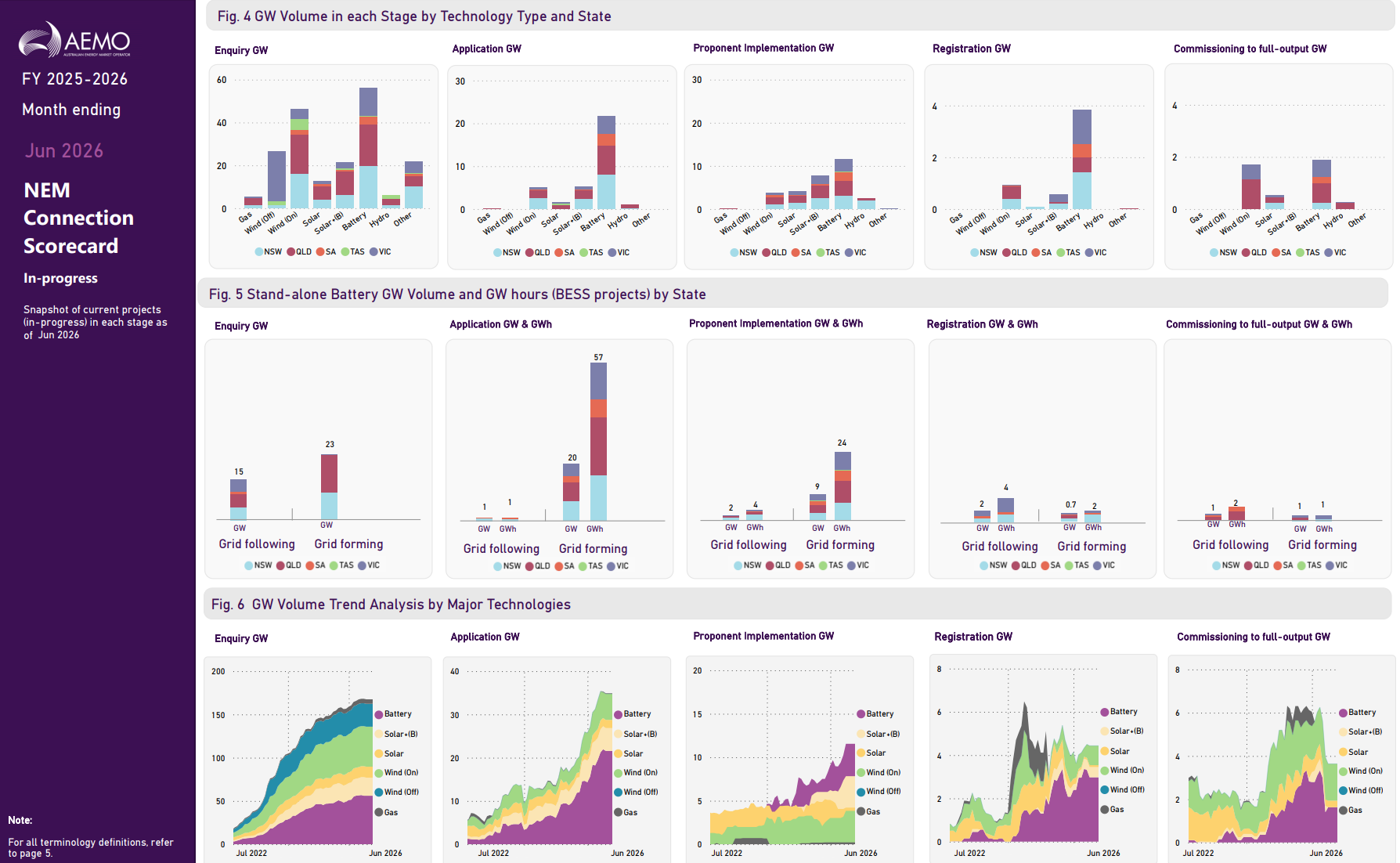
Batteries continue as the dominant technology in the 75 GW pipeline, representing 53% of capacity, ahead of hybrid solar-plus-battery (18%) and onshore wind (15%), with other technologies (Solar, Hydro and Gas) making up the remaining 14%.
Why are batteries surging ahead of generation? Because Australia’s lopsided transition, led by households’ rooftops rather than utilities, creates a daily energy duck curve that crashes electricity prices during the day, making batteries a better profit centre for utilities than generation.
This area of excess profitability will ease over time as investment chases it. The nature of capitalism.
The Capacity Investment Scheme (CIS) has failed to fix this issue. Instead, it has triggered many underbid-generation projects that have had to rework or drop their business models when confronted with a tougher reality. My bad on that one.
The better news is that the storage boom will reduce gas’s role in setting prices within the NEM, and wholesale prices ought to fall.
The connections problem is evident in the lengthening of implementation times, which have blown out to two years.
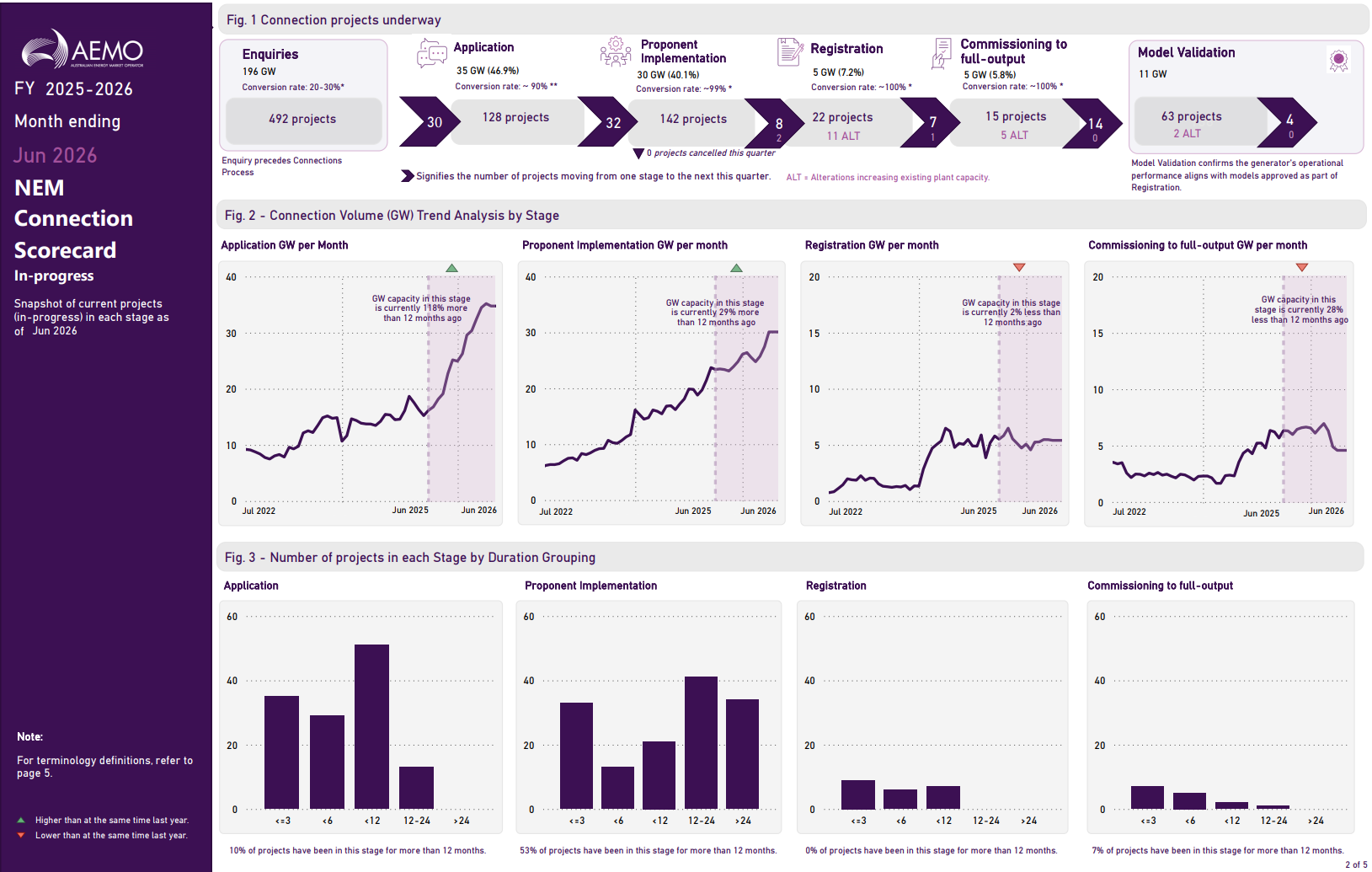
Are things going to improve? Completions have dropped sharply, but the pipeline is still reasonable, so things ought to improve as connections and firming power boom.
Where does this leave the overall transition? Behind. By years, not months.
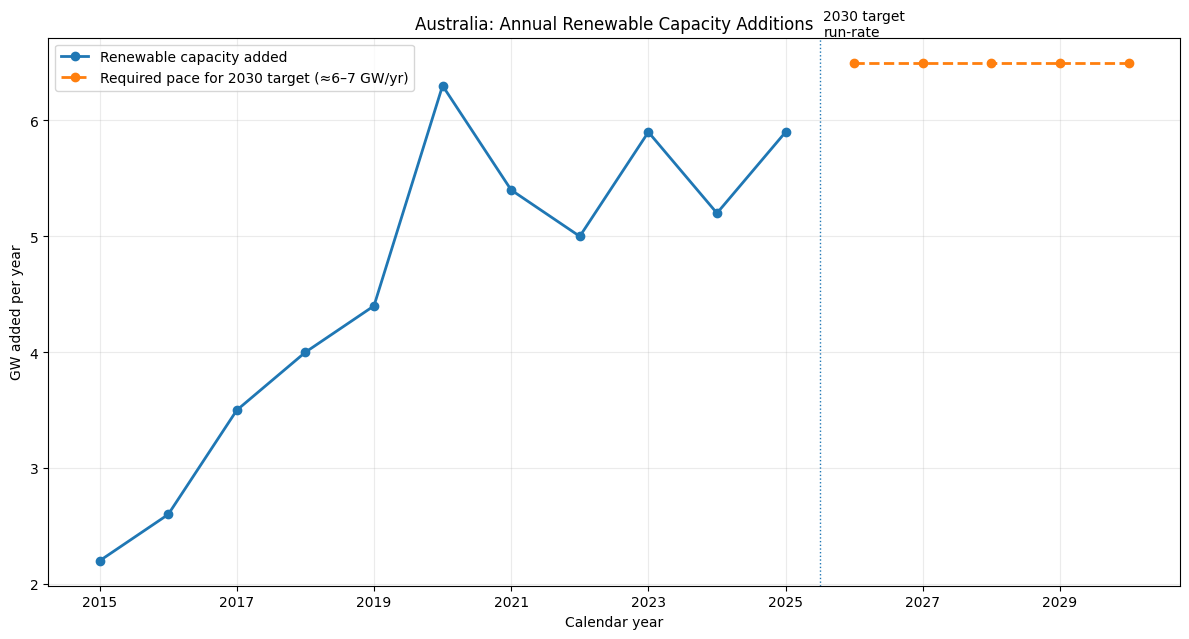
Thus the inevitable has happened again, and state governments are publicly subsidising unprofitable coal-fired power to fill the generation gap for now.
The question is how to resolve it. The first thing we should do is not be here at all. A carbon price and gas reservation policy would have avoided all of these problems.
That, in turn, points to the most fundamental problem with the transition: its politicisation. Those who derailed it now constantly gaslight the public by blaming the derailment of the transition on alleged implicit problems with renewable energy.
The second problem is the gas cartel, which has spiked wholesale and retail electricity prices, a problem that is instead constantly blamed on the transition.
This is generating increased community resistance to the entire project, exacerbating the connections lag, and giving more excuses to the skeptics to gaslight the failures.
Now we are in this piecemeal mess; we are in danger of leaving ourselves with a half-pregnant grid that produces large amounts of firmed renewable power increasingly cheaply but not enough to shut down old-age coal power by projected deadlines, where breakdowns are threatening brownouts more and more often.
The answer is not to build obscenely expensive coal or nuclear power, both of which are much slower (2 years for renewables versus 10 years at best for a super-critical coal plant). Coal would still require public subsidy because it cannot provide firming power quickly enough and loses money for half the day. Nuclear can firm power, but it’s very expensive, and god only knows how long and how expensive it would be to build under the conditions of the Australian tax. Think a nuclear version of Snowy Hydro 2.0, which obviously should never have been built. If cheap SMRs become available, that would be terrific, but the latest is not especially encouraging.
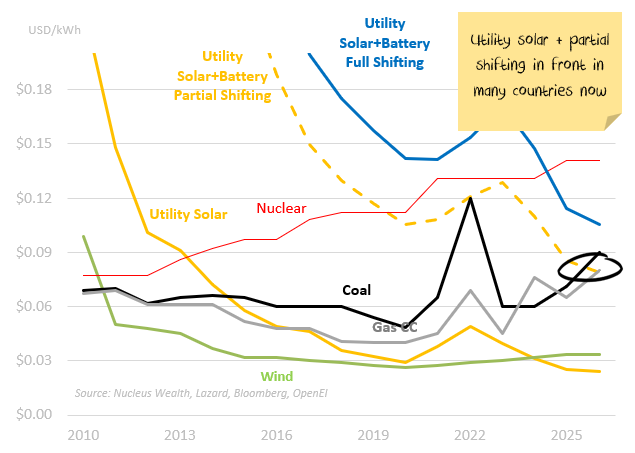
Utility-scale solar plus battery is the killer app of the transition. We are almost there in terms of competitiveness as battery costs continue to fall. It will be the same for households not long after that.
The solution is for the government to acknowledge past mistakes, set more realistic deadlines for the future, and rebuild political consensus for the transition.
What chance of that?
