
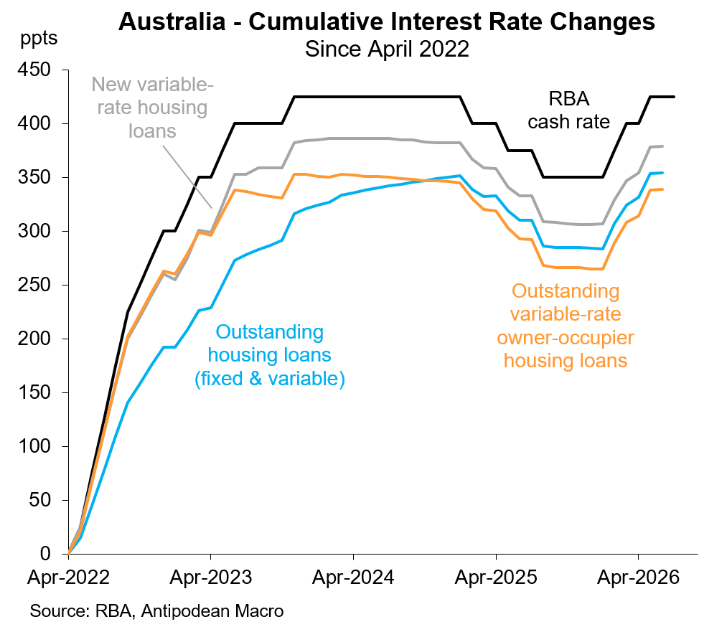
According to Justin Fabo from Antipodean Macro, there has been almost a full pass-through of the Reserve Bank’s 75 bps of tightening this year into the weighted-average new and outstanding home loan rates.
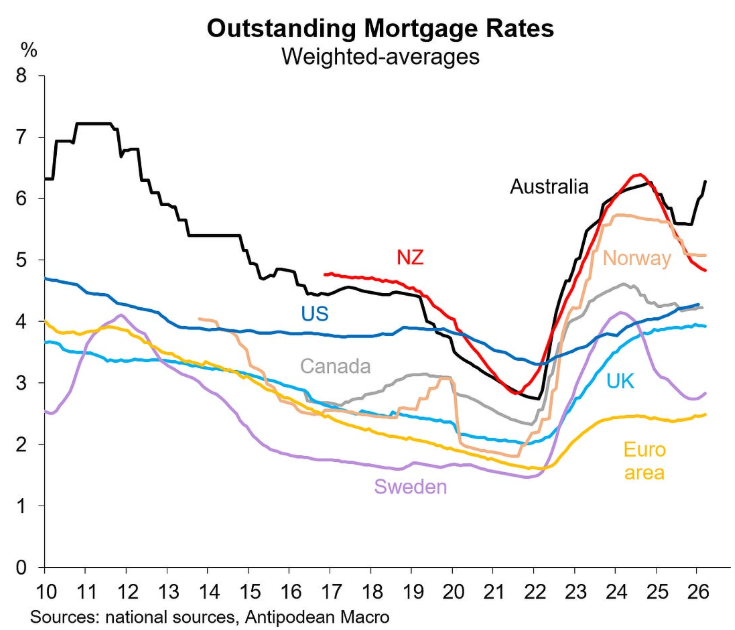
As a result, Australian mortgage holders now pay some of the highest rates in the world.
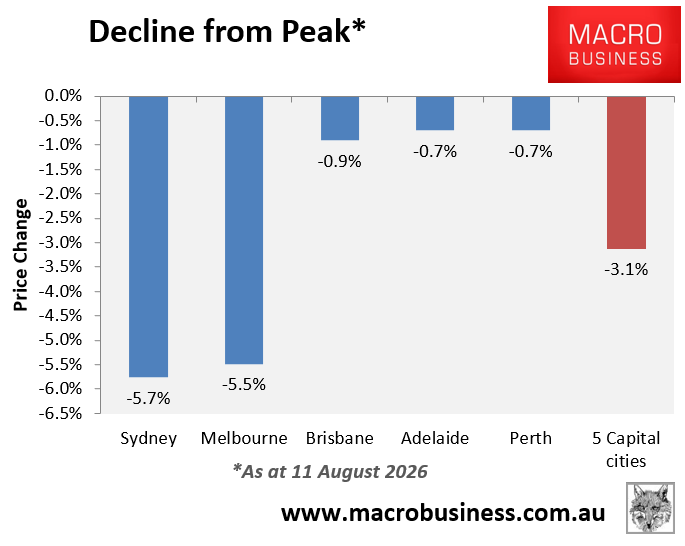
The rise in mortgage rates, the federal budget’s changes to negative gearing and capital gains tax, and deteriorating consumer sentiment have combined to drive the housing market into a synchronised correction, led by Sydney and Melbourne.
Sales volumes have also tumbled, which is impacting everything from agents’ commissions to state government stamp duty receipts and mortgage activity.
Regarding the latter, NAB reported last week that home‑loan applications have “plummeted” by 15%, reflecting a deteriorating economic environment, weaker borrower sentiment, and tighter household budgets.
NAB said that customers are increasingly focused on budget repair, cutting discretionary spending and delaying major financial decisions. Refinancing activity has also slowed as fewer borrowers can meet serviceability tests.
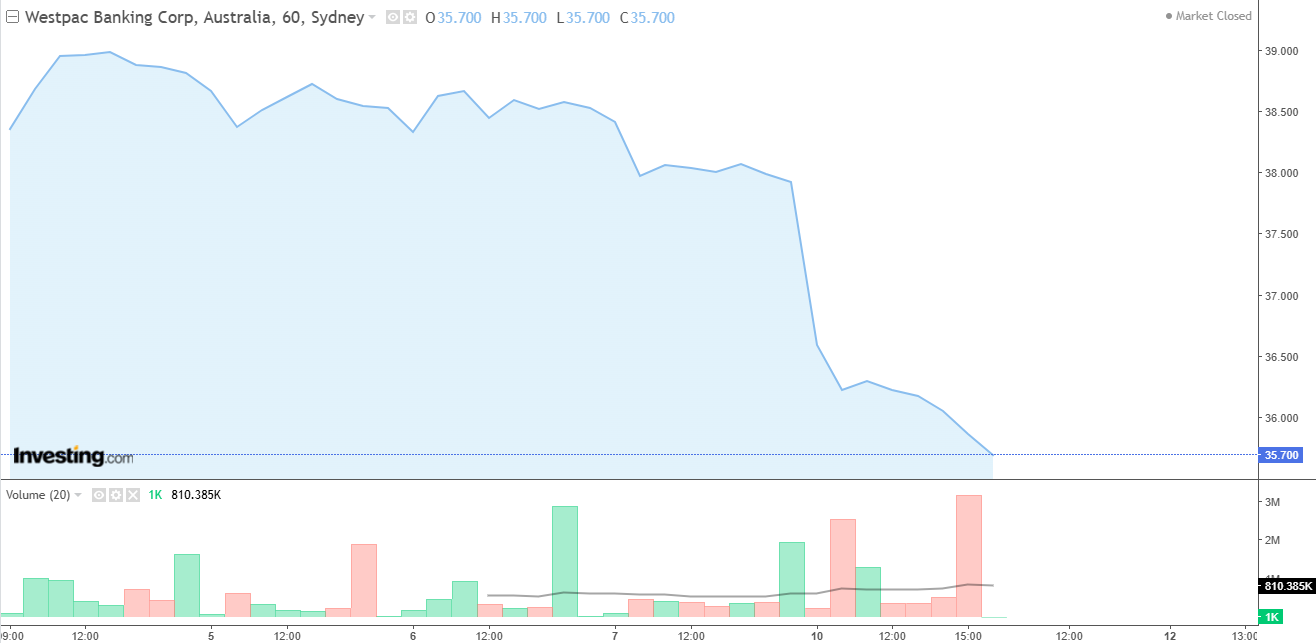
In a similar vein, Westpac’s share price has plunged, reflecting the beginning of a major mortgage shock across Australia’s banking sector, driven by collapsing home‑loan demand, rising arrears, and a sharp deterioration in household financial capacity.
Westpac reported a steep fall in new mortgage applications, dropping 11% across the June quarter and 20% since the Albanese government unveiled its changes to property investor taxes.
Owner occupier applications are down 18%, whereas investor applications have plunged 26%.
The bank warned that the slowdown is broad‑based, not limited to any single state or borrower type.
The headwinds are immense.
Borrowing capacity has been crushed by high rates and tighter serviceability rules.
Households are increasingly failing stress tests, reducing both refinancing and new lending.
Arrears are rising, especially among recent borrowers who entered the market at peak prices.
Two lots of data released last week rang ‘warning bells’ on credit risk, with Equifax saying the number of mortgage accounts in financial hardship had increased by 5.3% quarter-on-quarter, while Roy Morgan reported that just over one million mortgage holders were at “extreme risk” of stress over the six months to June 2026, higher than in the previous six months.
Given that mortgages make up 60–70% of major bank loan books, the sustained downturn in mortgage demand will hit profitability and valuations.
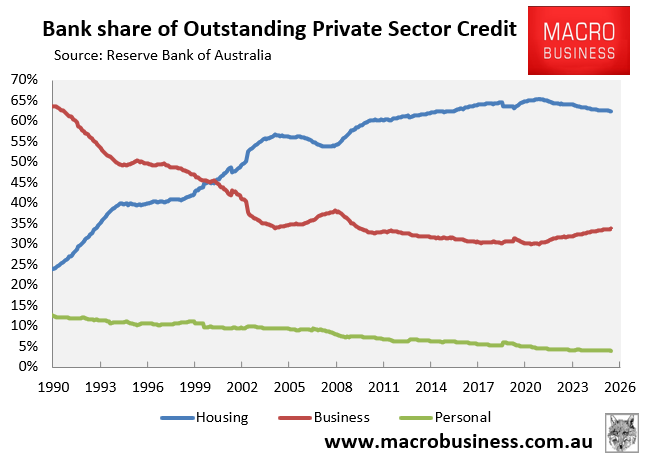
The 30-year housing and mortgage supercycle that turbo-charged bank profits appears to be over. Now comes the hangover.
