
As expected, the Reserve Bank of Australia (RBA) unanimously voted to keep the official cash rate on hold at 4.35% at Tuesday’s monetary policy meeting.
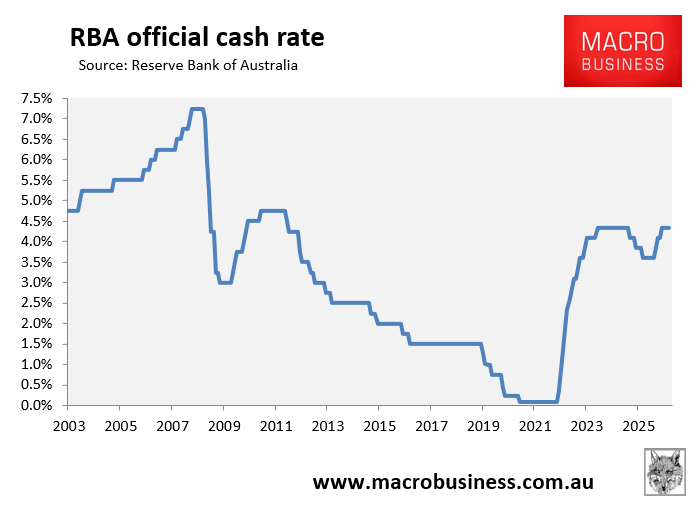
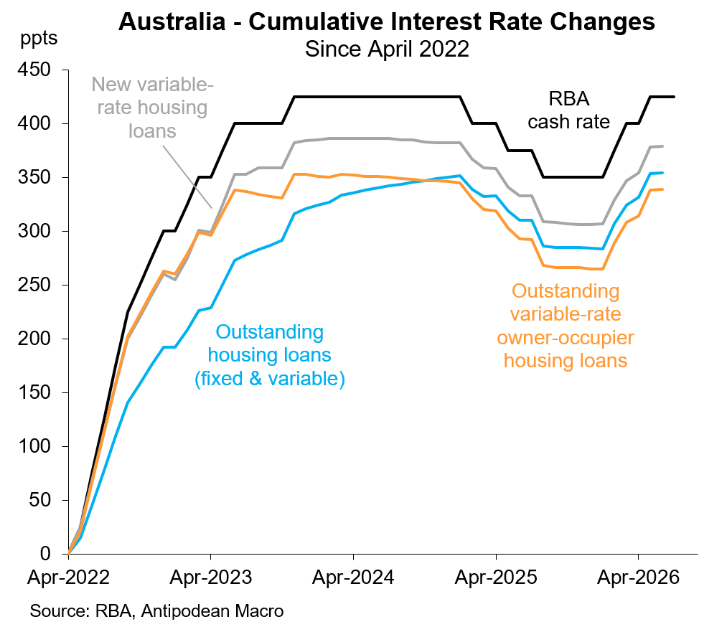
The positive news for mortgage holders is that there has been almost full passthrough of this year’s previous three rate hikes, so there’s no further pain.
The RBA’s commentary accompanying the decision was unashamedly hawkish, noting ongoing concerns around inflation:
“Inflation picked up materially in the second half of 2025, and information since the beginning of this year confirms that some of the increase reflected greater capacity pressures. While the impact of the Middle East conflict on inflation has so far been less than expected, headline inflation is still too high. Trimmed mean inflation also remains elevated and is little changed from the March quarter”.
However, the RBA statement acknowledges that the three rate hikes this year have helped to slow spending and demand, alongside home prices, while the labour market continues to gradually soften:
“There are signs that consumer spending growth is slowing gradually as expected, while growth in business debt and investment is strong”.
“Momentum in the housing market has shifted, with housing prices falling in some capital cities and new housing loans declining noticeably”.
“Labour market conditions have eased by a little more than expected in recent months. Labour market leading indicators point to only limited easing in the near term”.
Looking ahead, the RBA expects inflation to remain elevated as fuel prices rise.
“The disruption to global oil supply is adding directly to inflation and there are indications that higher fuel prices are being passed through to prices of other goods and services, so inflation is likely to remain high for some time. This inflation impulse is in addition to the effect of capacity pressures in the economy”.
The statement reaffirmed that bringing inflation down remains the RBA’s number one priority:
“The Board remains focused on ensuring that high inflation does not become embedded. To achieve this, growth in aggregate demand needs to remain subdued to reduce capacity pressures and bring inflation back to target”.
“Following three increases in the cash rate target since the beginning of the year, financial conditions are now tighter than they were, and the economy appears to be slowing as expected. But inflation is still too high”.
“It is not expected to return to around the midpoint of the target range until late 2027 and there are upside risks to this projection”.
The RBA ended by stating that it will remain “attentive to the data and the evolving assessment of the outlook and risks to guide its decisions”.
