
Labor is right to rule out further increases in compulsory superannuation
In late 2020, the former Coalition government received the findings of the review into Australian retirement incomes, which explicitly recommended against lifting the compulsory superannuation rate to 12% because it could disadvantage low-income earners and reduce workers’ lifetime incomes:
“A rate of compulsory superannuation that would result in people having an increase in their living standards in retirement may involve an unacceptable reduction in living standards prior to retirement, particularly for lower-income earners”, the report stated. “This is based on the view, supported by the weight of evidence, that increases in the super guarantee rate result in low wages growth, and would affect living standards in working life”.
“The weight of evidence suggests the majority of increases in the super guarantee come at the expense of growth in take-home wages. The view is based on empirical research, economic theory, evidence across a number of countries and the original policy intent of superannuation guarantees”, the review stated.
The review also warned that increasing the superannuation guarantee to 12% would increase inequality:
“Increases in the superannuation guarantee rate will increase lifetime government support for higher-income earners by more than lower- and middle-income earners”, it said.
Despite the review’s findings, annual 0.5% increases in the superannuation guarantee (SG) resumed from 1 July 2021 following the passage of the Treasury Laws Amendment (Your Future, Your Super) Act 2021, with the SG rate currently sitting at 12%:
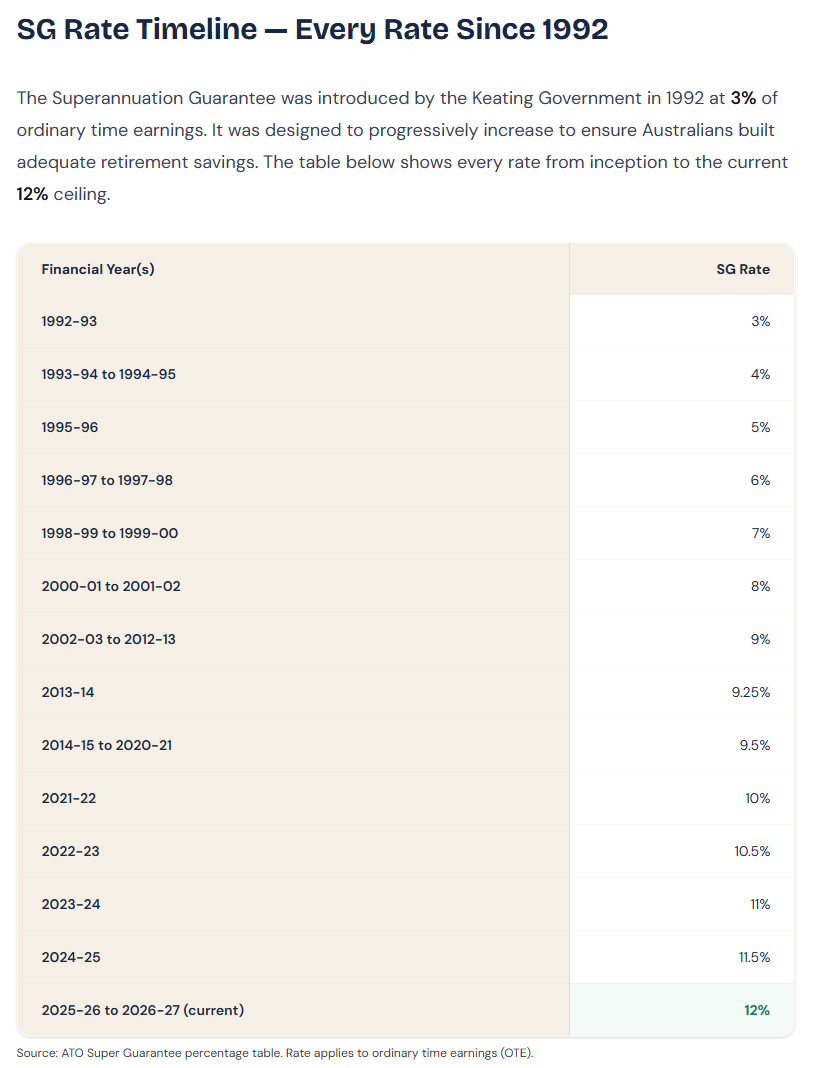
There have been calls within Labor to gradually lift the SG to 15%. However, Assistant Treasurer Daniel Mulino told ABC Radio National this week that “there’s no plans to lift the super guarantee”, stating the current level of 12% is already “putting people in a very strong position” for retirement.
Freezing the SG at its current level is a sensible policy from Labor. Australians have already suffered a steep decline in real wages, which are tracking at late 2011 levels and are not forecast to recover over the coming years:
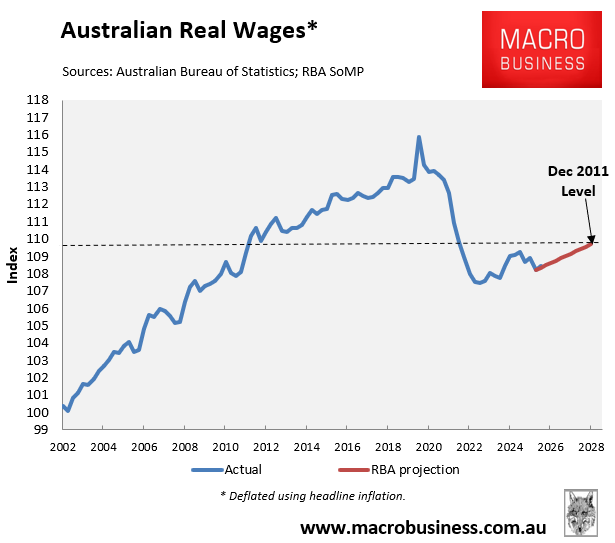
Since the SG comes at the expense of take-home pay, any increase in the SG would further reduce real wages, which is unreasonable during a cost-of-living crisis.
Lifting the SG further would also likely worsen the long-term sustainability of the federal budget, given that the Australian Treasury found the cost of superannuation concessions outweighed the benefits of lower pension outlays.
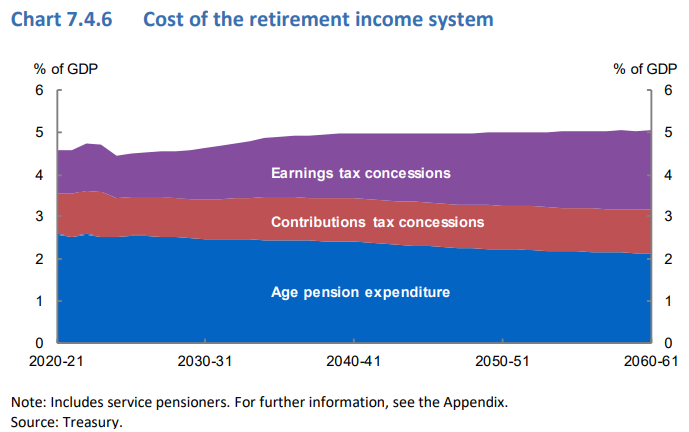
In an age of rising budget deficits, lifting the SG would place a growing strain on the nation’s finances.
Ultimately, the main beneficiary of lifting the SG beyond 12% would be super funds themselves, because it would give them more funds under management and enable them to charge higher fees, to the detriment of taxpayers and workers.
