
Battery boom crushes gas cartel in the nick of time
A new global gas shock is underway as Qatari blockages have left Europe short of gas for the winter.
LNG prices in Asia and Europe are now at their highest point since the war began
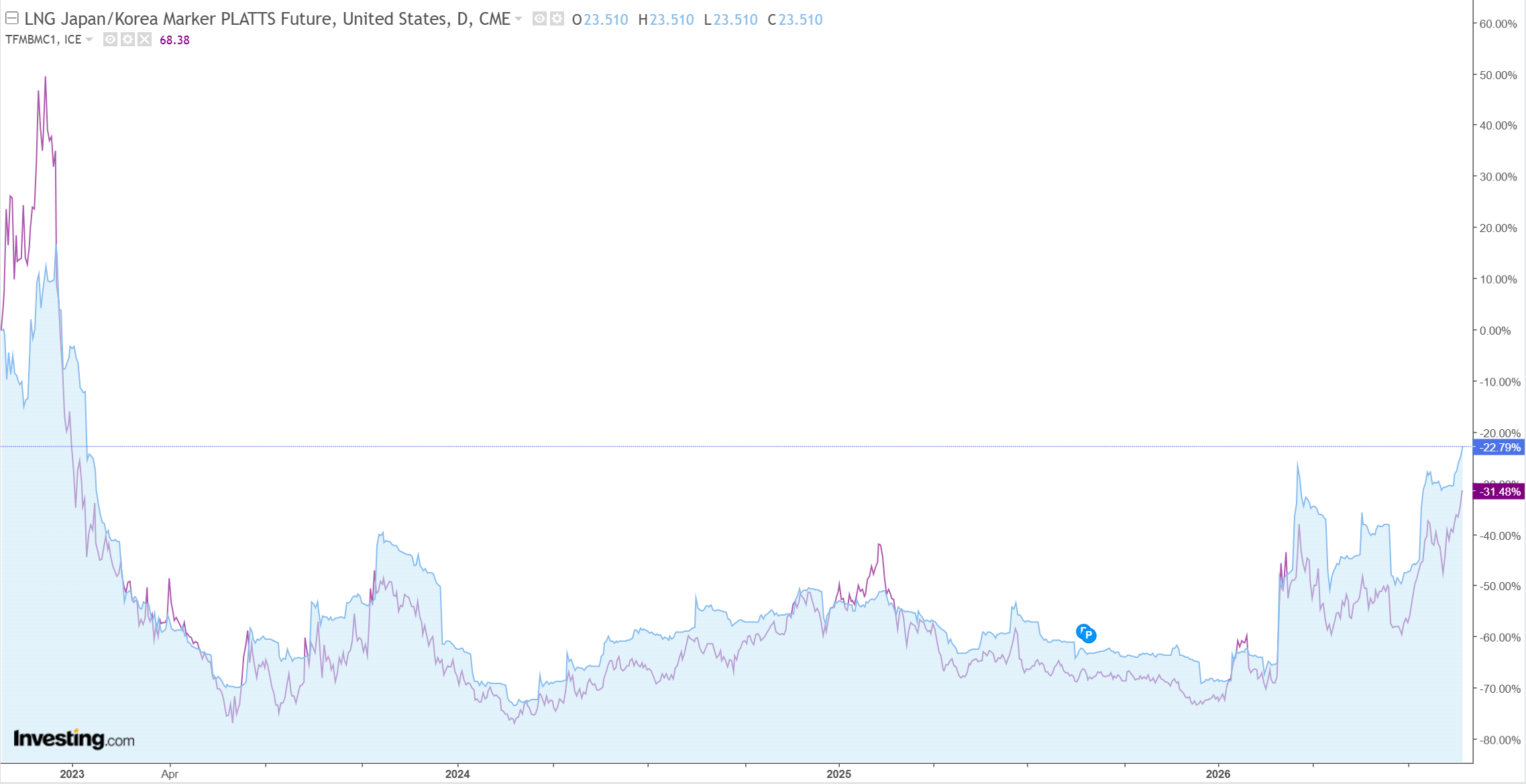
Goldman has more.
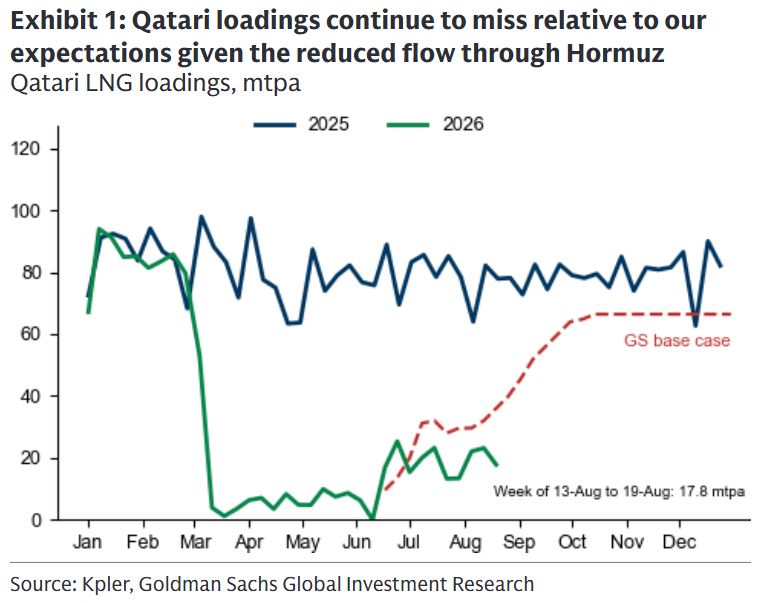
We have argued that, in the absence of an improvement in LNG exports through the Strait of Hormuz (SoH) (Exhibit 1), European gas prices (TTF) would need to rise to discourage Asia LNG demand, thereby freeing incremental cargoes to be sent to Europe to help manage European gas storage levels. This price-driven fix started to take shape in late July, as we recently flagged, and has since solidified.
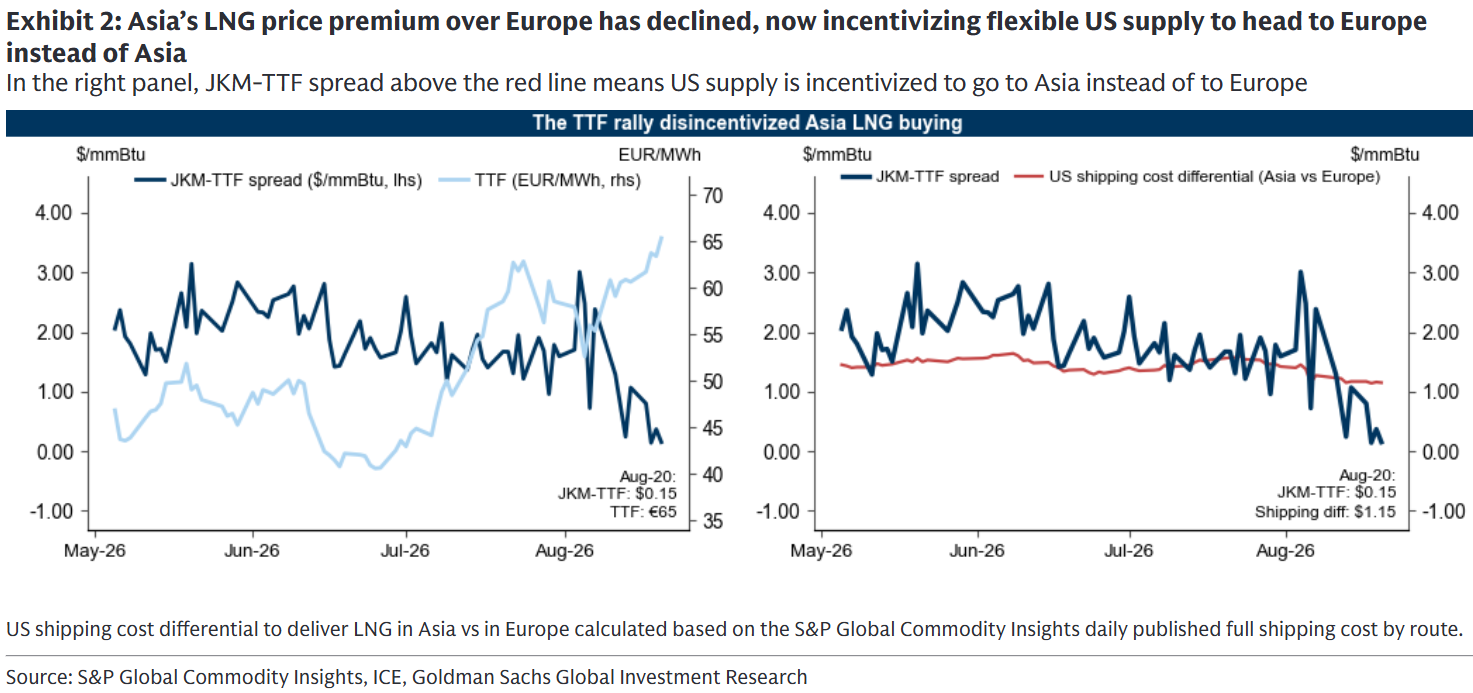
Specifically, as TTF rallied, pulling Asia LNG spot prices (JKM) higher, Asia LNGn buying interest moderated, which drove the JKM-TTF premium lower (Exhibit 2, left panel). We now see the Asia price premium low enough that flexible US LNG supply is once again incentivized to be sent to Europe, instead of to Asia (Exhibit 2, right panel), contributing to higher European LNG imports (Exhibit 3 and Exhibit 4).
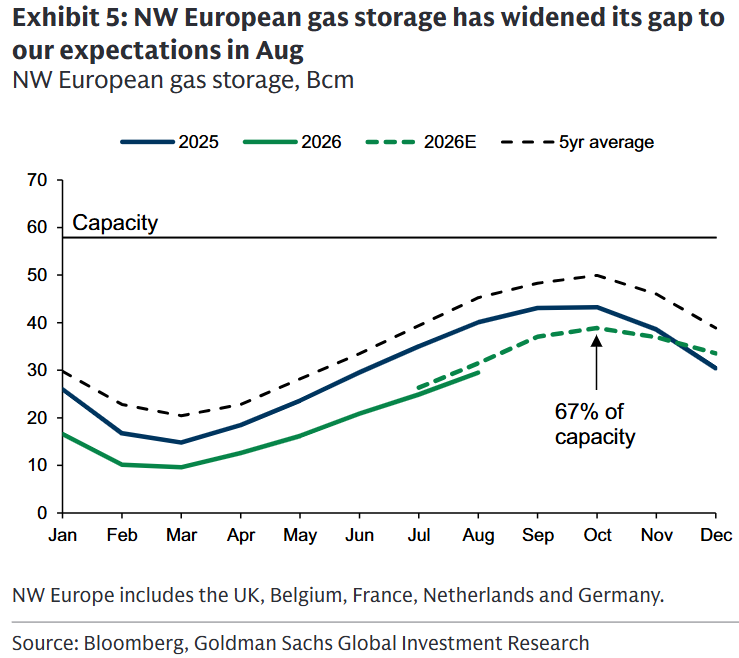
Importantly, this hasn’t been enough yet to steady European gas storage injections, with Aug storage injections thus far widening the miss relative to our expectations. Should the average pace of NW Europe gas storage injections of the last seven days hold for the remainder of the month, NW European gas storage will end Aug at 51% full, 3.4pp below our base case (vs 2.5pp below our base case as of end-Jul) (Exhibit 5). This is consistent with TTF recently moving above the 65 EUR/MWh threshold, taking JKM to the mid-$20s/mmBtu, the level at which we have historically observed incipient reduction in Asia industrial demand for gas.
These developments have the local gas price glued to the $12Gj price cap and the cartel is printing money on spot exports.
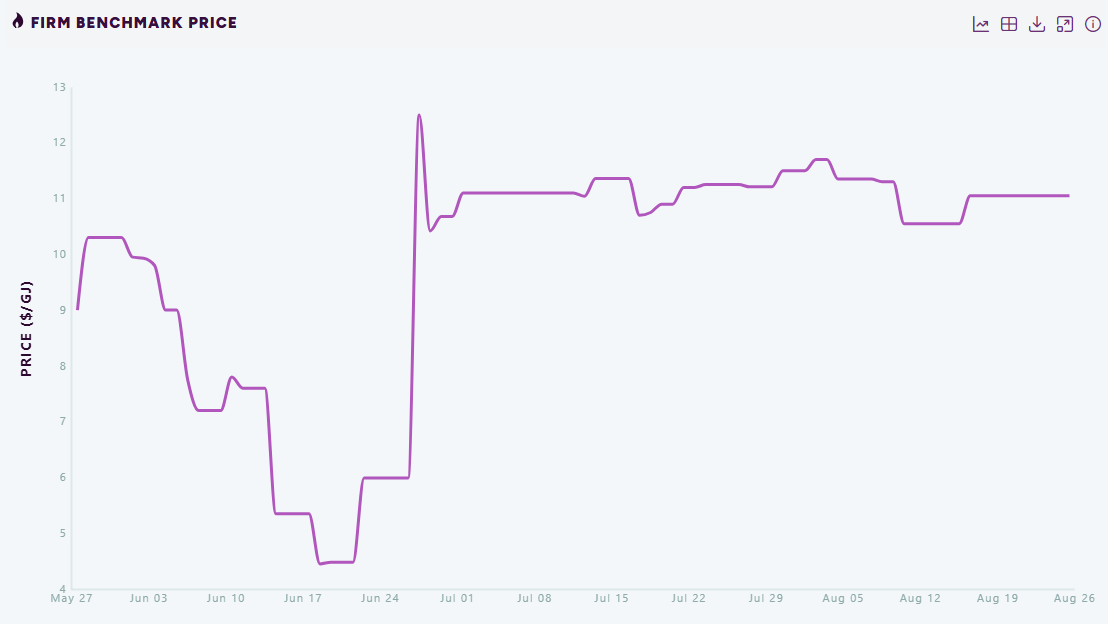
Which is why we need gas reservation.
The Albanese government is expected to give ground to the gas industry over the operation of its contentious domestic reservation scheme, but will hold firm on its insistence that the policy creates an oversupply of gas in the east coast market.
…But the government is not expected to retreat from its broader objective of maintaining more gas in the domestic market than would otherwise be available, despite industry warnings that deliberately creating an oversupply could undermine investment in new supply.
…The government has proposed reserving gas equivalent to 20 per cent of LNG export volumes for the domestic market.
This lie by The Australian is criminal. The policy excludes existing export contracts, meaning it is more like reserving 20% of 1% of exports. Arseholes.
There is much better news in the NEM itself. Although gas prices have rebounded strongly from their unusual winter swoon, wholesale electricity prices are falling and are much more stable than past winters.
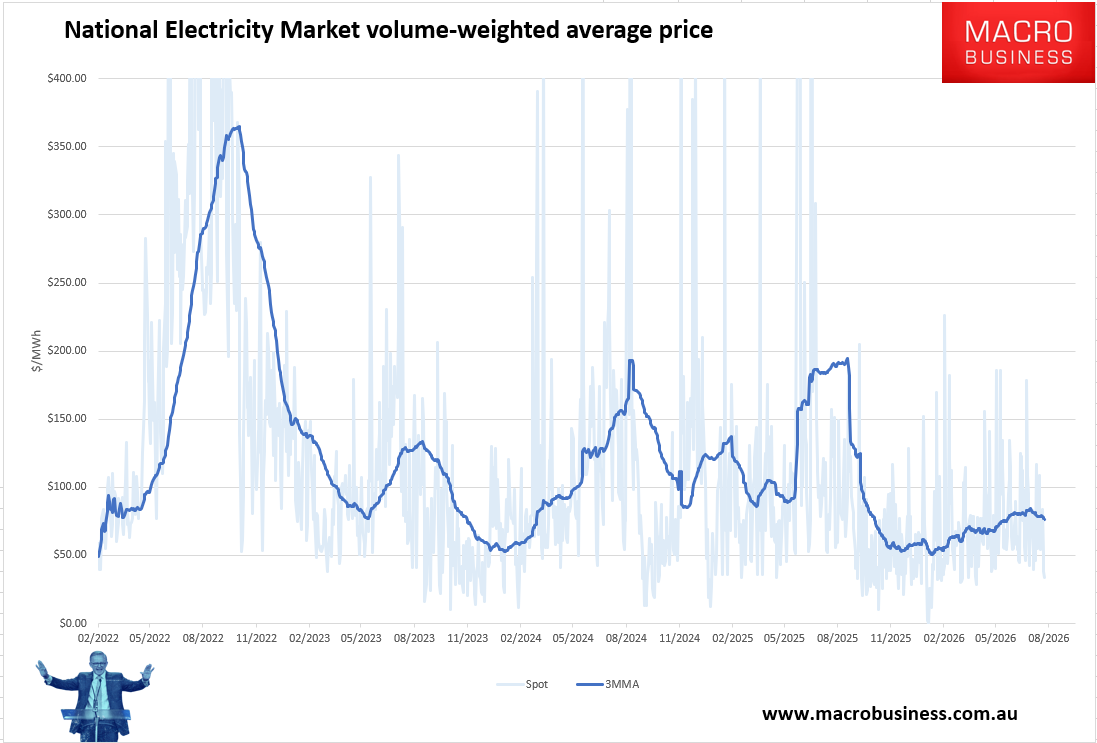
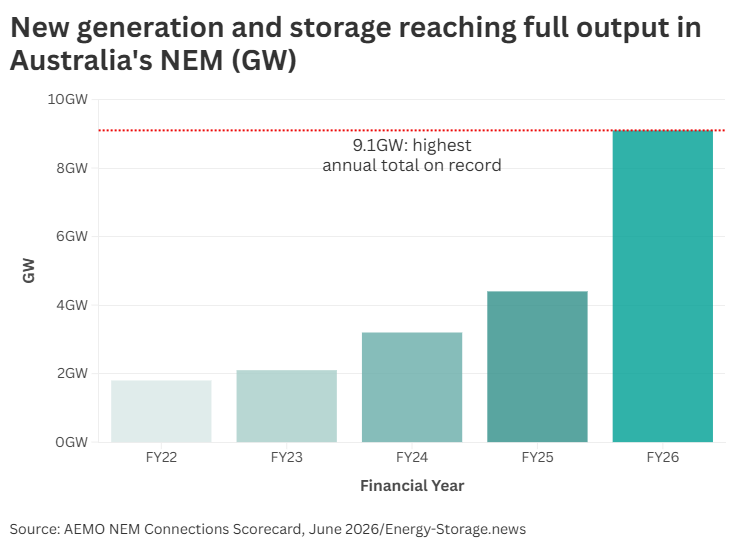
The reason? The battery boom. Over the past year, grid-scale batteries have poured into the NEM, growing from virtually nothing to 2% of power, half the scale of gas.
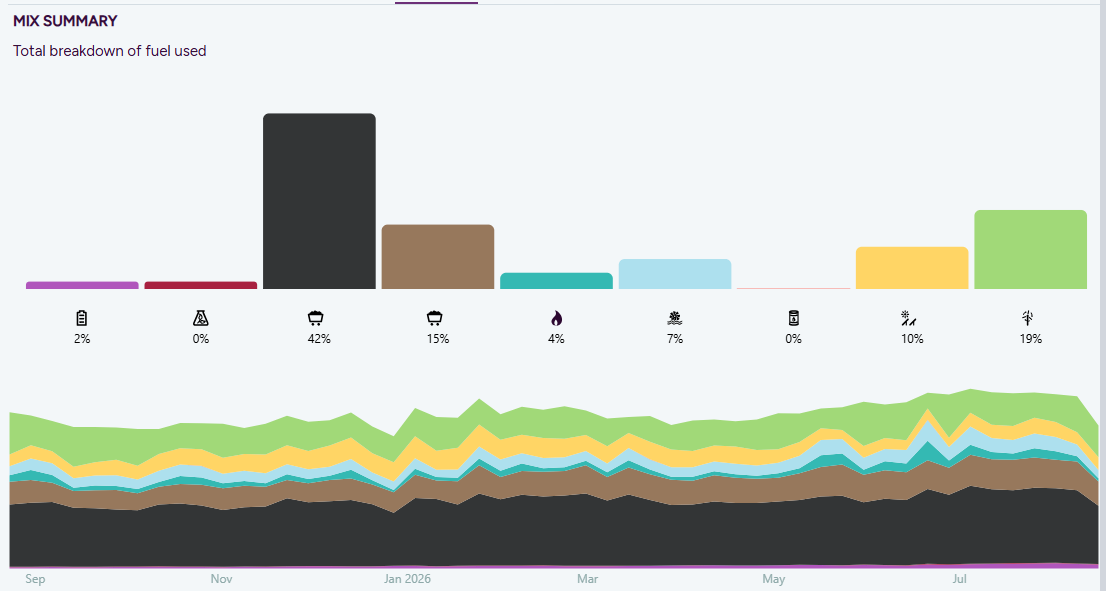
Moreover, the scale is sufficient to rip away the gas cartel’s power to set the marginal cost of electricity.
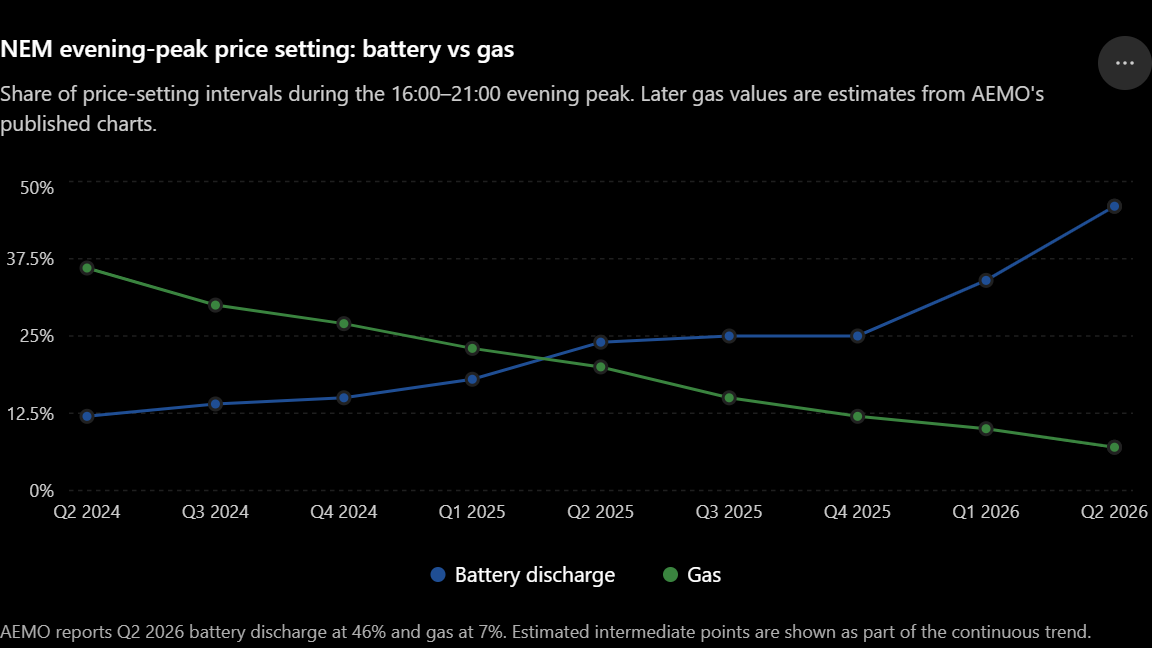
Batteries are now the dominant price setter, and they are highly competitive, displacing gas.
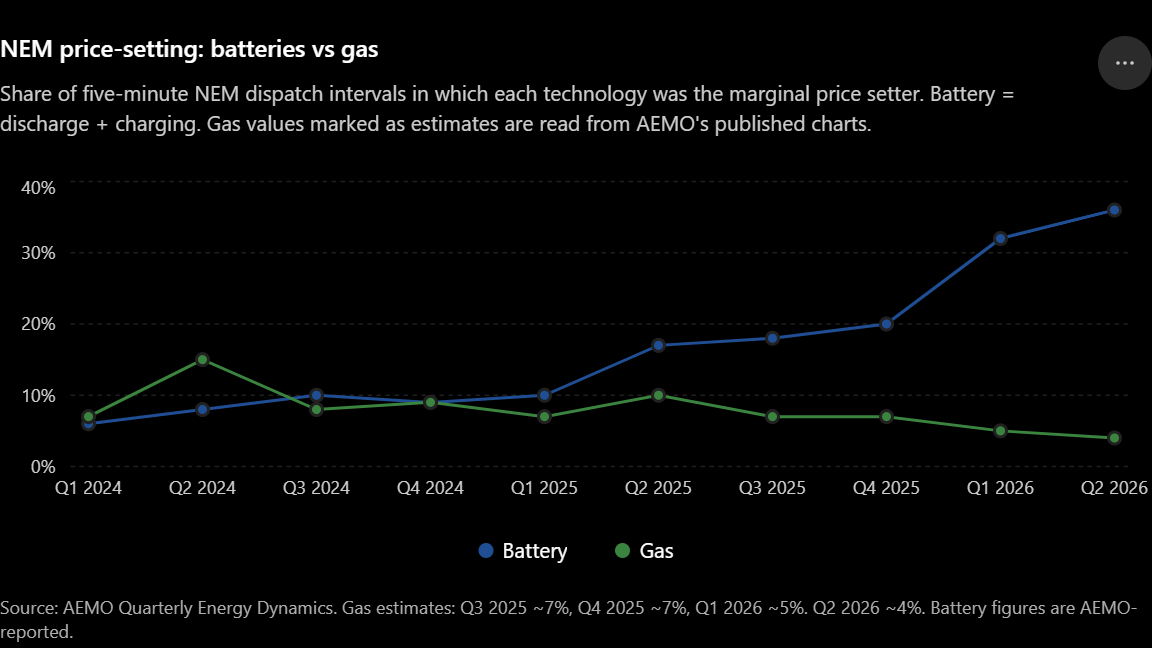
The structural transition is even wilder during evening peak demand.
Batteries are also highly competitive with each other. Boom!
And bust!
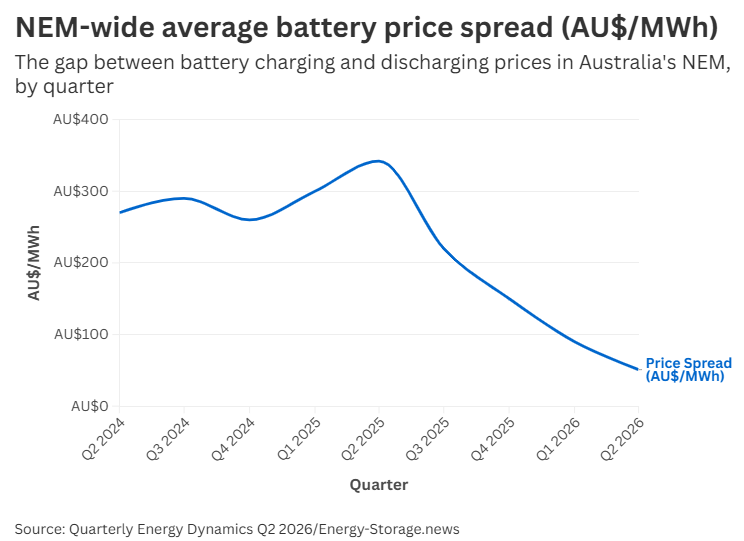
Vertically integrated gas-export and local power suppliers, like Origin Energy, can only cry into their LNG trains. Their power to distort electricity prices is over.
Batteries have caught up, aided by the gas cartel’s own self-serving price gouging.
If we took the politics out of energy, the economics of the transition would take care of themselves.
