
Over the past week, the Australian media has been full of articles about the sharp decline in home values, with one commentator noting that Labor’s budget has triggered a housing slump that has wiped $230 billion from property values.
In reality, the decline in home values is minor in a historical sense.
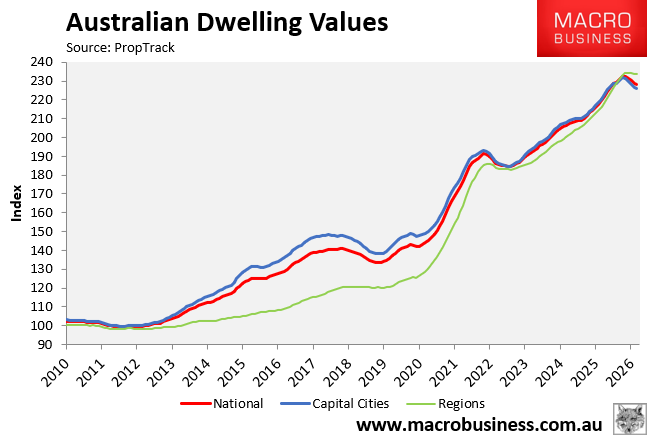
For example, PropTrack’s monthly dwelling values index has reported a 1.8% national decline in values from March’s peak, which pales into insignificance against the 64% trough-to-peak rise recorded between April 2020 and March 2026:
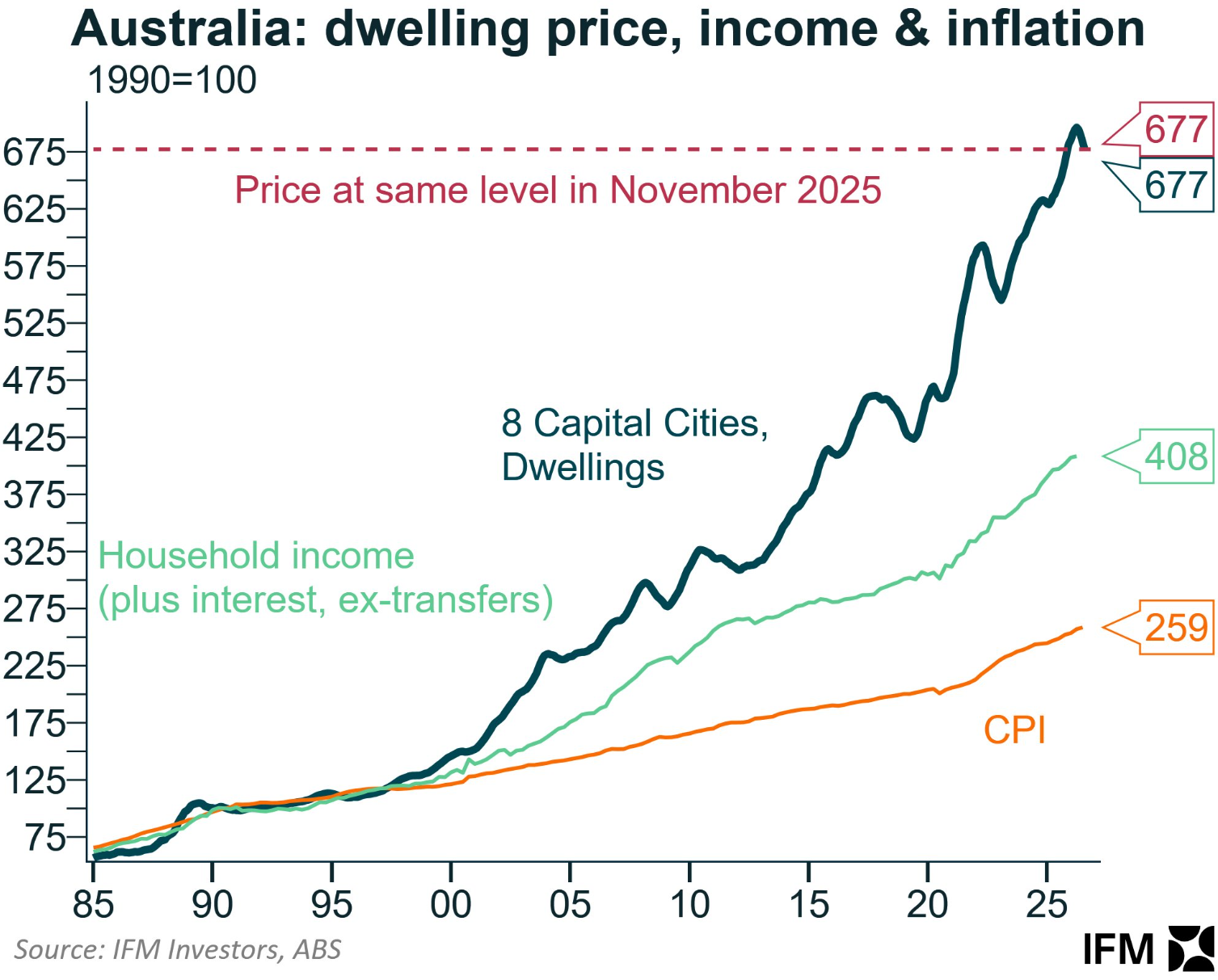
Indeed, according to Alex Joiner at IFM Investors, Australian dwelling values have merely returned to the same level as November 2025:
The problem is that Australian housing remains completely detached from buyers’ capacity to pay, as Shane Oliver from AMP clearly illustrates below:
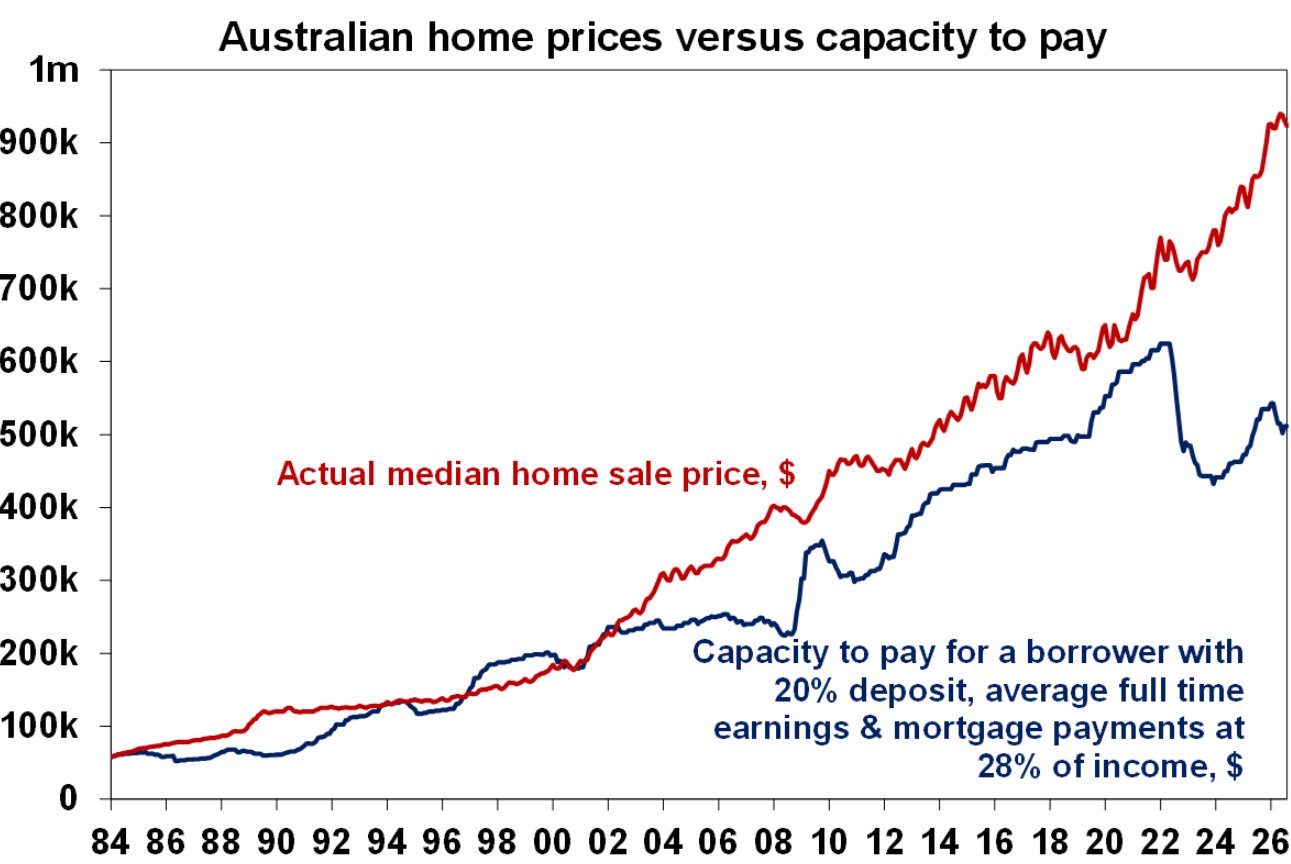
For Australian housing to become “affordable” again, then either values need to fall sharply, bringing the red line back to the blue line, or interest rates need to fall sharply, bringing the blue line up towards the red line (or some combination of the two).
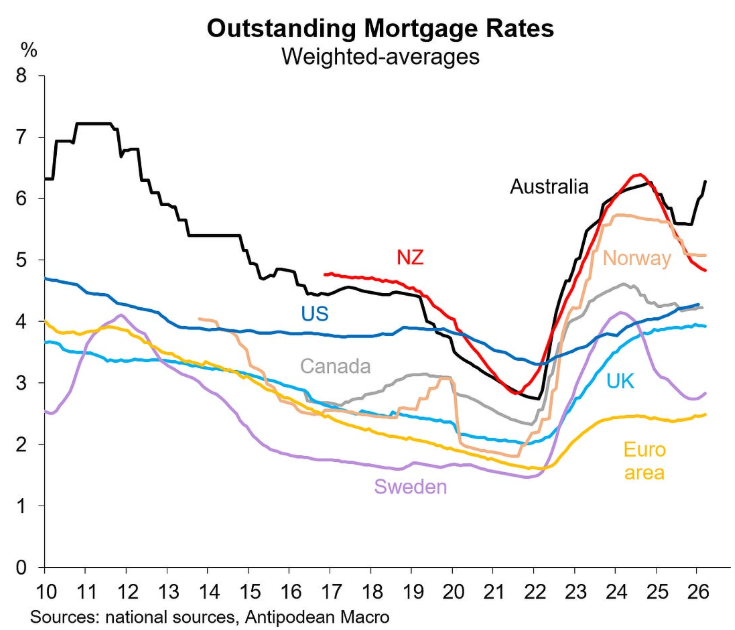
However, with Australian mortgage rates among the highest in the world and rate cuts off the RBA’s agenda for now, prices must fall.
How far must home prices fall?
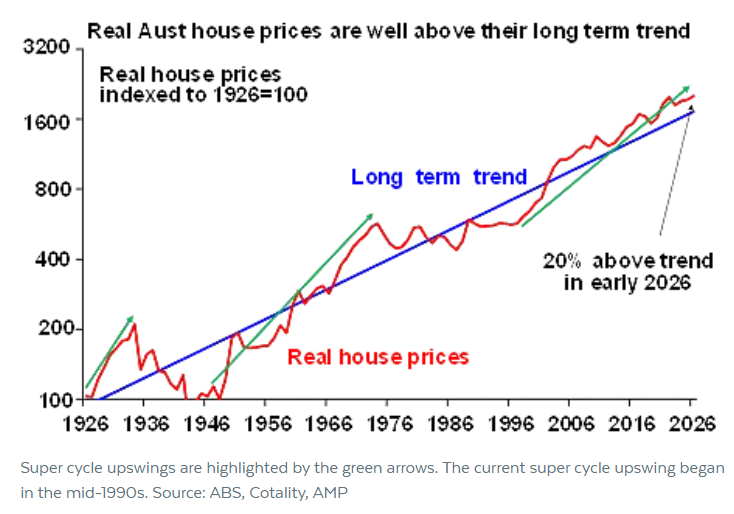
In his latest research note, Shane Oliver estimates that Australian real home values are around 20% overvalued relative to their long-run trend:
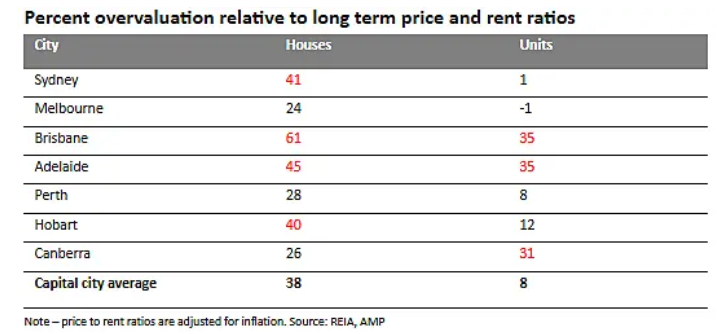
The overvaluation is worse for houses than for units, and it is most pronounced in Brisbane and Adelaide, following six years of explosive price growth.
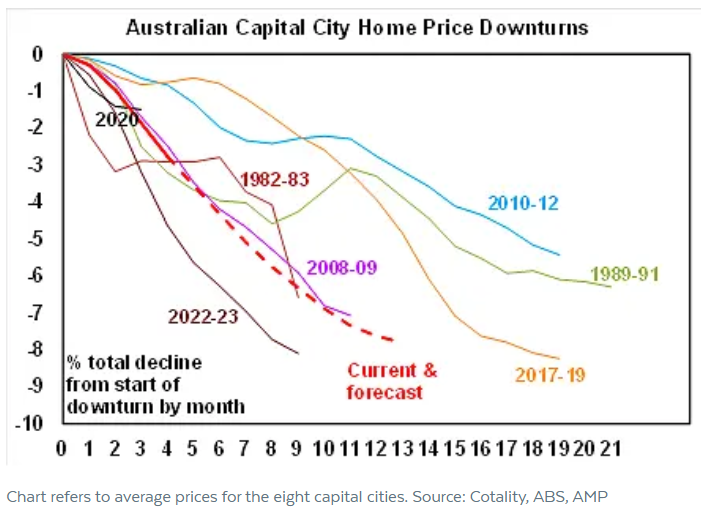
Oliver has forecast a peak-to-trough decline in national values of around 7%, “which is within the range of average capital city property price declines seen over the last 40 years or so”, although he notes that “the risk is likely on the downside” given “the uncertainty around the full impact of the property tax changes on demand”.
I am less optimistic than Oliver and anticipate a double-digit decline in home values nationally.
