
Australia’s housing market is facing a ‘perfect storm’ of forces that are converging to deliver the largest price correction in generations.
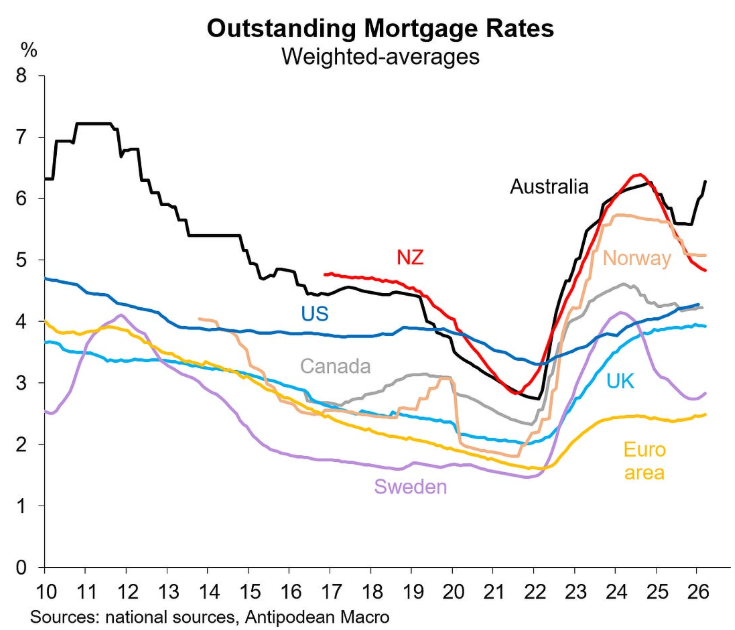
First, following this year’s three rate hikes by the Reserve Bank, mortgage rates in Australia are tracking at their equal highest in more than a decade.
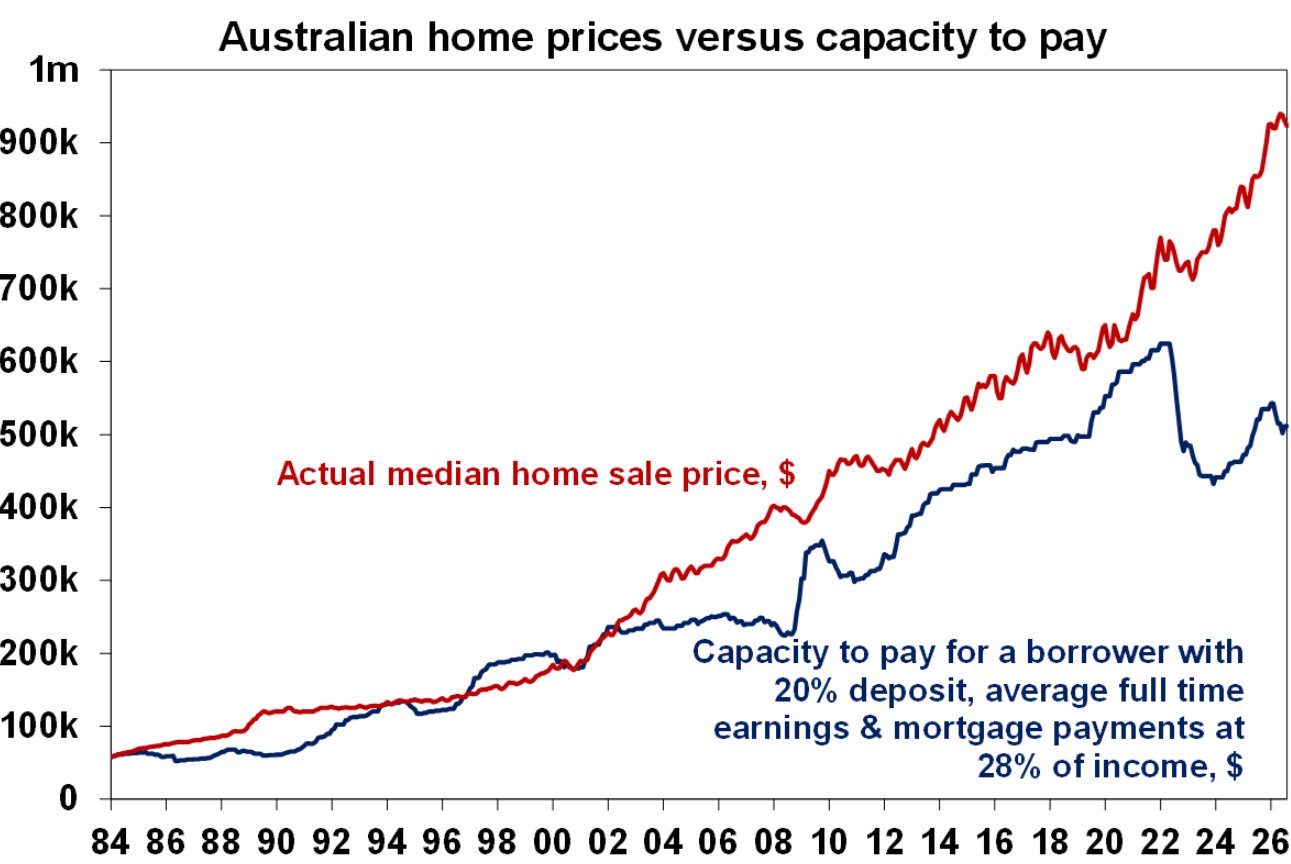
As a result, a wide gap has opened between dwelling values and borrowing capacity.
Second, the Albanese government’s changes to negative gearing and capital gains tax have significantly dampened investor demand in the housing market. Following the changes, borrowing capacity for investors has fallen by around 30%, limiting their ability to pay. NAB estimated this week that rental yields would need to rise by around 30% to make investing in residential property worthwhile, given the loss of tax benefits.
A third less understood factor that is likely to place significant downward pressure on home prices is the recent changes to anti-money laundering (AML) rules, which came into effect on 1 July 2026.
The “Tranche 2” changes brought real estate agents, conveyancers and accountants under AUSTRAC regulation for the first time.
Under “Operation Claw”, a major mortgage‑fraud investigation, AUSTRAC has uncovered large‑scale, systemic mortgage fraud involving brokers, lawyers, accountants and shell companies funnelling money—often from China and the Asia‑Pacific—into Australian home loans using fake documents. At least $4 billion in suspect loans have been identified across the major banks, with hundreds of cases now referred to police, ASIC and the ATO.
“They are wanting to move that money into the Australian real estate market, and they’re doing that through these established referral pathways that are helping them to establish what looks like a legitimate Australian source of wealth … but that source of wealth isn’t from Australia”, AUSTRAC CEO Brendan Thomas said.
AUSTRAC found widespread use of fake payslips, fake invoices, shell companies and falsified wealth sources to obtain home loans. Many borrowers were allegedly ineligible, under‑declaring income, or routing offshore funds through complex structures to appear legitimate.
AUSTRAC has made around 200 formal referrals to enforcement agencies and received around 1800 suspicious matter reports from lenders. Banks have already begun terminating relationships with brokers and customers, and AUSTRAC expects criminal charges to follow.
“For a lot of these people, they’re not declaring their full income in Australia, and there are taxation-related challenges with what they’re doing”, Thomas said.
“I am expecting once we write to these other banks and other mortgage lending businesses that we’ll see more of this loan fraud activity come out”.
The regulator is now writing to 143 mortgage‑market participants, demanding stronger controls and warning that trusted referral networks have become a major vulnerability.
“The banks have looked at where they feel they’ve got fraudulent applications, and they’re making their own decisions … I’d be surprised if they didn’t end a lot of those arrangements”, Thomas said.
“It should be a wake-up call for everybody to say you need to pay attention to who your customers are, and you can’t dilute your controls and your wariness by virtue of trusted relationships with third-party referrers”.
Thomas said reports from real estate agents and conveyancers had already led to active investigations and arrests.
“They’re starting to generate law enforcement activity, and it’s substantial”. he said.
Meanwhile, Sean Quagliani, chief executive of document fraud detection firm Fortiro, estimated that around 7% of customer loan documents it assessed exhibited “high risk” signs.
“This is an inflection point, and we need to make it harder for financial criminals to find a home in Australia”, he said.
Based on the above, we can assume that the Tranche 2 changes to AML rules will remove demand from the housing market, thereby placing additional downward pressure on home prices.
