
AEMO warns on energy shortages after coal closures
I have warned repeatedly that Australia’s energy system is on a collision course with physics and reality.
To recap, coal is currently the backbone of Australia’s electricity grid, accounting for 58% of NEM generation over the past three months:
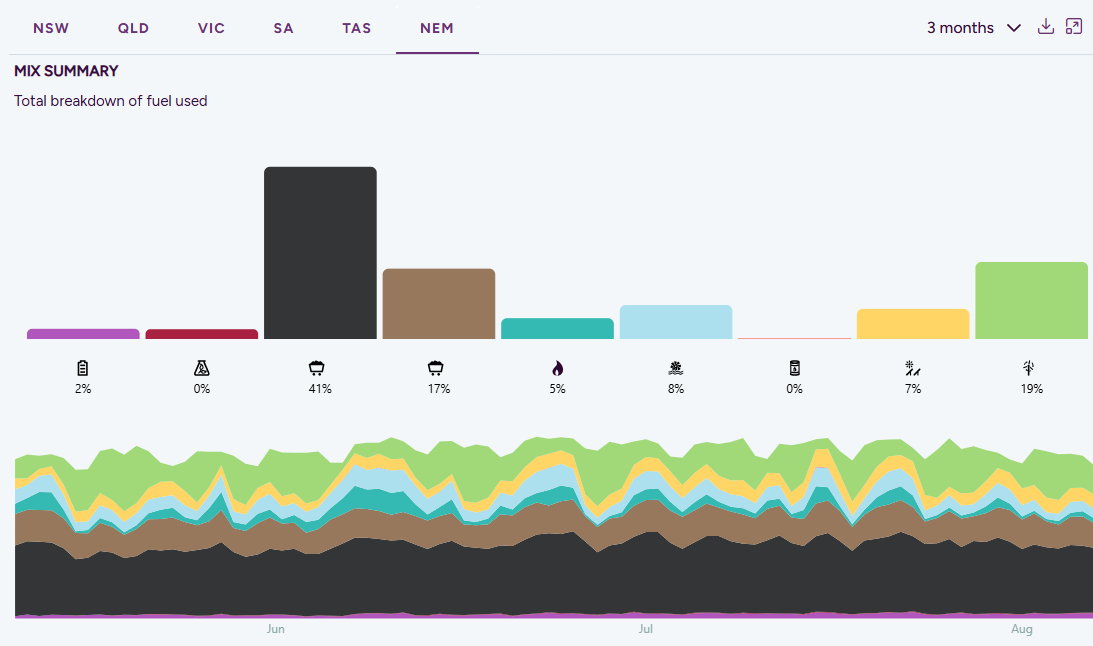
NEM Power Mix – Past 3 months
The latest version of AEMO’s flagship report, the 2026 ISP released in June, showed that more than 5 GW of coal generation is scheduled to close in 2029:
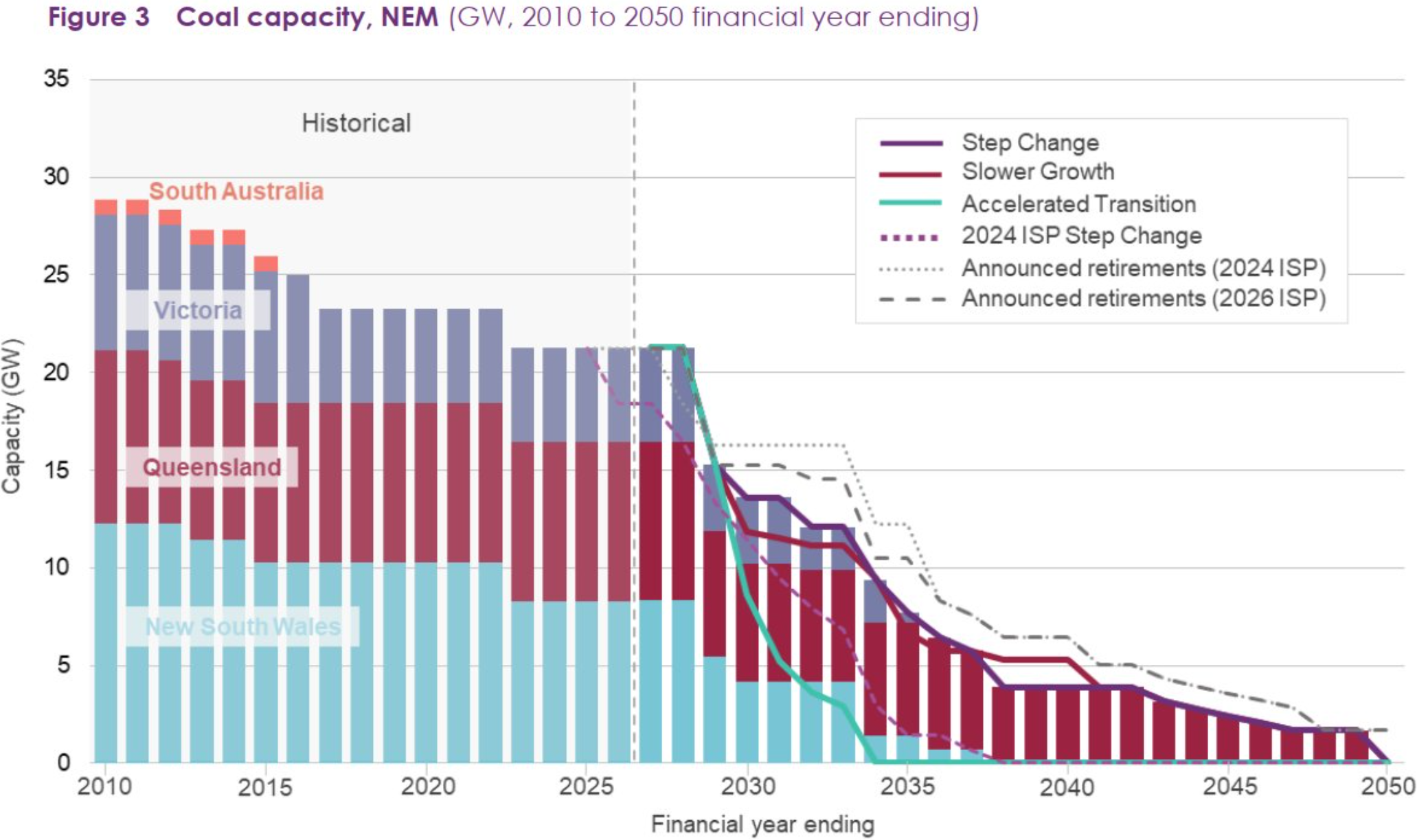
By 2035, Australia is scheduled to have lost around 15 GW of coal capacity.
At the same time as the bulk of Australia’s baseload coal generators are scheduled to close, the nation’s electricity demand will soar due to:
- Strong population growth: Australia’s population is officially forecast to grow by around 3.5 million by 2035-36 and by around 13 million by 2065-66.
- Data centres: The Climate Council says there are 162 data centres in Australia, and about 90 more in the pipeline.
- Electric vehicles: There are more than 22 million vehicles on Australia’s roads, the majority of which are expected to shift to electric propulsion over the coming decades.
- Water desalination: The growing population and data centres will require more desalinated water plants.
The equation is simple: strongly rising electricity demand and reduced baseload supply suggest that Australia’s electricity grid will experience chronic shortages and reliability issues.
AEMO sounds the alarm:
Australia’s data centre boom is accelerating far faster than previously expected, and AEMO now warns it will become one of the dominant drivers of electricity demand growth over the next decade.
Australia now has 225 data centres in development, up from 97 in 2025. Data‑centre consumption is forecast to rise from 5 TWh today to 34 TWh by 2035 — almost 7 times higher.
Data‑centre electricity use will, therefore, rise from 3% of national consumption today to 13% by 2035, contributing heavily to a 40% surge in grid demand, from 176 TWh (2025–26) to 250 TWh (2035–36), excluding behind‑the‑meter solar/batteries.
AEMO now forecasts that residential consumption in 2035–36 will be 19% higher than last year’s outlook.
Business consumption will also rise by 60%, driven by data centres, transport electrification and industrial electrification.
Meanwhile, 15 GW of coal and gas generation is scheduled to retire, including Yallourn (2028), Gladstone (2029), Eraring (2029), Loy Yang A (2035), coinciding with rising electrification of homes, businesses and industry.
AEMO expects that the grid will remain reliable to 2030, but gaps will emerge in the early 2030s unless another wave of investment arrives.
AEMO also reiterated that the east coast will face a gas supply gap next decade, compounding reliability risks.
Coal generators will need to remain online for longer:
With renewable investment stalling, Australia’s coal generators will need to stay online longer.
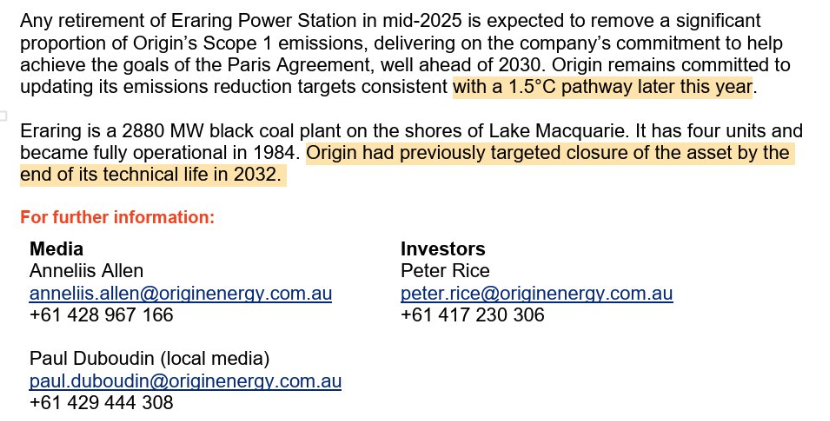
Interestingly, Origin Energy’s ASX media release from 17 February 2022 explicitly stated that NSW’s largest coal generator, Eraring (2,880 MW), had a technical end of life of 2032, which could obviously be extended with some refurbishment:
The same applies to most of Australia’s other coal generators.
Otherwise, Australia faces an acute energy shortage and all the economic and social carnage it entails.
