
A new negative gearing scare campaign emerges
Economists warn that the Albanese government’s removal of key investor tax concessions (negative gearing on existing homes and the 50% CGT discount) could force rents up 15–30% over the next two years, far above Treasury’s estimate of $2 a week, adding substantial pressure to inflation at a time when underlying inflation has already sat outside the RBA’s 2–3% band for most of the government’s term.
Banks, analysts and property researchers argue that investors will demand higher rental yields to offset the loss of tax benefits abolished in the government’s recent housing reforms. NAB and SQM Research estimate this requires a 1–1.5 percentage‑point increase in yields, which—if house prices stay flat—equates to 25–30% rent increases.
“In our view, the changes to the tax settings for investors in existing dwellings imply that gross rental yields will need to rise in order to compensate for the loss of tax benefits”, said NAB’s head of Australian economics, Gareth Spence. “For investment properties in Sydney and Melbourne, a rise in the rental yield of 1 percentage point from about 3.5% to around 4.5% implies an increase in rents of 25% to 30%, assuming the current level of house prices is unchanged”.
“We estimate between a 1 to 1.5-percentage-point increase in the yield would be needed to compensate investors, and that equates to about 30% increase in rents”, SQM Research managing director Louis Christopher said. “Even if the impact of the tax changes is shared between lower house prices and higher rents, that would mean about 15%. That’s going to be a significant input to inflation given rents are such a major component of the consumer price index.”
The government rejects this, saying the changes end an unfair system that subsidised investors over first‑home buyers. But the warnings come as inflation remains persistently high, and political debate intensifies over whether Labor is too tolerant of inflation.
The reality is that Australian rents have already surged over the past four years due to the federal government’s record net overseas migration. This surge in rents occurred under the old negative gearing and CGT rules.
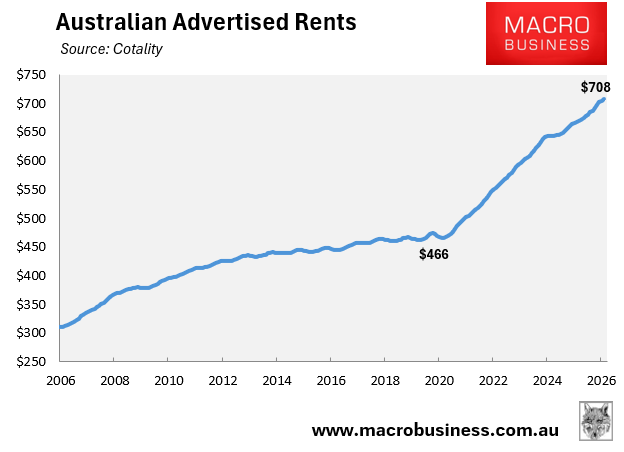
The empirical evidence also does not support the suggestion that the changes to negative gearing and CGT will drive up rents.
More than 80% of investor mortgage commitments are for established homes. Therefore, fewer than one out of five investors are adding to housing supply:
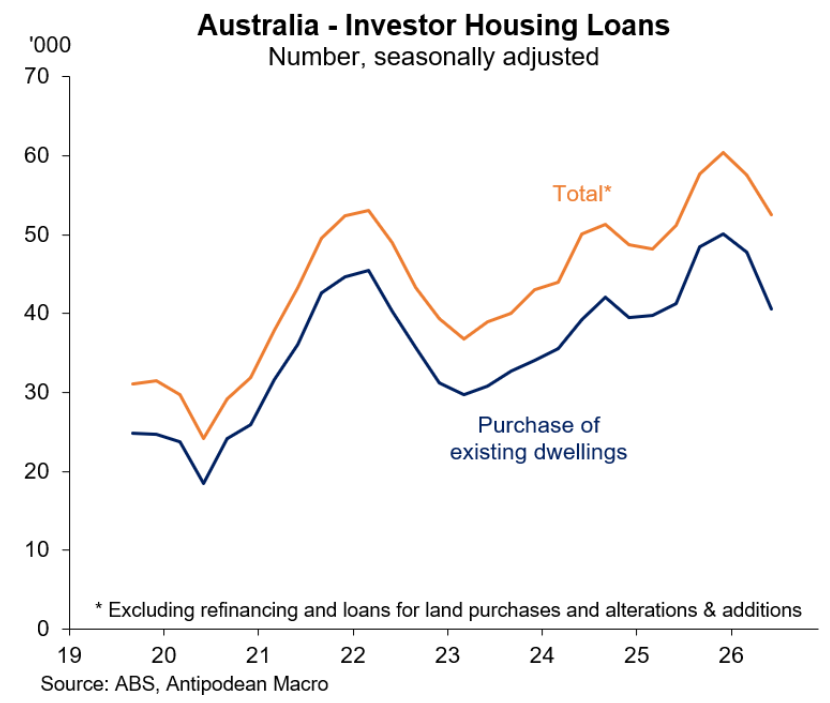
Most investors, therefore, have turned homes for sale into homes for rent.
When an investor sells, the property does not vanish. Rather, it will either be purchased by another investor or by an owner-occupier (possibly a first-home buyer).
Therefore, if fewer investors participated in the market, or if investors sold up following the budget’s negative gearing and CGT changes, there would be fewer homes for rent, but also fewer people needing to rent, as more owner-occupiers would be in the market.
The rental supply-demand balance would be largely unaffected.
Moreover, negative gearing and CGT have been retained for newly constructed homes, which should add to supply over the longer term.
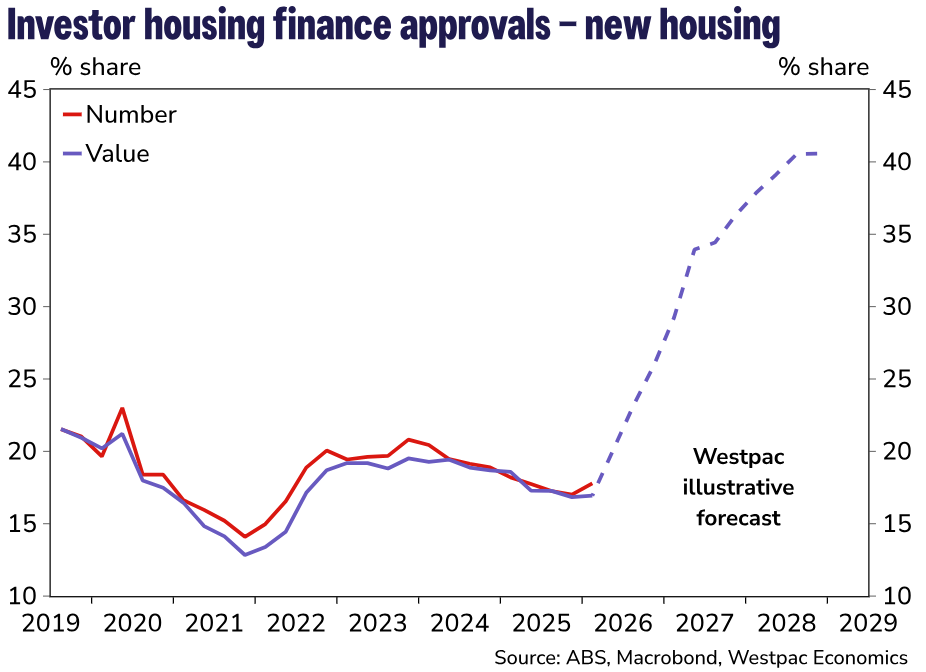
Indeed, as noted by Tarric Brooker yesterday, Westpac forecast that the number of new homes built by property investors would rise by about 45% as a result of the budget’s changes to negative gearing and CGT.
“While there are other important considerations for buyers considering new vs existing – including cost, delivery risk and capital gain expectations – it is likely that at least some prospective investors will switch”.
“The implication is that sharply lower investor activity will also skew more heavily towards new, the share potentially rising towards 40–50% of new investor loans”, Westpac wrote.
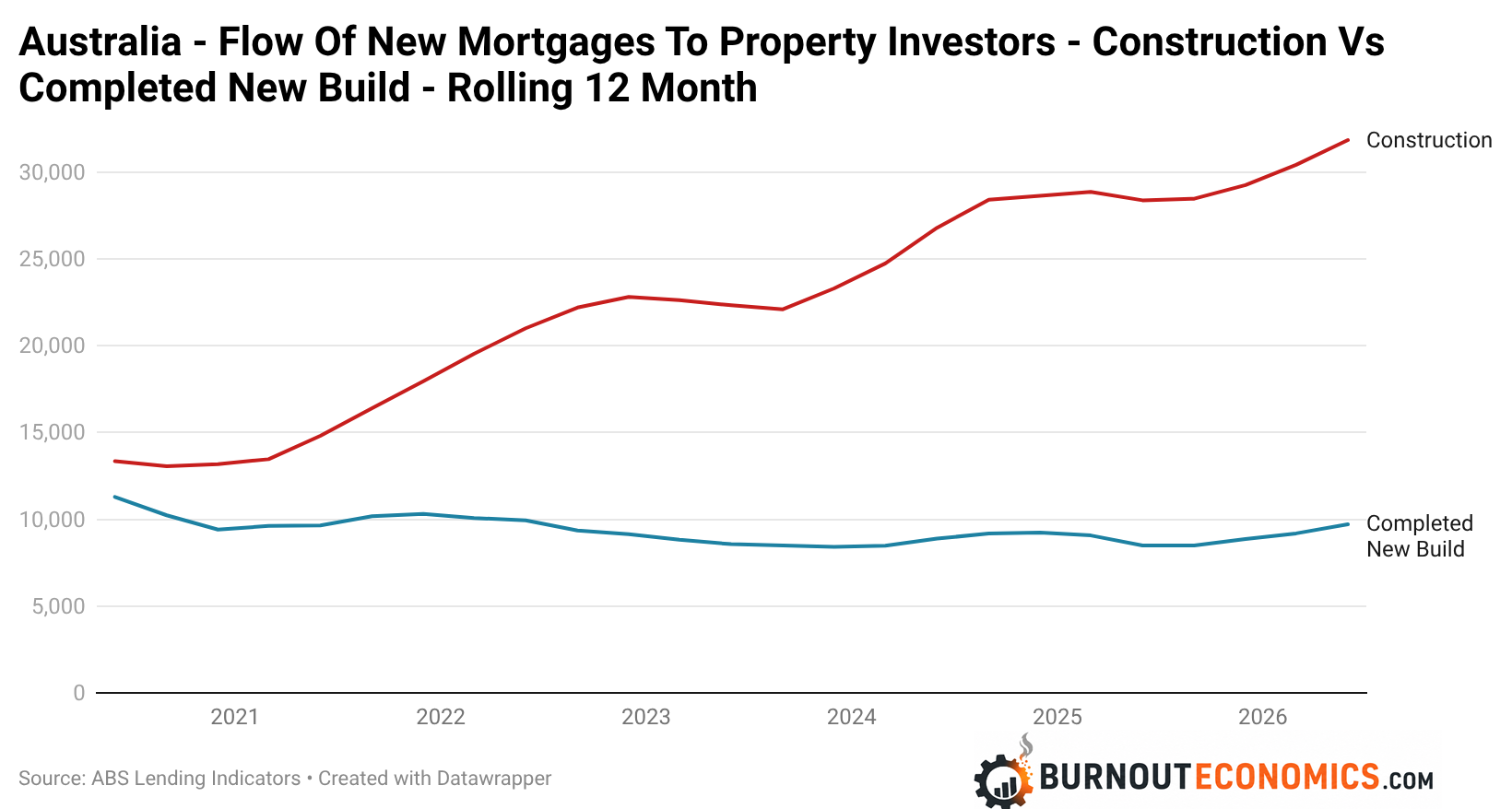
Brooker also showed that “loans to investors for the construction of new homes hit a quarterly record high for the current ABS data set, which stretches back to September 2019, with 8,468 loans approved for the June quarter. On a rolling 12-month basis the flow of new construction loans for investors also set a record high of 31,837”.
“Flows of mortgages to investors for already completed new homes are also performing relatively robustly, hitting the highest quarterly level since September 2025 and the highest rolling 12-month figure since the June quarter of 2022”, he wrote.
Victorian data suggests fears of a rent explosion are unjustified:
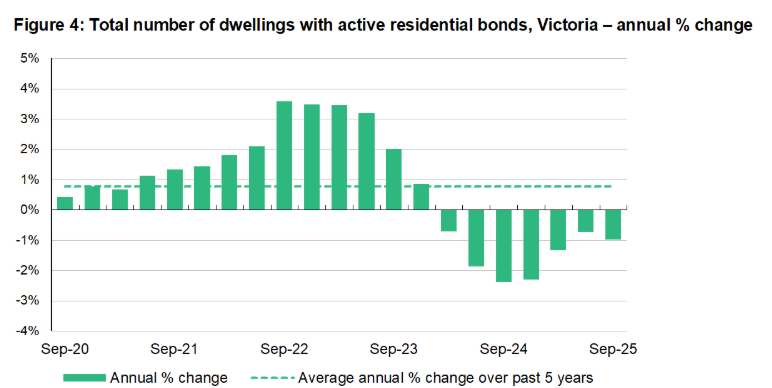
In 2024, the Victorian government significantly increased holding costs for investors—primarily through lower land-tax thresholds, expanded vacant-residential-land taxes, and new short-stay levies.
The changes mean more investors now pay land tax, and those who already pay are paying more, reducing net yields.
As a result, a significant number of investors abandoned the market, as evidenced by the decrease in rental bonds on issue:
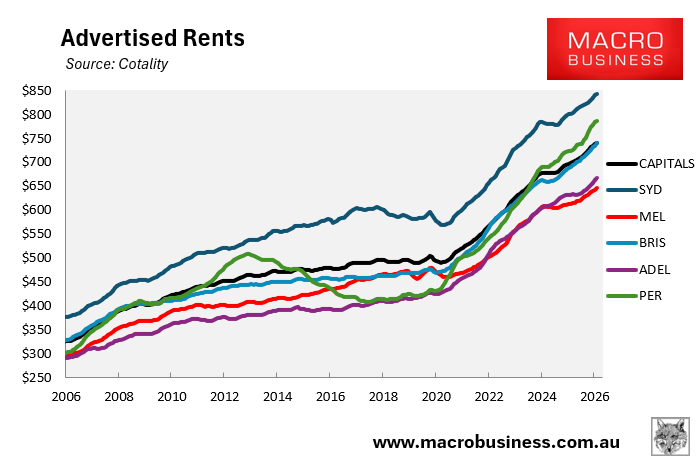
Despite the exodus of investors, Melbourne’s rental market has fared far better than the other major capital cities.
According to Cotality, Melbourne advertised rents grew by 37% in the five years to July 2026, significantly below the 41% growth recorded across the combined capital cities:
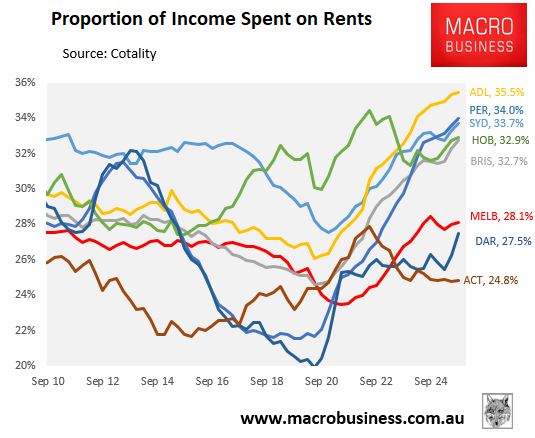
The amount of income required to rent the median home in Melbourne was 28.1% in Q3 2025, significantly below the other major capital cities and the national average of 33.4%:
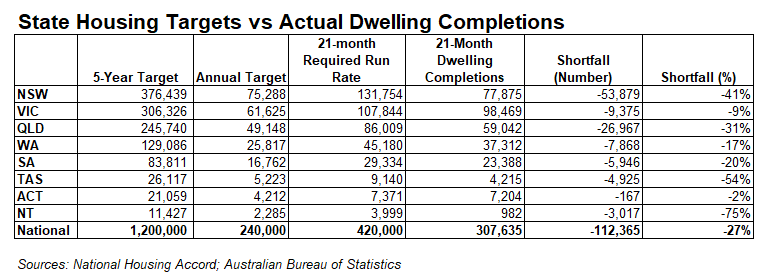
Victoria’s dwelling construction rate is also tracking well above the other states, suggesting the investor tax changes haven’t harmed supply.
As illustrated below, Victoria is the only state to be tracking close to the National Housing Accord supply target:
Ultimately, excessive immigration into a supply-constrained market is the primary driver of Australia’s rental crisis.
Renters should be angry about excessive migration, not the changes to negative gearing and CGT.
