
RBA in tug-of-war between inflation and unemployment
CBA notes that two key data points will determine whether the Reserve Bank of Australia (RBA) will hike the official cash rate (OCR) at its next meeting in August, namely:
- This week’s Labour Force Survey (23 July); and
- The June CPI the following week (29 July).
May’s labour force report from the Australian Bureau of Statistics (ABS) recorded an official unemployment rate of 4.4%, above the Reserve Bank’s latest forecast.
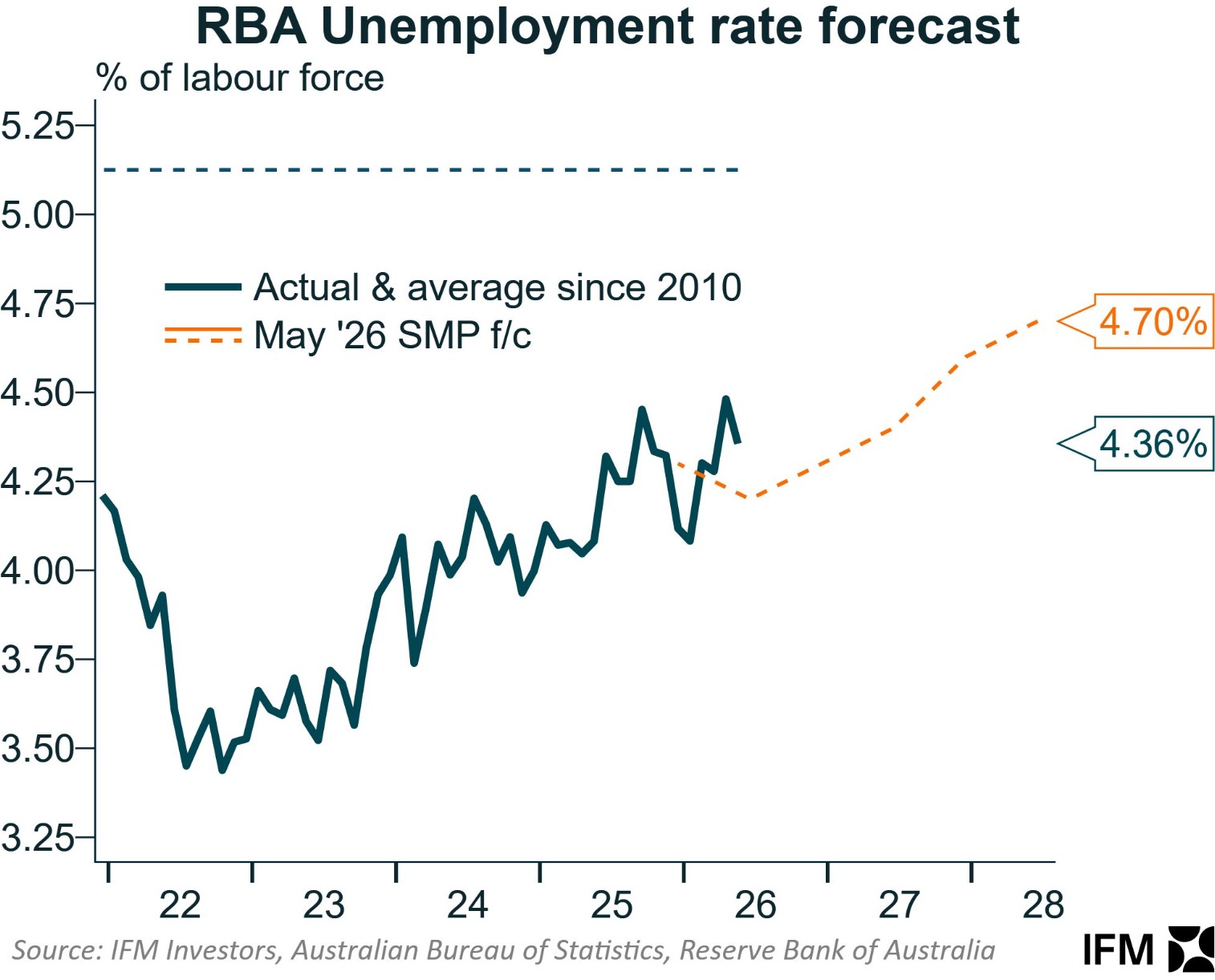
Chart from Alex Joiner (IFM Investors)
The latest unemployment estimate from Roy Morgan Research, released last week, recorded its highest unemployment rate (11.7%) since January 2021.
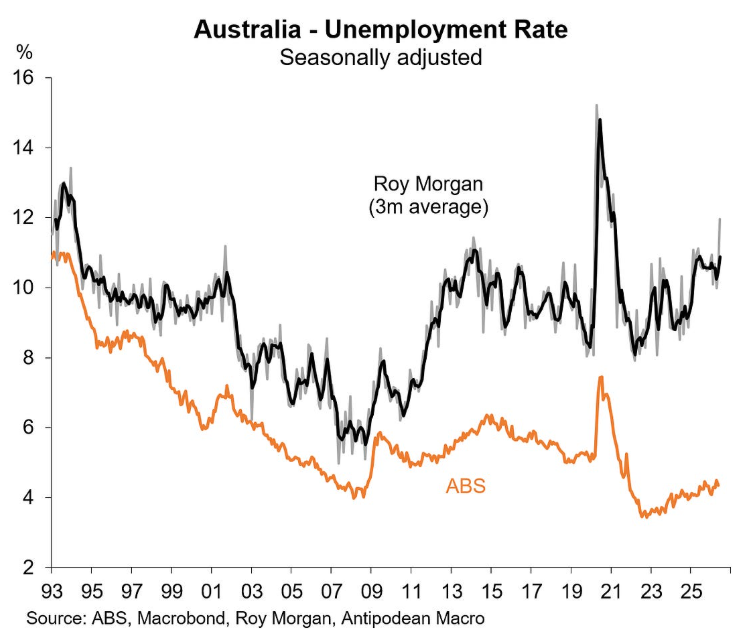
Chart from Justin Fabo (Antipodean Macro)
The latest NAB business survey, released last week, showed that employment growth has slowed sharply.
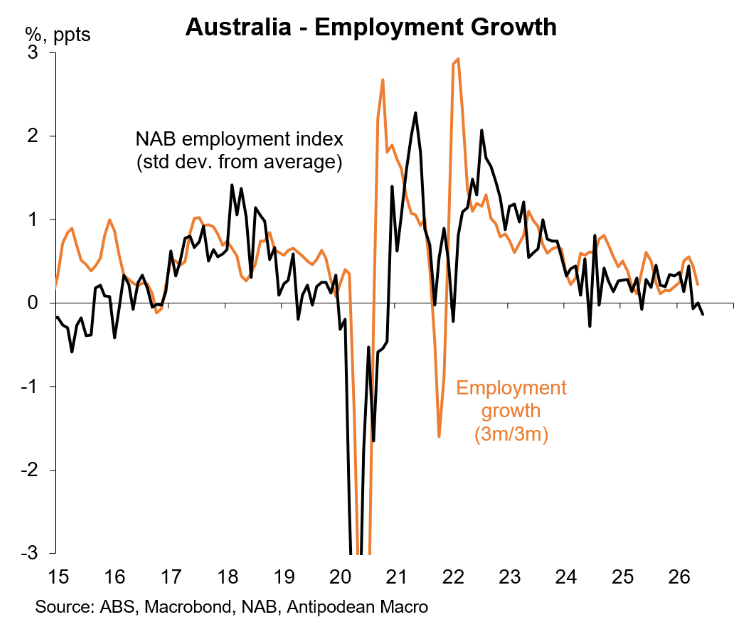
Chart from Justin Fabo (Antipodean Macro)
Both data points suggest that the ABS could report soft job growth and rising unemployment on Thursday.
Meanwhile, CBA forecast that inflation will remain elevated when the ABS releases the June CPI report later this month.
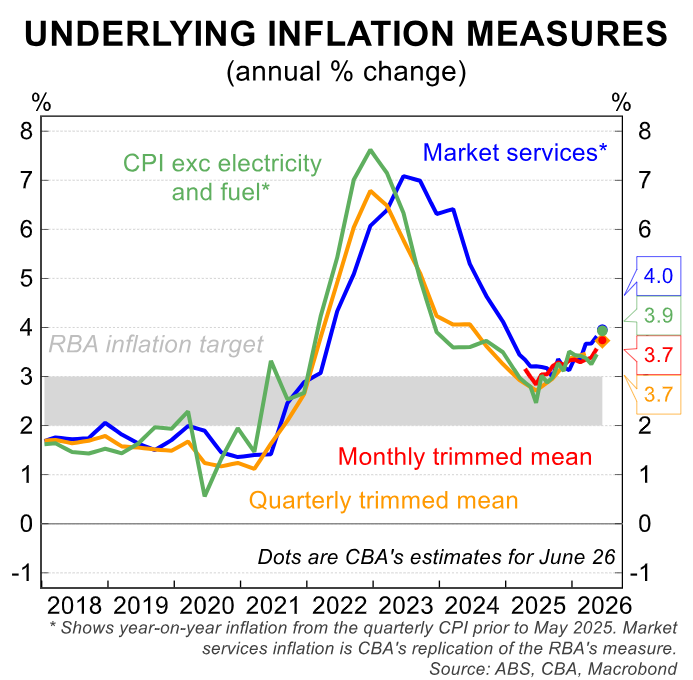
CBA forecasts that monthly trimmed mean inflation will increase to 3.7%/yr, while the RBA’s measure of market services inflation will accelerate to 4.0%/yr.
CBA also expects the policy‑relevant quarterly trimmed mean CPI to have risen by 0.9% in the June quarter, with its annual rate edging higher to 3.7%.
“If realised, this would be the fourth consecutive quarter of trimmed mean being within a range of 0.8%-1.0%/qtr”, CBA notes.
“The risks to quarterly trimmed-mean inflation are also to the upside. Our simulations suggest that the likelihood of trimmed inflation coming in above our estimate is around 30%, while the probability it comes in lower than expected is under 10%”.
“By the end of 2026, trimmed mean inflation is likely to have been outside the target band for all but three quarters since 2022. On our current forecasts, it will not return to the top of the target band until mid-2027 and will not be around the midpoint until early 2028”, CBA notes.
Despite the poor inflation outlook, CBA still expects the OCR to remain on hold for the remainder of the year due to the deteriorating growth outlook and rising unemployment, which will trump concerns surrounding inflation.
“We then have two rate cuts pencilled in for May and August 2027, although the timing will depend on the data flow”, CBA notes.
“The Board will likely need to see a sustained decline in inflation and have greater confidence it is returning to target before easing.Given the quick acceleration in inflation following rate cuts in 2025, it is possible the RBA’s reaction function has altered and will remain more cautious than in prior cycles”.
The interest rate futures market has also trimmed its expectations for rate hikes. It now tips around a 60% chance of one more rate hike by the end of this year, down from an expected two further rate hikes a few months back.
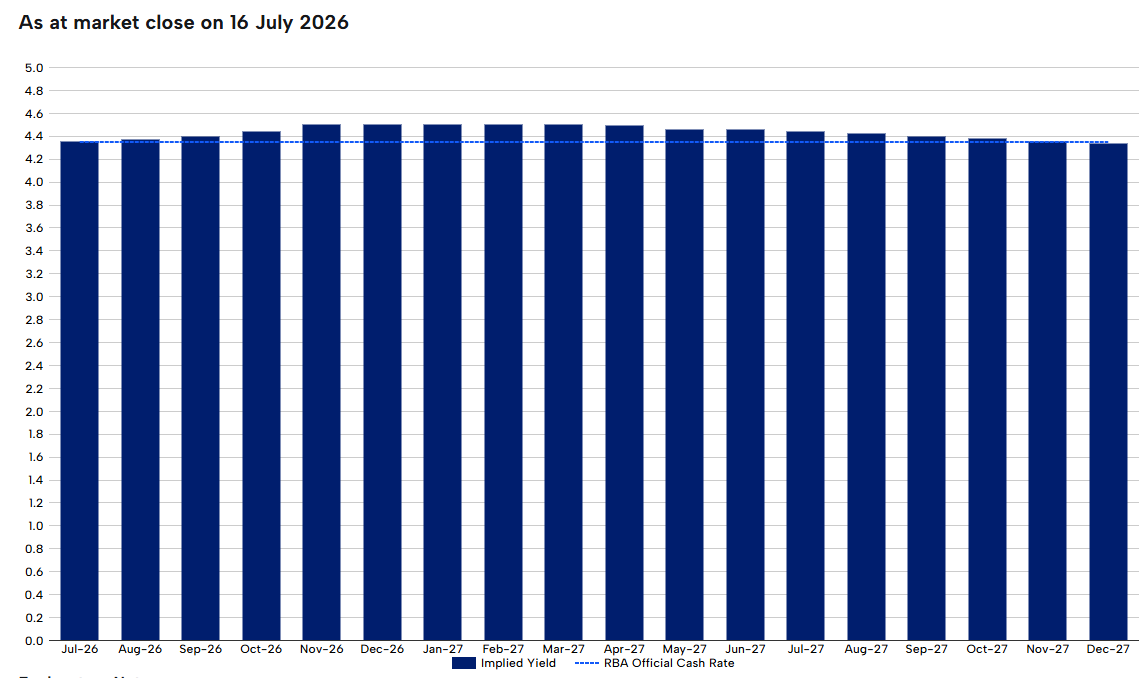
The deteriorating growth outlook and softening labour market have tempered rate hike expectations, despite stubbornly high core inflation.
