
The Iran war is not getting better and is not going to.
It has entered the escalation trap. Dump cannot abide losing. Israel controls Washington. Iran is fighting for its life.
I’m yet to meet an oil bear. They don’t exist. So, most often, you get guff like this: from BofA.
The bottom line is that the world has enough crude oil to withstand a few more weeks of skirmishes around Hormuz, or even maybe a few more months.
How reassuring. I’m not sure when we pass from a “skirmish” to a war, but Professor Pape is not hopeful and for good reason.
Last night Iran crossed another escalation threshold.
Instead of concentrating on military bases, Iranian missile and drone strikes hit a vital power and water desalination plant in Kuwait —part of the system that produce roughly 90 percent of the country’s drinking water. Unlike past fragments by Iran strikes that inadvertently hit desalination plants earlier, there is no question this plant was directly targeted. The fire was contained and emergency crews are restoring stability, but the strategic message is unmistakable: civilian survival infrastructure is now becoming a direct battlefield target.
Kuwait has approximately 5 days of national emergency water storage in its ground reservoirs and distribution networks. With rationing the emergency period can stretch to a month or so – exact estimates impossible since there is little historical experience.
Kuwait has eight desal plants, tqo were hammered on the weekend. Concentrated strikes could make the country uninhabitable in five days.
So, I am not reassured by diminishing oil inventories, and neither is the market as Brent marches back towards $100.
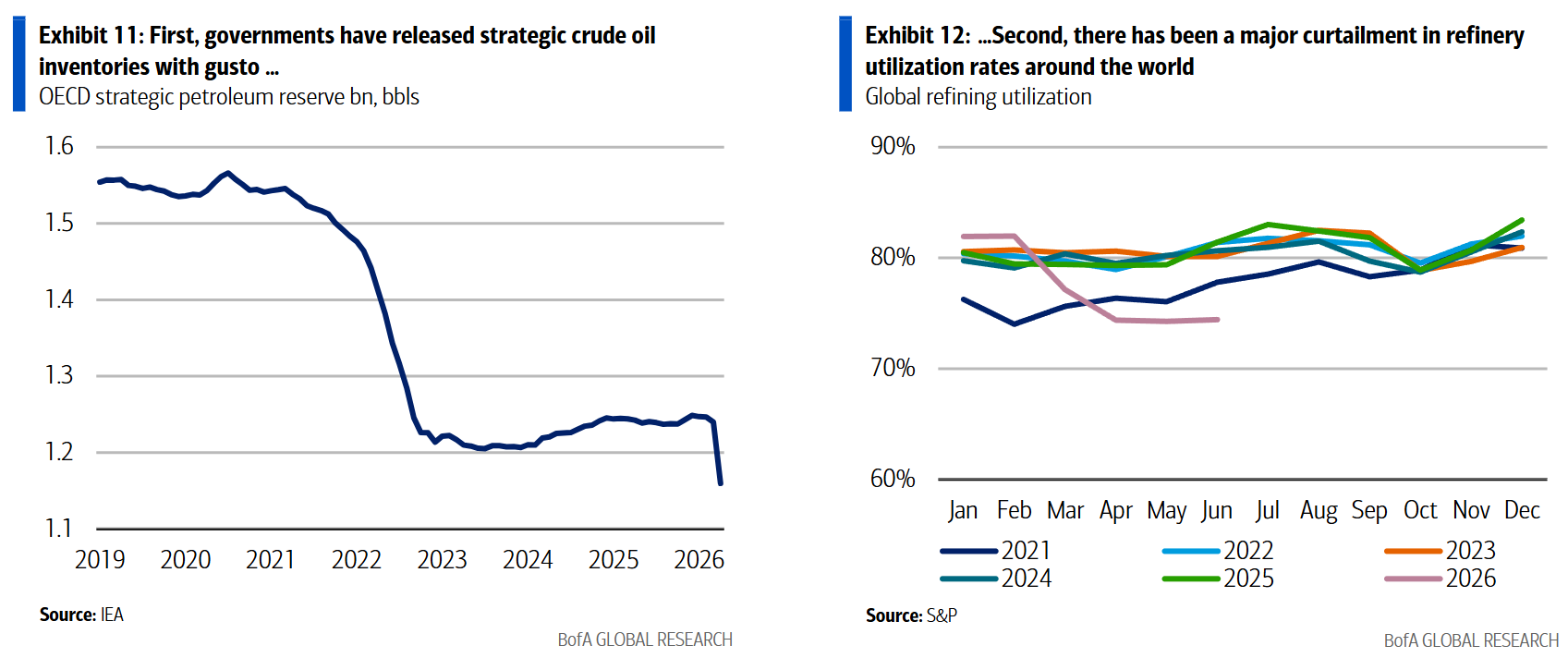
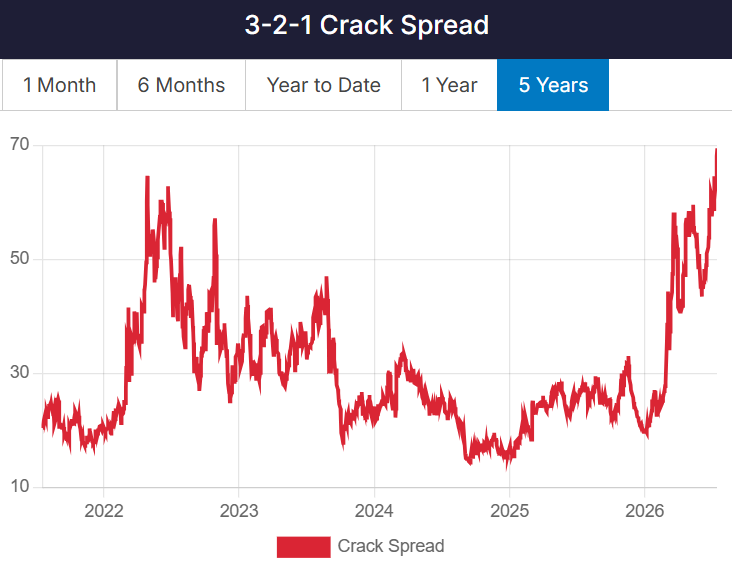
Moreover, it is the second chart that matters most. The lack of refining has widened your crack spread to breaking point, above the Ukraine shock.
Governments don’t store much in the way of actual fuel, going into peak consumption season.
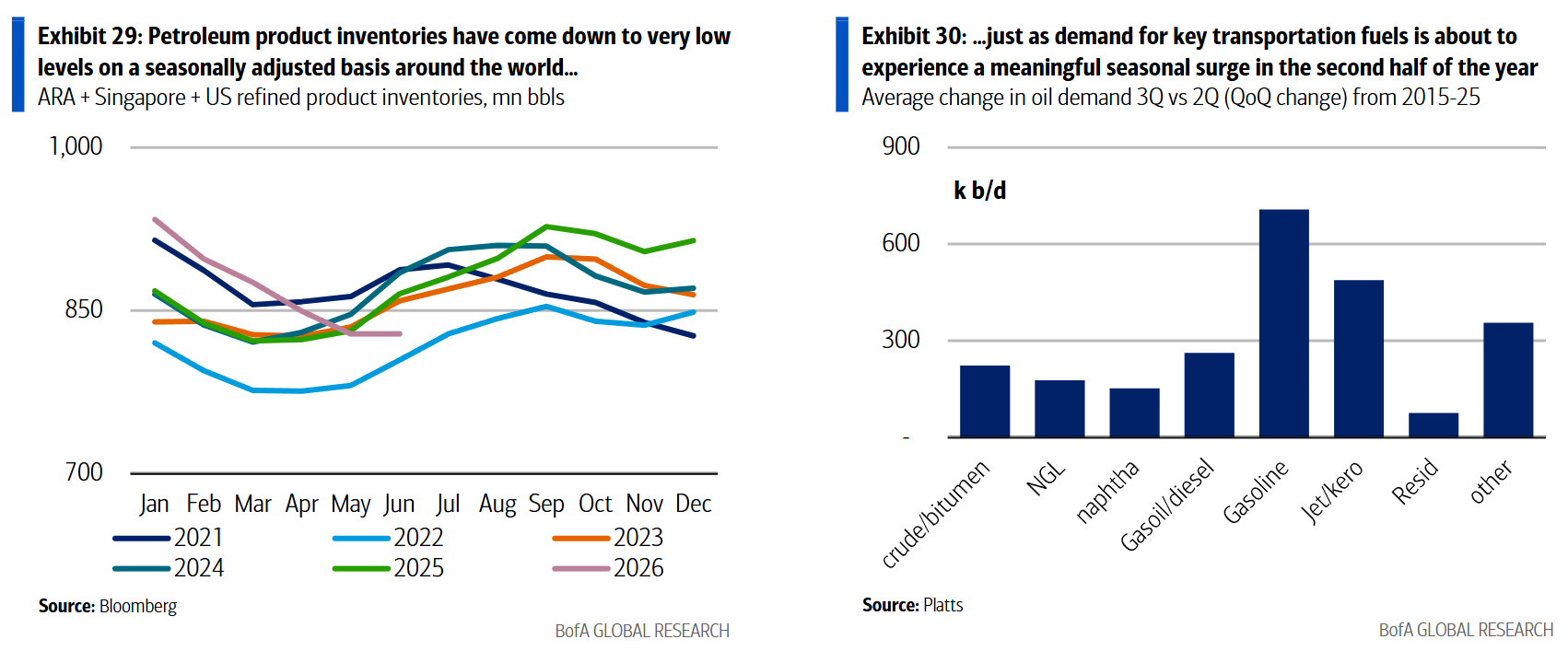
The moment refineries reopen to close your crack, the rate of consumption of oil will skyrocket, and SPRs everywhere will empty out like your crack has busted wide open.
Diesel Strategic Reserve, anyone?
