
Australia’s rental market continues to deteriorate, with the latest data from Cotality showing that advertised capital city rents grew by 6.0% in the year to June, with the vacancy rate also tracking near historical lows:
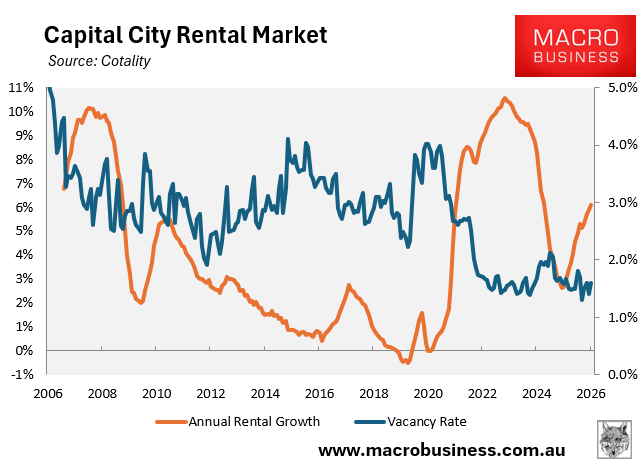
As a result, capital city advertised rents have increased by 42% over the past five years, adding roughly $11,300 to the annual cost of renting for the typical tenant household.
Relief will only arrive if:
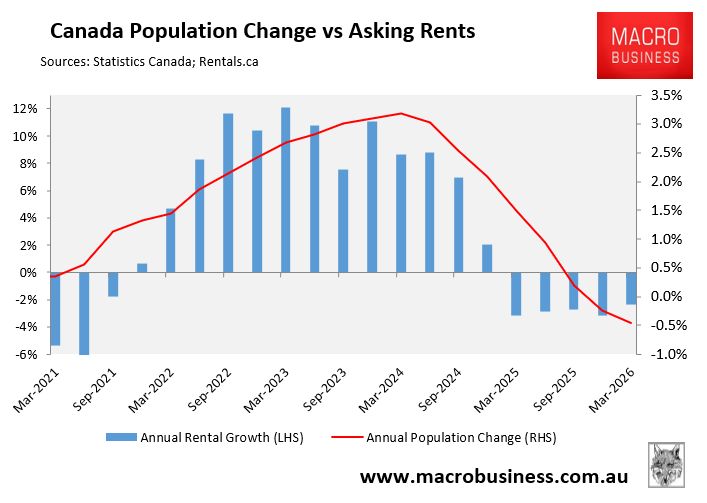
- The government reduces rental demand by slashing net overseas migration, as Canada has done; or
- There is a large increase in dwelling construction, as occurred during the 2015 to 2020 high-rise apartment boom.
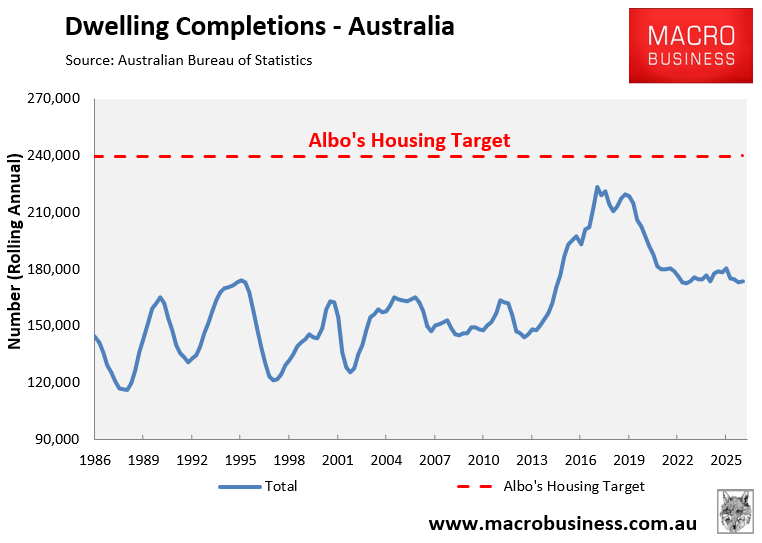
Sadly, the outlook remains grim, with the latest dwelling construction data from the Australian Bureau of Statistics (ABS) showing that only 173,400 homes were built in the March 2026 year, 66,600 (28%) fewer than the National Housing Accord’s annual target of 240,000 dwellings a year.
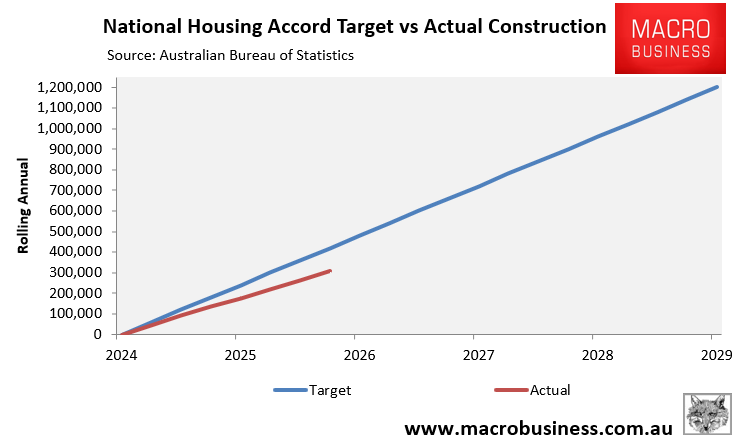
In fact, over the first 21 months of the National Housing Accord, 112,400 fewer homes have been constructed than the target, representing a shortfall of 27%.
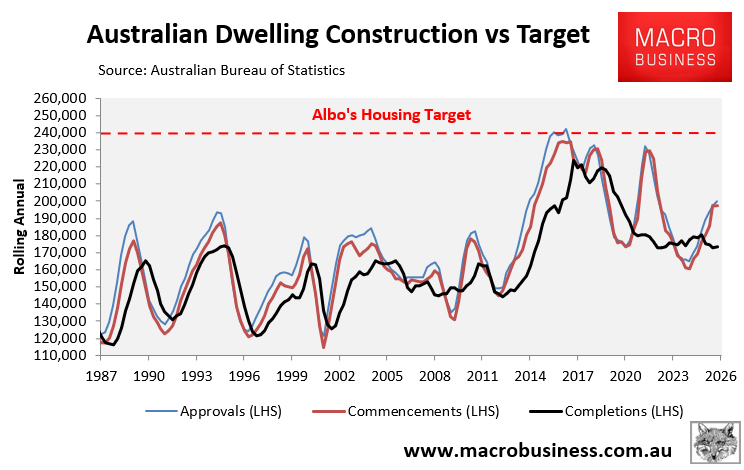
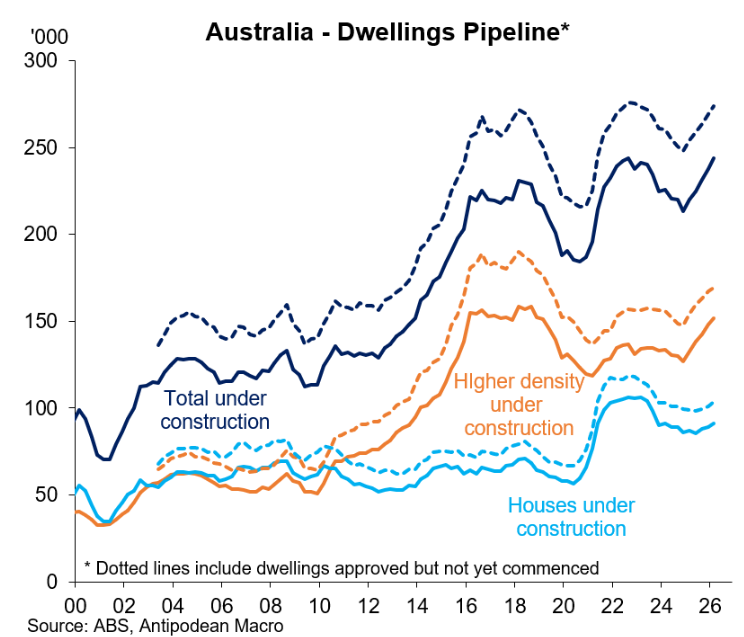
The following chart shows that dwelling approvals and commencements are tracking far above actual completions, suggesting that the construction pipeline in Australia is severely bottlenecked, negatively impacted by factors including labour shortages, soaring costs, builder insolvencies, and the blowout in timelines.
According to Justin Fabo from Antipodian Macro, the pipeline of unfinished/unbuilt dwellings in Australia rose to 244,000 in Q1 2026, with a further 30,000 homes approved but not yet commenced.
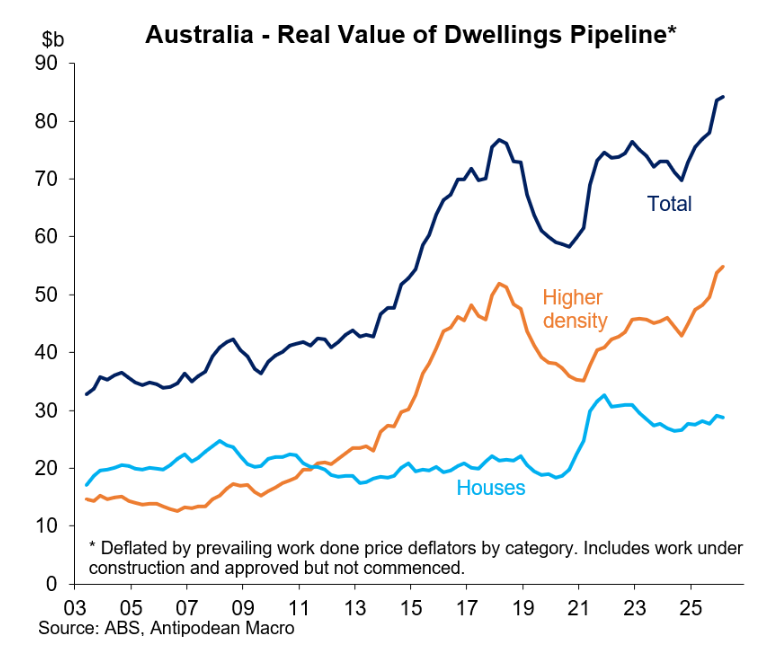
The real value of the dwellings pipeline also hit a record high in the March quarter:
With the construction pipeline severely constricted, the only viable solution to the rental crisis is to dramatically lower immigration, as Canada has done with great success.
Otherwise, Australia’s rental market will continue to tighten to the detriment of tenants.
