
The Climate Council contends that there are about 160 data centres currently operating in Australia, with another 90 proposed.
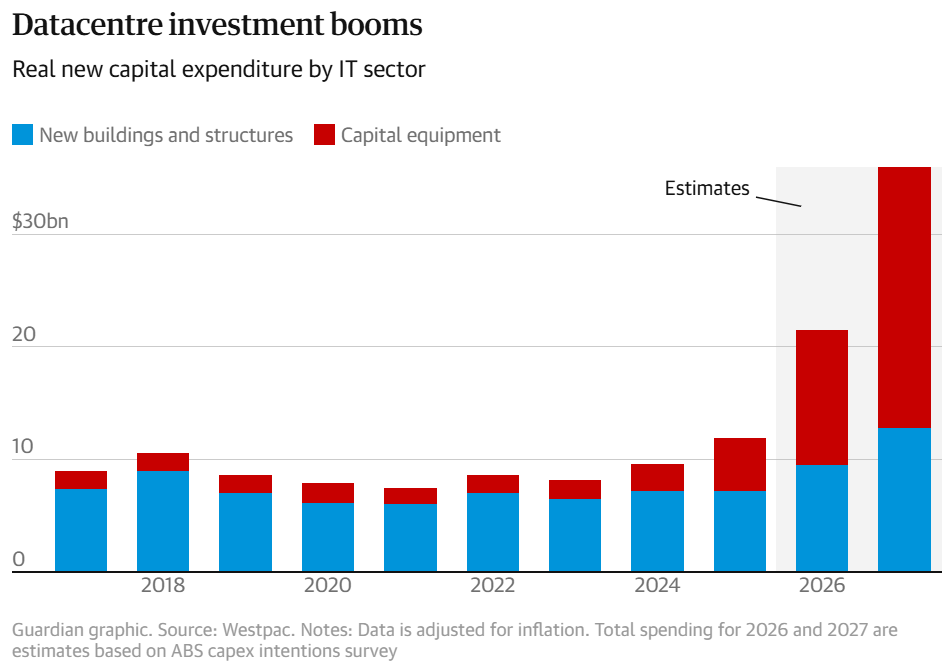
Alex Hooper, the head of climate and energy economics at Oxford Economics Australia, says data centres are tipped to account for more than 10% of electricity consumption on Australia’s east coast by the mid-2030s.
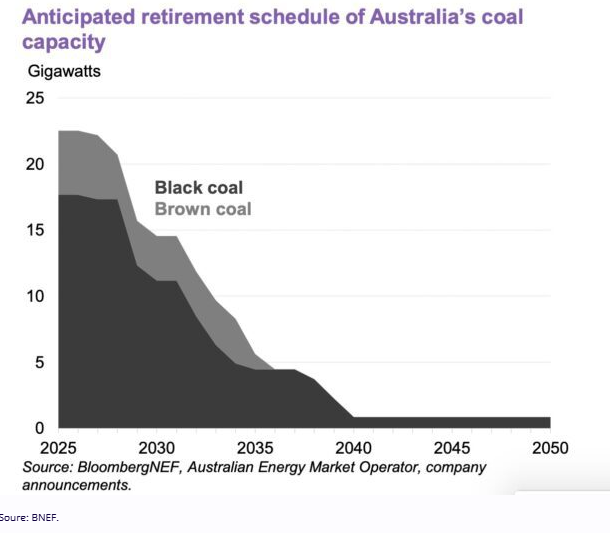
Over the same period, Australia has scheduled the closure of the majority of its coal generation fleet by the mid-2030s, with the rest to shutter by 2040:
Assistant Technology Minister Andrew Charlton told Sky News’ Sunday Agenda that the additional demand created by data centres will be met by renewables, including solar and wind, while rejecting the prospect of nuclear-powered data centres.
“There are no proposals from these large data centre operators for nuclear power”, Charlton said.
“They are all putting proposals based on renewables, a range of solar and wind”.
“These nuclear proposals do not exist. All of the data centres that are coming in are proposing to do firmed renewables that will meet their energy needs”.
The rapid growth of data centres has prompted technology firms overseas to pursue a range of energy sources, including gas, geothermal and nuclear power.
The United States Department of Energy recently found that the firm power generated by nuclear power “fits perfectly” with the 99.99% energy reliability needs of data centres.
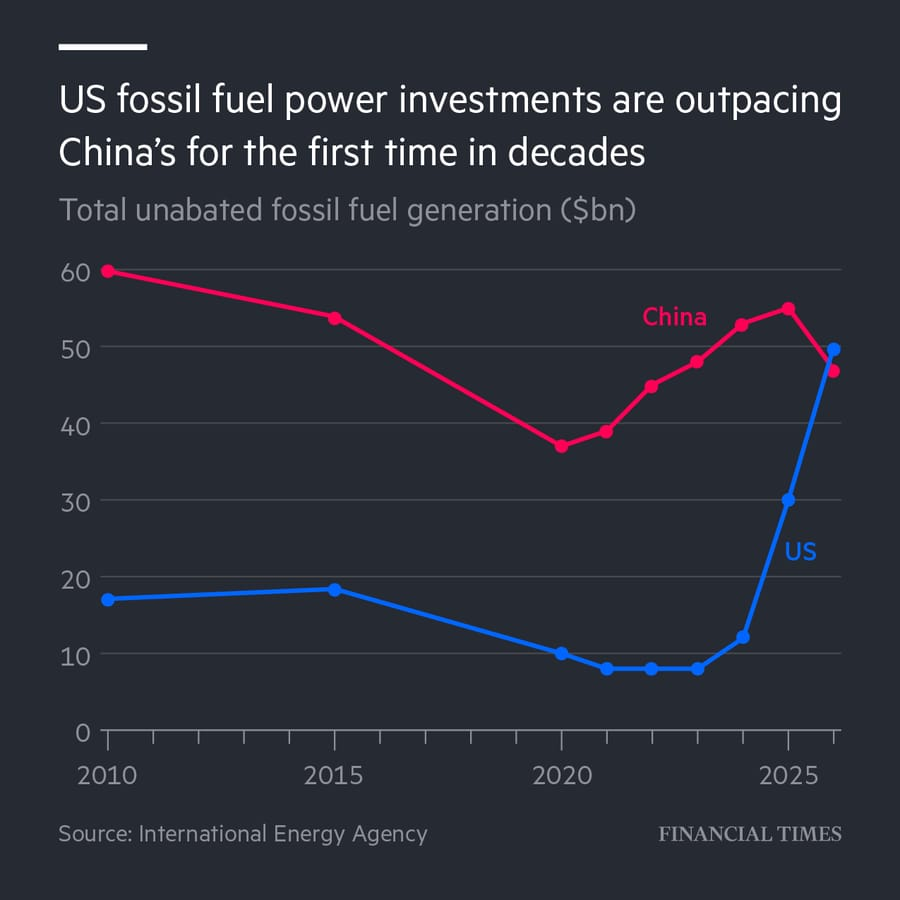
The US has increased fossil fuel generation to power data centres
As Andrew Charlton made his comments on Sunday, NSW and Victoria – the two states leading the race for data centres – were experiencing another wind drought, with renewable power plummeting.
Over the 48 hours to 19 July, 75% of NSW’s power came from coal, with solar (11%) and wind (7%) providing only 18% of the state’s power:
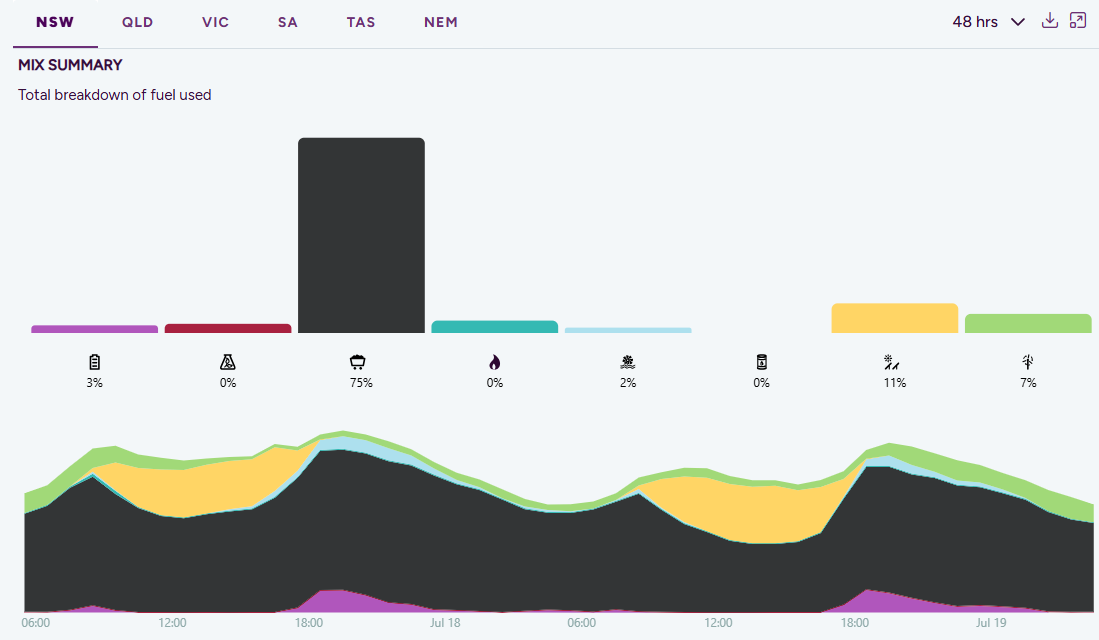
NSW energy mix – 18-19 July, 2026
Over the 48 hours to 19 July, 73% of Victoria’s power came from coal and 4% from gas, with solar (4%) and wind (4%) providing only 8% of the state’s power:
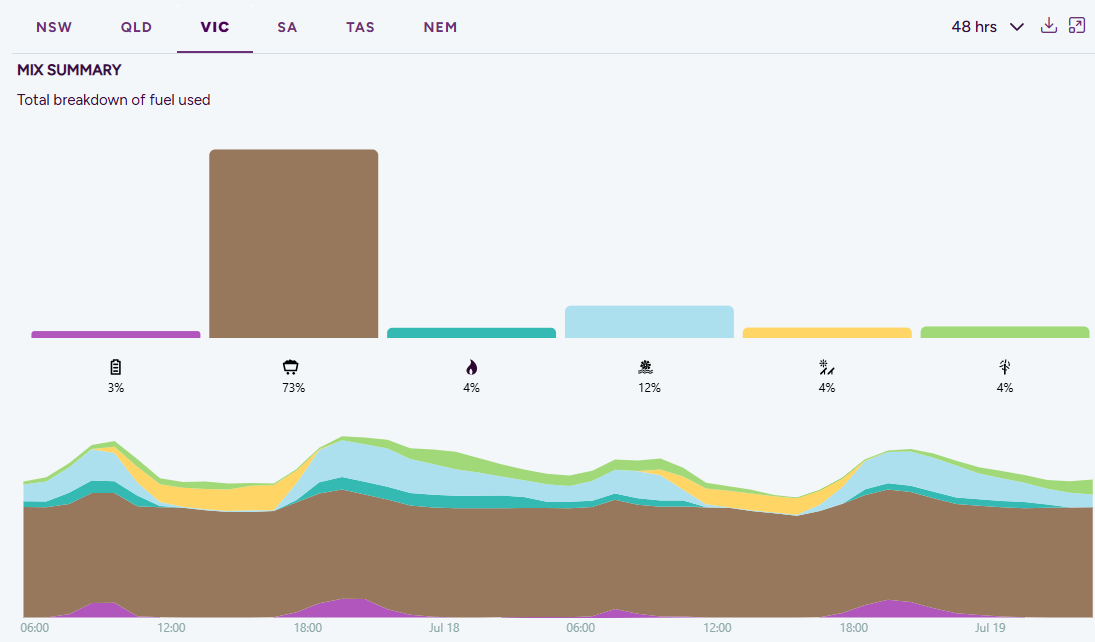
VIC energy mix – 18-19 July, 2026
Without coal, both states would have faced blackouts, even with triple the amount of wind, solar and batteries available.
This raises the important question: how are data centres, let alone the broader economy, supposed to operate when coal is removed from the grid?
The reality is that the economy requires stable, 24/7 power, which intermittent and weather-dependent sources like wind and solar cannot provide.
Australia’s electricity demand will skyrocket in the decades ahead due to:
- The projected 13 million (near 50%) growth of the population over the next 40 years.
- The planned electrification of the vehicle fleet.
- The mass expansion of data centres.
- The expansion of water desalination plants.
Australia, therefore, requires non-weather-dependent generation, such as coal, nuclear, and gas, to keep the lights on.
Relying almost solely on renewables and storage to power Australia’s grid will lead to energy scarcity, rising power prices, and regular blackouts.
