
Will Australia’s house price correction broaden beyond Sydney and Melbourne?
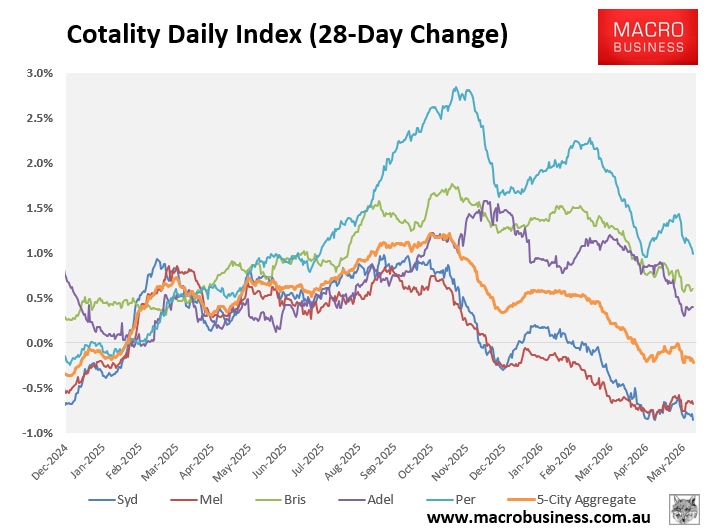
According to Cotality’s daily dwelling values index, Perth, Brisbane, and Adelaide have so far avoided the house price corrections taking place in Sydney and Melbourne.
PropTrack’s dwelling value results for May also show that these three cities have avoided falling, although growth has slowed significantly across each market.
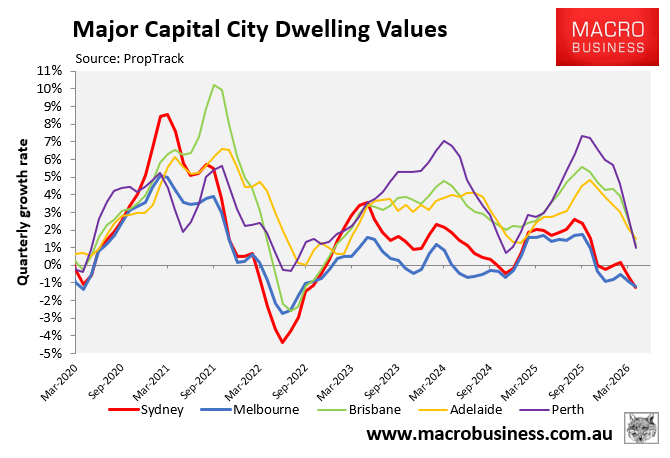
The question arises: can Perth, Brisbane and Adelaide avoid dwelling value declines? Or will they eventually follow their larger peers downwards?
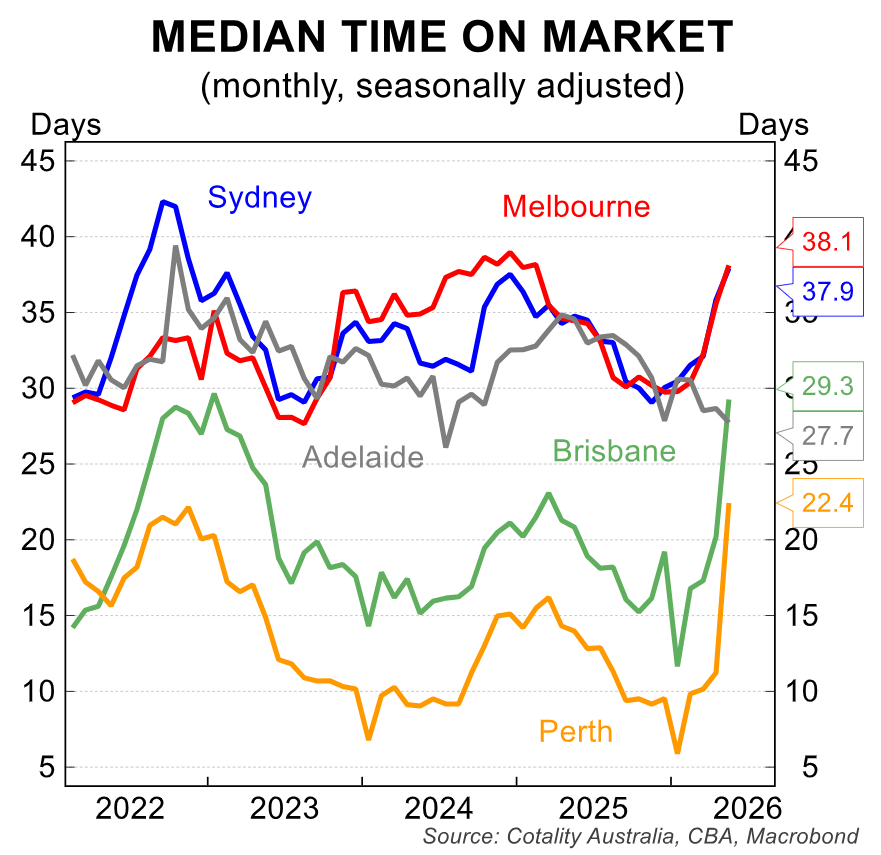
Trent Saunders at CBA posted the following chart showing that the median time on market has shot up in Brisbane and Perth, although they both remain below the other major markets:
“Housing market conditions were already losing momentum before the Budget, but there are signs that the slowdown has accelerated since the announcement of changes to negative gearing and the CGT discount”, Saunders wrote.
“A lot of attention has been on the recent deceleration of housing price growth, as well as the decline in auction clearance rates relative to 2025 levels. The slowdown has been seen across a range of other housing data as well though”.
“One such metric is the median time on the market. After adjusting Cotality’s data for the usual seasonal pattern, there has been a clear increase in median time on the market across most capital cities in May (with the one exception being Adelaide)”.
“Perth has seen its seasonally adjusted time on market double from 11 days in April to 22 days in May. In Brisbane, it has increased from 20 days to 29 days”.
“The increase in Sydney and Melbourne started a bit earlier, aligning with the increase in interest rates from the RBA, though it also continued to move higher in May”, Saunders wrote.
CBA does not expect Perth, Brisbane, and Adelaide to experience outright price declines due to their “tight demand-supply balances”.
“In contrast, Sydney and Melbourne do not have the same degree of supply tightness, so are more exposed to a pronounced slowdown in the market”, Saunders argues.
“Population growth has been softer relative to new dwelling supply in NSW and Victoria, and prices were already declining before the Budget”.
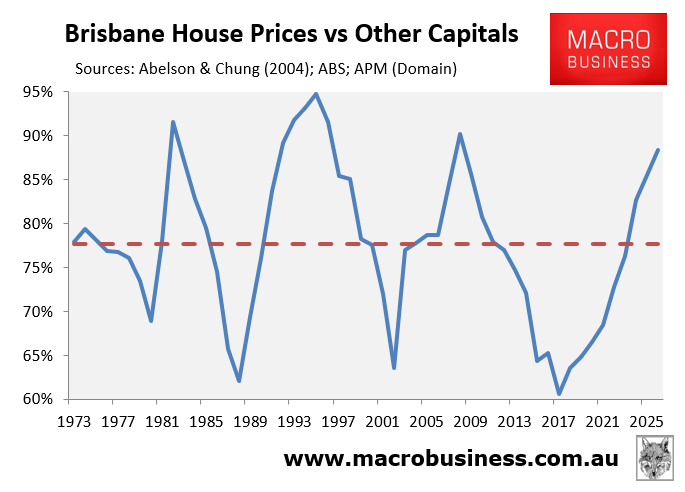
I personally believe that Brisbane is the most likely to join Sydney and Melbourne in falling dwelling values because it’s historically expensive compared to the other capital city markets:
Brisbane has also experienced the largest increase in for-sale listings over the past year:
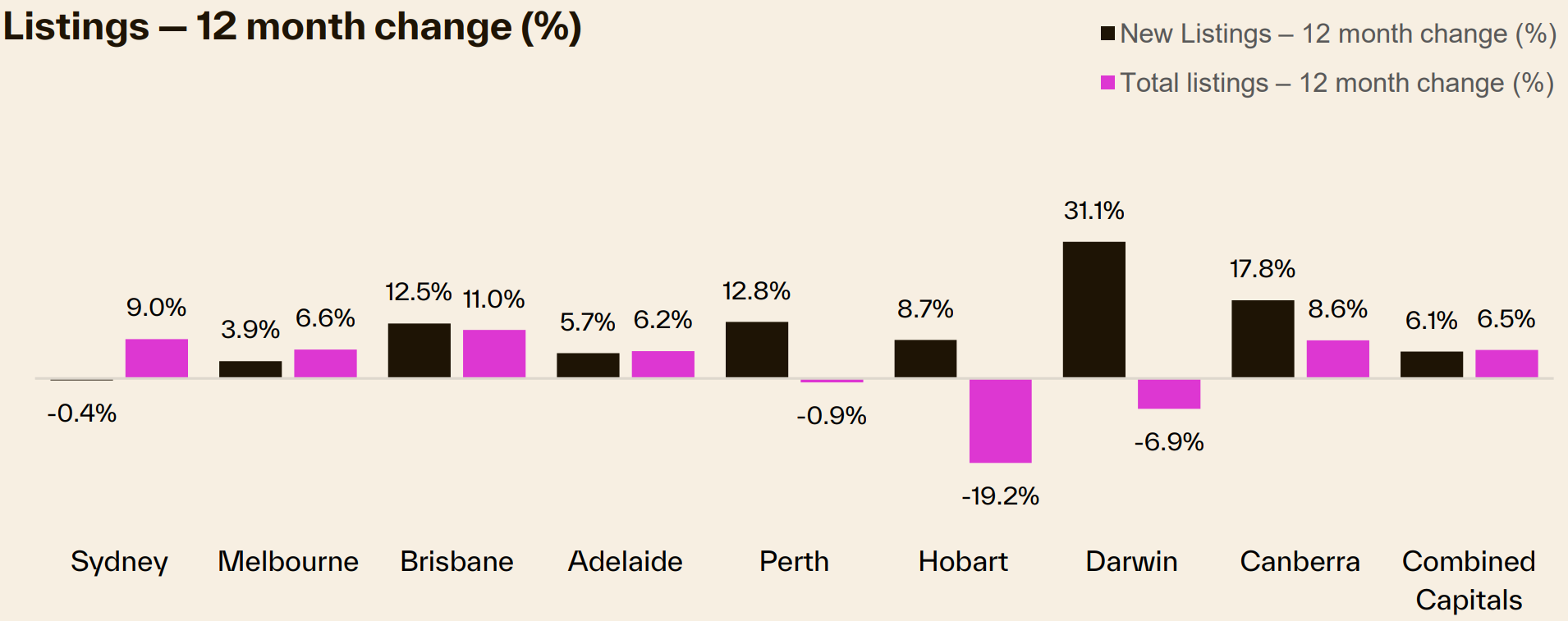
Source: Cotality
It will be interesting watching how it all plays out over the coming year.
