
Advertisement
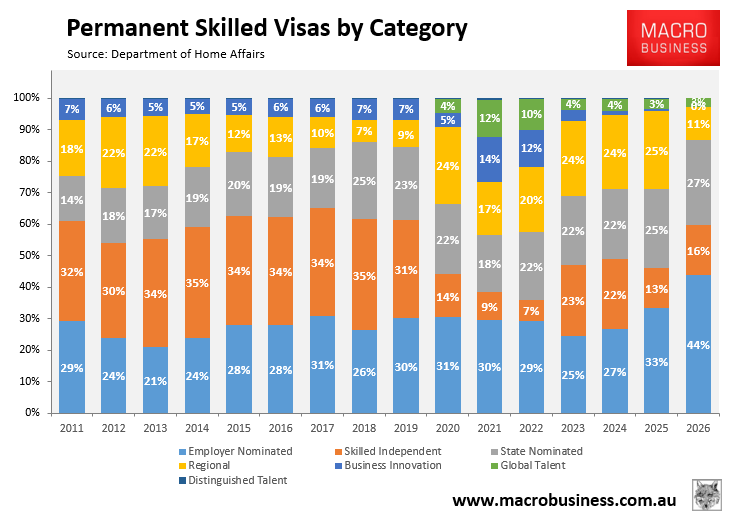
One positive recent reform undertaken by the Albanese government to Australia’s migration system was allocating far more permanent skilled places to employer-sponsored visas at the expense of regional visas.
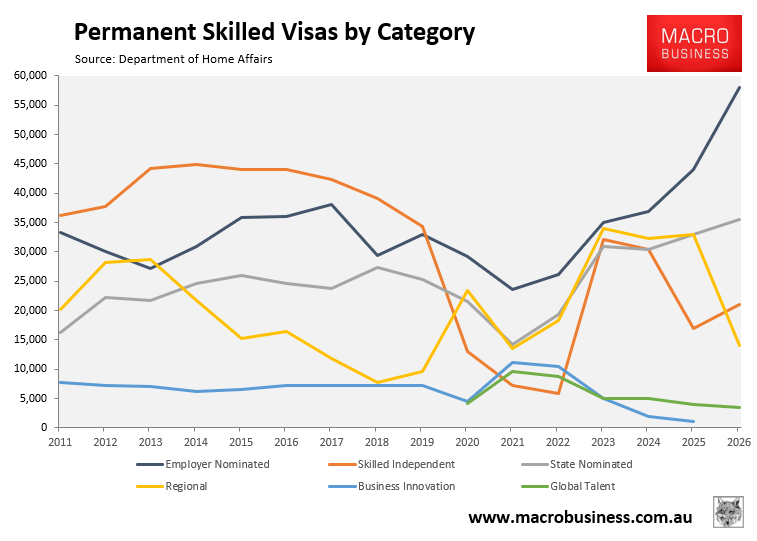
As a result, 58,040 permanent employer-sponsored visas are planned to be issued for 2026-27, comprising 44% of the total skilled migrant intake:
Advertisement
The Australian Treasury’s Fiscal Impact of New Australians (FIONA) modelling shows that two primary factors determine the fiscal and economic benefits of skilled migrants:
- The age at which the migrant enters and begins working in Australia; and
- Their starting incomes.
The full text of this article is available to MacroBusiness subscribers
Cancel at any time through our billing provider, Stripe
About the author

Leith van Onselen is Chief Economist at the MB Fund and MB Super. He is also a co-founder of MacroBusiness.
Leith has previously worked at the Australian Treasury, Victorian Treasury and Goldman Sachs.
Advertisement