

By Jennie George
Waiting for the Budget to provide information about Labor’s Capacity Investment Scheme (CIS) left you none the wiser. Investment in large-scale renewable energy and storage projects is underwritten by taxpayers in contracts “not for publication due to commercial sensitivities”.
Using the defence of “commercial in confidence” prevents scrutiny of the scheme’s costs and liabilities. It’s a denial of the public’s right to know. It’s made worse knowing that Labor’s target of an 82% renewables grid by 2030 won’t be met.
The transition to renewables is an exercise in magic pudding economics, held together by billions in taxpayer-funded subsidies. In the case of the off-budget CIS, taxpayers are funding a revenue safety net used to reduce investor risk. The extent of this financial support is a mystery. While profit is maximised the losses are socialised.
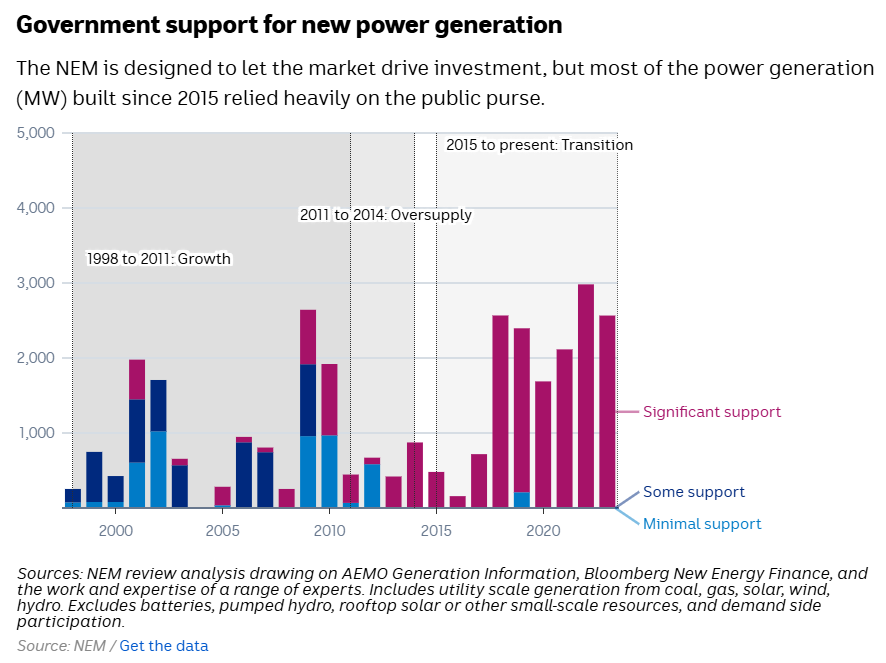
The scheme aims to deliver 40 gigawatts (GW) of new capacity, consisting of 26 GW of renewable generation and 14 GW of dispatchable capacity, like battery storage. In competitive auctions, developers bid for underwriting support from the government, delivered through secret “contracts for difference”. They guarantee a minimum revenue “floor” if market prices fall, while profits are shared with the government if revenues exceed a nominated “ceiling”.
While Minister Bowen praises the scheme’s “critical certainty for investors”, he doesn’t disclose the financial extent of its downside risks. The use of an underwriting model exposes governments and taxpayers to contingent liabilities should market prices fall below the contracted “floor” price. In these cases, the government could be liable for 90% of the shortfall of the agreed annual cap for 15 years.
The extent of potential financial liabilities is too important to ignore, let alone be kept secret.
The Clean Energy Council estimated that in future it would need “in the order of 6-7 GW of new large scale renewable projects from 2024, and the installation of approximately 3.5 GW of rooftop solar per year to achieve the Government’s target of an 82% renewables grid by 2030”.
Minister Bowen concedes that meeting the 2030 target is challenging, but “it can and will be achieved”. The $275 broken promise is a permanent reminder not to take such assurances at face value.
Ross Garnaut, a previous adviser to Labor governments, believes the 82% goal “will be missed, not by a little, but by a big margin.” Rystad Energy forecasts the share of renewables will reach 60-65% by 2030. Surely the Minister must be aware that not one independent analyst believes Labor’s 82% target by 2030 will be met.
In Parliament Bowen boasts about a “pipeline” of renewable projects. By deliberately conflating all projects, he masks those waiting to get a final investment sign-off and a much smaller number under construction.
What matters to meeting the 2030 target is projects that are adding renewable generation capacity to the grid. Last year 5.9 GW of new renewable capacity was added, with onshore wind contributing 1.3 GW, utility-scale solar 2 GW and rooftop solar 2.6 GW.
However, these outcomes were overshadowed by troubling developments in the lead up to 2030. Investment in new large-scale wind and solar fell to one of the lowest levels in a decade. Only 2.3 GW of new utility-scale solar and onshore wind reached financial closure in 2025, down 46% year-on- year. Onshore wind (0.9 GW) fell 59% and utility-scale solar (1.4GW) fell 29%.
There was never justification for Labor’s decision to increase the emissions reduction target from 43% to 62-70% for 2035. It compounds all the current problems with the transition. Most importantly, it risks the reliability of electricity supply when coal exits the energy system.
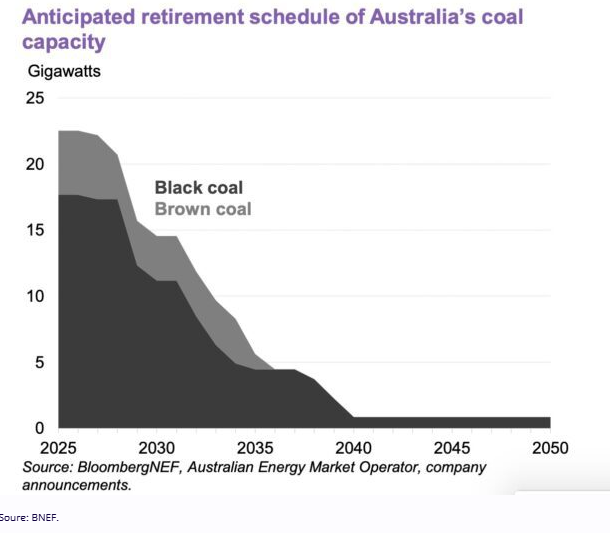
Labor’s lack of contingency planning was obvious when the fuel crisis exposed our vulnerability. At times of global instability, energy security is national security.
In the pursuit of Labor’s “reliable renewables plan”, there is no Plan B. Minister Bowen’s optimism is unfounded. Time is fast running out
Having signed up to nuclear submarines, there’s no reason to maintain the near thirty-year ban on nuclear energy. Many nations are exploring the benefits of next-generation nuclear technologies, like SMRs and micro reactors.
An intermittent, weather-dependent energy system cannot meet the emerging needs of AI and data centres. The nuclear ban should be lifted and the market tested.
The public remains in the dark about the whole-of-system costs for Labor’s renewables transition. Even with the billions in subsidies and the revenue safety net of the CIS, the 82% renewable grid by 2030 will not be met. In the words of an expert, “Labor risks buying failure with its supersized renewables subsidies.”
There’s deliberate confusion by promoting the figure of 43% of electricity supply coming from clean energy, as it includes battery storage. The 43% figure is used to suggest that we’re halfway to meeting the 82% target. Clearly we’re not. “Supply”and “generation” are not interchangeable terms.
The promised 82% renewable grid by 2030 is based on adding new renewable “generation” capacity.
Investment in large-scale wind and solar actually fell in 2025 to one of the lowest levels in the past decade. This doesn’t augur well.
Labor in opposition made much of its promised accountability and transparency in government, but it fails the test on a regular basis, as the report from the Centre for Public Integrity attests.
Once again it appears that it’s left to the Auditor-General and Senate processes to defend the public’s right to know.
Jennie George was a former ALP MP and President of the ACTU